
Last updated November 15, 2026
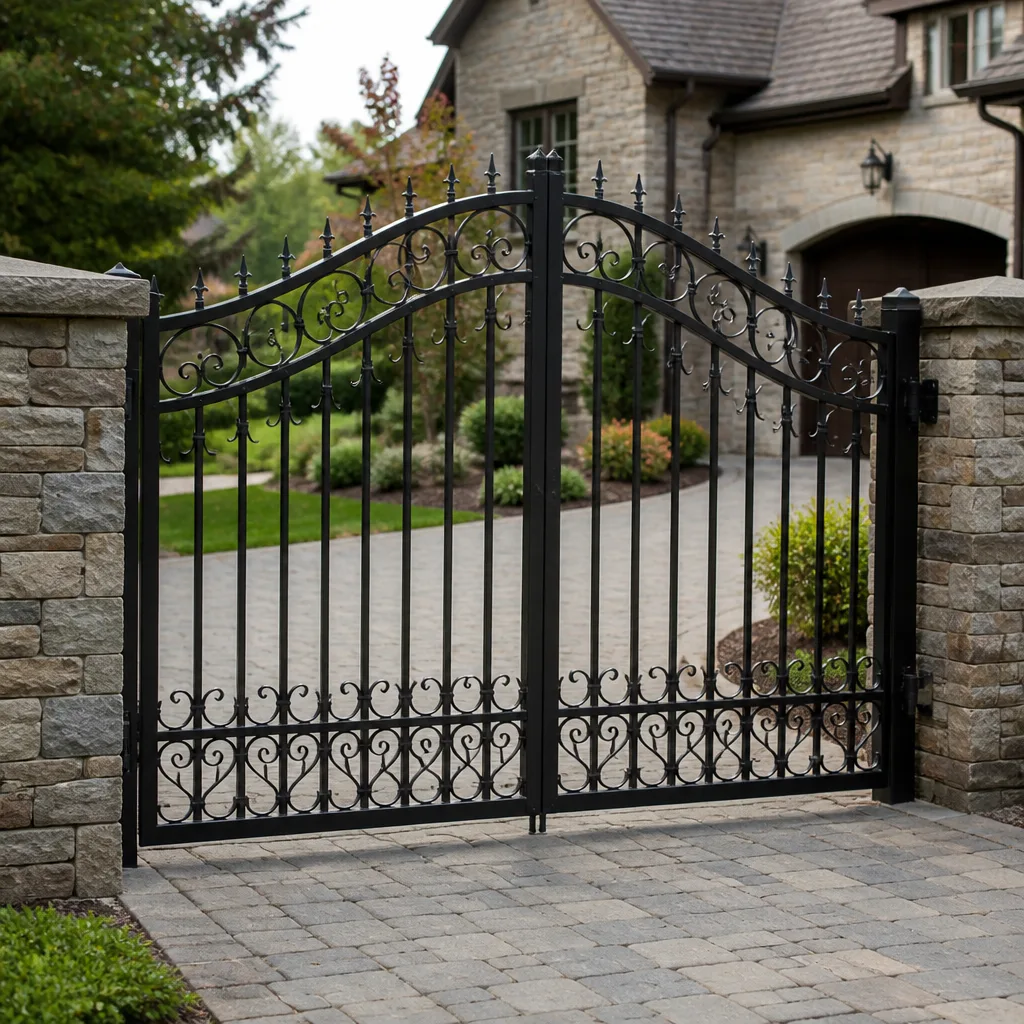 Wrought iron
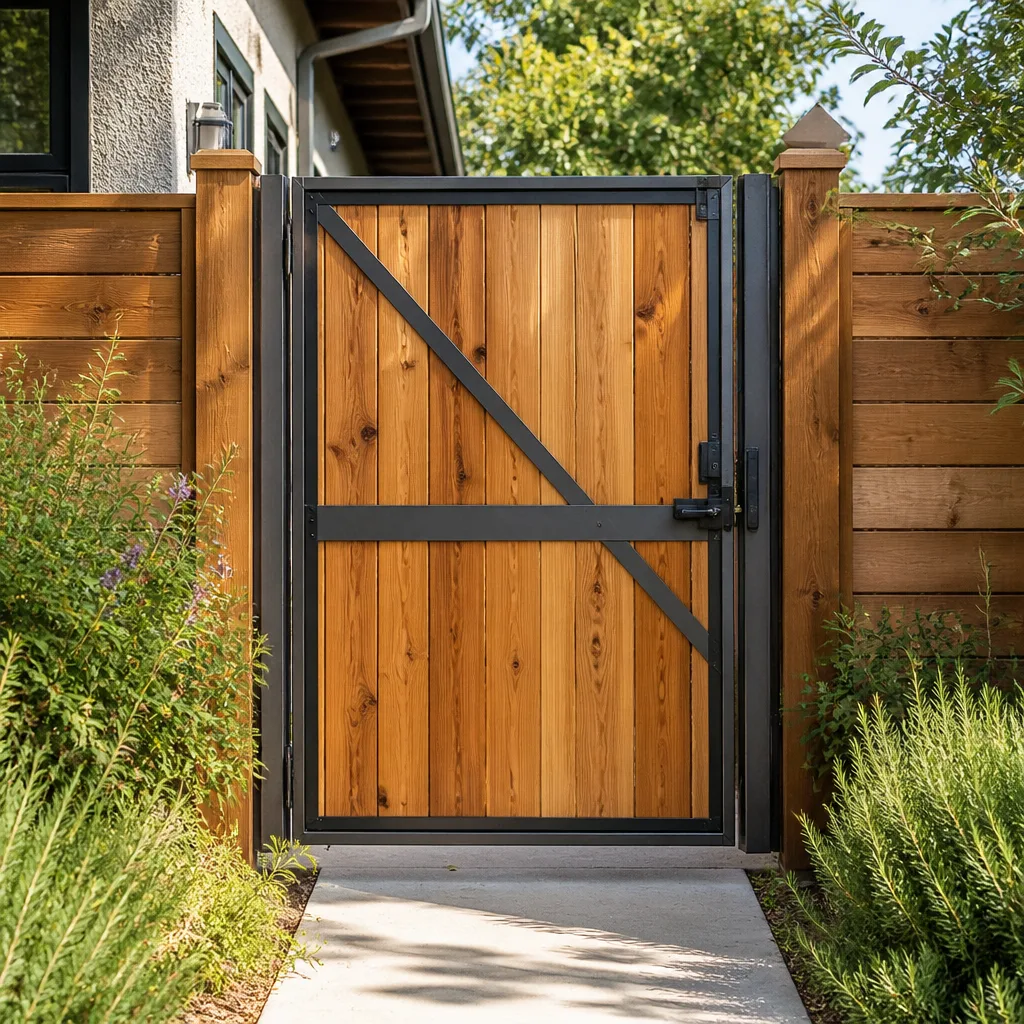 Wood & steel frame
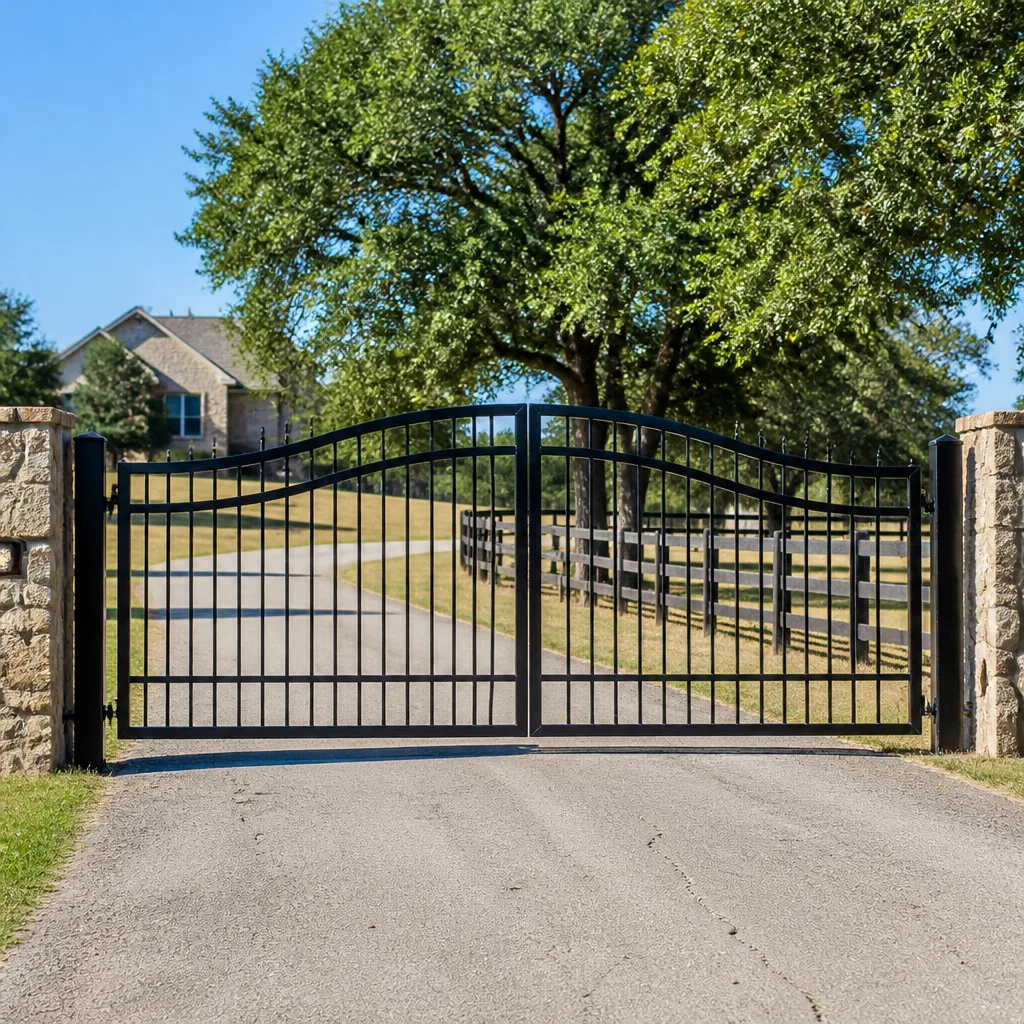 Farm & ranch
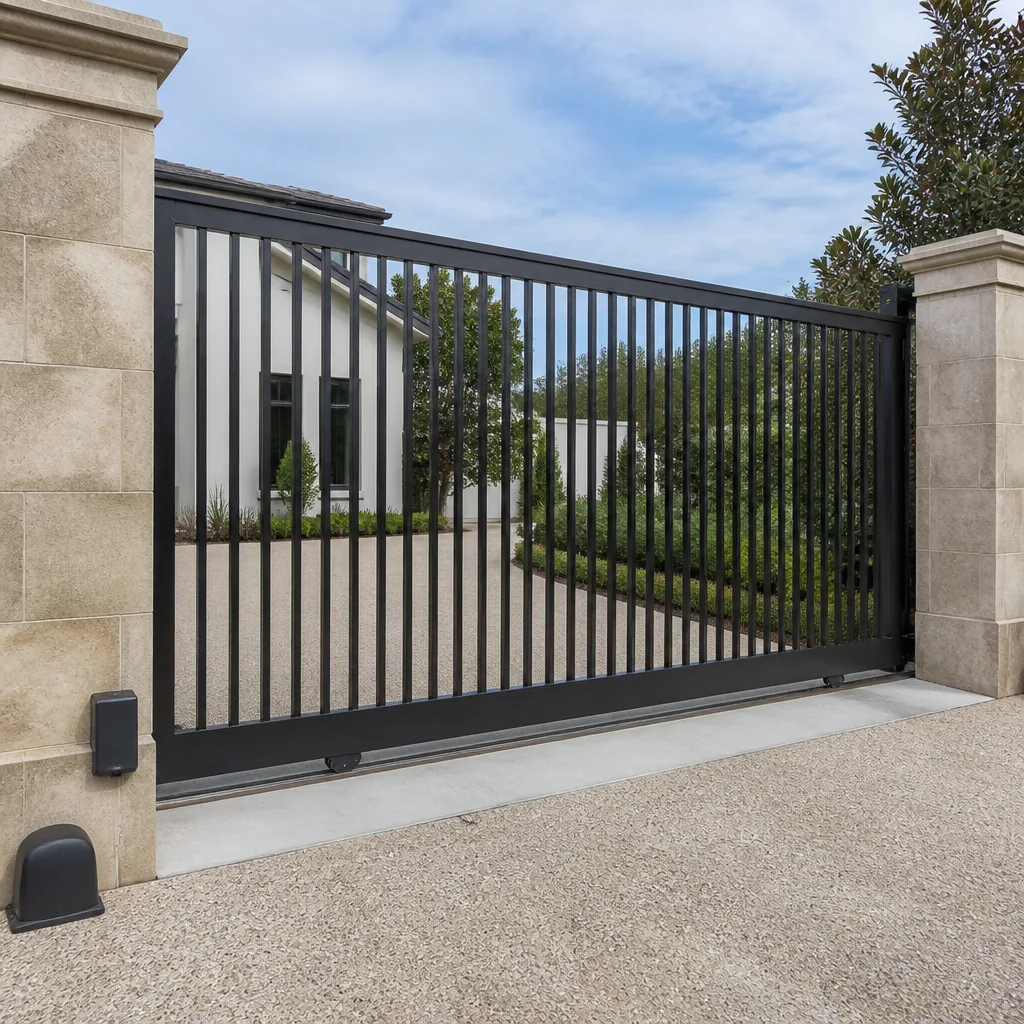 Sliding driveway gates
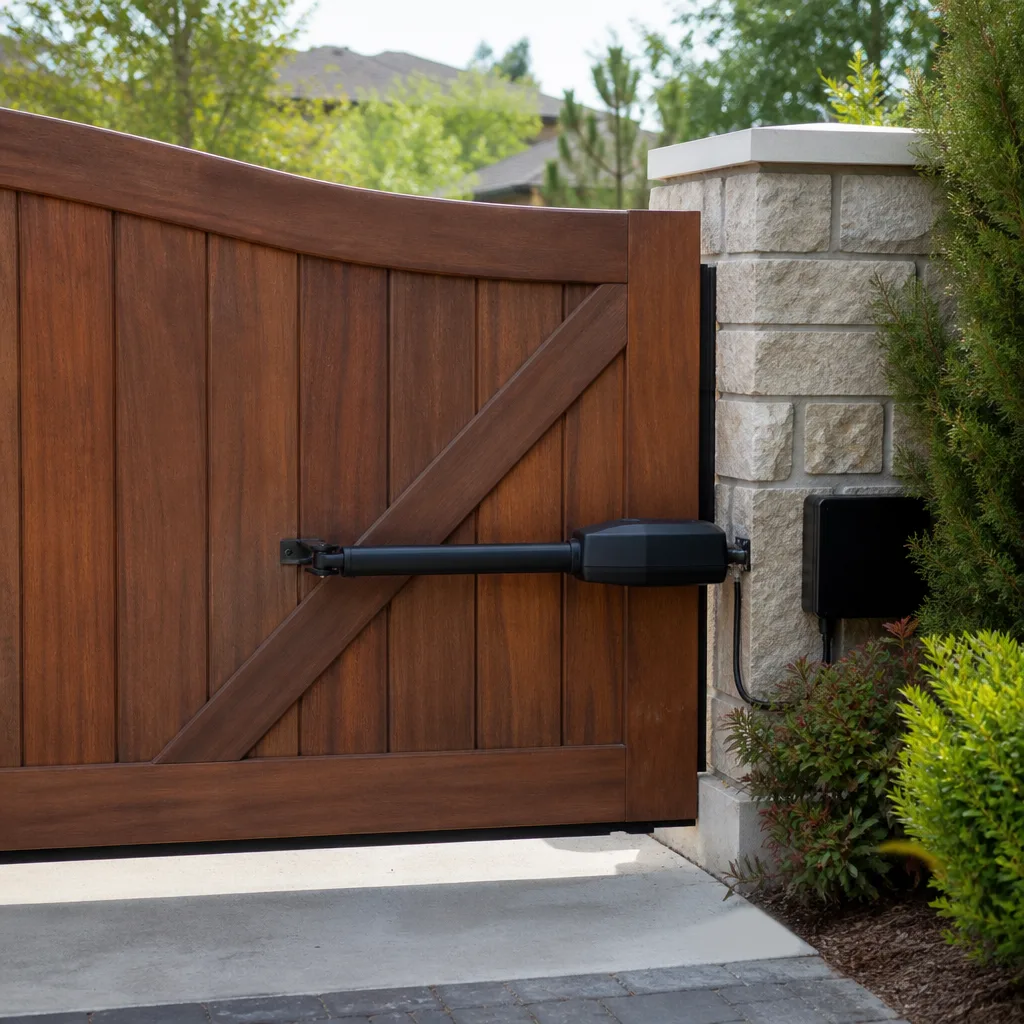 LiftMaster operators
Free on-site gate assessment - hinges, posts, and your LiftMaster or Nice gate operator checked before anything is quoted
The assessment is free and the quote is the invoice.
Get your free estimateDIY vs Professional Gate Repair: The Pembroke Pines Homeowner’s Decision Guide
A homeowner who successfully replaces a gate hinge is not necessarily equipped to adjust a gate operator’s limit switches. One is mechanical assembly – bolts, brackets, a physical part you can see and touch. The other requires understanding how a control board interprets position feedback, and getting it wrong creates an entrapment hazard. That distinction sits at the center of every DIY-or-call-someone decision in Pembroke Pines, and most guides blur it. This one draws the line task by task, so you can decide without underselling your own ability or overestimating your safety margin.
Styles & brands we work with
- Wrought iron
- Wood & steel frame
- Farm & ranch
- Sliding driveway gates
- LiftMaster operators
Quick Answer
Mechanical gate work – lubrication, minor hinge adjustment, remote programming on a residential operator – is genuinely reasonable to do yourself. Anything involving the gate operator’s electrical components, limit switches, safety edges, or heavy gate panels that could fall or crush is a job for a trained gate technician, because a mistake there creates a safety hazard and can void the operator’s UL 325 certification. In Pembroke Pines, where many properties sit behind shared automated entry systems, the dividing line also runs through HOA rules about who may touch the equipment at all.
Table of Contents
- Why Gates Fail Differently in South Florida
- Work That’s Genuinely DIY-Appropriate
- Work That Belongs With a Professional
- UL 325, Florida Code, and What DIY Work Can Void
- The Hidden Cost of a Partial Fix
- How to Evaluate Your Gate Before You Commit
- HOA-Run Entry Systems in Pembroke Pines
- Common Mistakes to Avoid
- When to Call a Professional
- Frequently Asked Questions
Why Gates Fail Differently in Pembroke Pines
South Florida’s climate shapes gate wear in ways that matter for your repair decision. The heat and humidity of a Pembroke Pines summer work on metal, lubricant, and electronics simultaneously: grease thins and migrates off moving parts, rubber and plastic components dry and crack, and control boards sit in enclosures that trap warm, moist air. The result is that gate failures here often trace back to slow material degradation rather than a single moment of breakage.
What does that mean for the DIY question? It means the failure you notice is frequently not the failure that started the chain. A gate that suddenly stops reversing on an obstruction may not have a sensor problem at all; the operator’s components may have been degrading for months in the heat. We’ve seen this pattern repeatedly – a homeowner replaces a sensor, the gate works for a few weeks, and then the underlying issue surfaces louder.
Local housing stock plays a part too. Pembroke Pines includes a large share of gated communities, townhome associations, and single-family homes with driveway gates, and each has its own hardware profile. A residential LiftMaster or Linear operator on a single-family driveway is a different animal from the commercial DoorKing system controlling an HOA entry. The more complex the system, the narrower the DIY lane becomes.
Work That’s Genuinely DIY-Appropriate
We’re not going to tell you that every gate problem requires a professional. That would be self-serving and wrong. Several maintenance and adjustment tasks are entirely reasonable for a homeowner with basic tools and a careful approach, and knowing them helps you avoid unnecessary service calls.
The work that genuinely belongs in the DIY category:
- Lubrication. Applying the lubricant the manufacturer specifies to hinges, rollers, and the operator’s drive chain on a schedule is routine maintenance. Wipe off old grease first; don’t layer new over old.
- Visual inspection. Walking the gate line to check for loose bolts, worn hinges, debris in the track, or bent hardware costs nothing and catches problems early.
- Minor mechanical alignment. If a gate drags slightly because a hinge is loose or a bolt has backed out, tightening or replacing that fastener is standard homeowner work – provided the gate is light enough to be safe and you can support it while you work.
- Clearing obstructions. Leaves, dirt, and small debris jammed in a slide gate’s track cause a lot of “my gate is broken” calls that need no repair at all.
- Remote and keypad programming. Adding a new remote or changing a keypad code on a residential operator is documented in the owner’s manual for most systems, including Linear and Ghost Controls units. Follow the manual for your model.
- Battery replacement in remotes and keypads. Straightforward, low-risk, and worth checking before assuming the operator has failed.
One caution applies even here: any task that requires you to lift, prop, or work beneath a heavy gate panel carries a crush risk. A swing gate can weigh hundreds of pounds. If supporting the gate safely is beyond what you can manage alone, stop and call.
Work That Belongs With a Professional
Now the other side of the line. Gate operators are electrical systems that move heavy things automatically, and the failure modes are not like a misaligned hinge. When an operator fails to detect an obstruction, the gate keeps moving into whatever is in its path. That’s an entrapment hazard, and it’s the reason safety regulations on these systems exist.
The tasks that belong with a trained gate technician:
- Limit switch adjustment. Limit switches tell the operator where the gate’s open and closed positions are. Adjust them incorrectly and the gate over-travels, under-travels, or reverses unexpectedly. This requires understanding how the control board reads position feedback, not just turning a screw.
- Safety edge and photocell work. These components are the gate’s obstruction detection. A safety edge that has been replaced or repositioned without proper testing may appear to work and fail to stop the gate when it matters.
- Control board diagnosis and replacement. Identifying why a board has failed – and whether replacing it will fix the problem or just burn out the new board – takes diagnostic experience with the specific brand.
- Motor, capacitor, and power wiring. Anything involving mains power at the operator carries shock risk and, on shared systems, potential liability.
- Heavy panel and post work. A gate that has come off its track, a failing post, or a hinge on a heavy commercial panel. These can fall and cause serious injury.
- Anything that changes how the operator responds to an obstruction. This is the bright line. If your repair touches the safety function, it’s not a DIY job.
This is where brand familiarity matters. Whether your property runs a Viking, a DoorKing, or anything in between, a technician who works on that platform regularly already understands the control logic before arriving. That shortens diagnosis and reduces the chance of a wrong-part replacement.
UL 325, Florida Code, and What DIY Work Can Void
Gate operators sold in the US are designed to meet UL 325, the safety standard covering automatic gate operators and their entrapment protection. The standard addresses how an operator detects obstructions and what safety features it must have – photocells, safety edges, and related devices. When those features are present, working, and correctly installed, the operator meets the standard it was certified under.
Here’s the practical consequence for a homeowner: modifying, bypassing, or incorrectly reinstalling safety components can take a certified system out of compliance with the standard it was built to. A safety edge wired in the wrong polarity, a photocell mounted so it doesn’t actually sense the gate’s path, or a bypassed obstruction input may leave you with an operator that no longer provides the protection it was certified to provide. If someone is injured, that matters – legally and morally.
On the code side, automated gates are typically treated as an electrical installation and an access-control system, and most cities require a permit for new operator installation or significant electrical work. Pembroke Pines is no different in principle: before you pull a permit for anything beyond maintenance, check with the city’s building department on what your specific project requires. We won’t tell you what your permit will cost or exactly what the inspector will ask for – that’s a conversation with the city, and it varies by project.
The safe summary: maintenance and mechanical adjustment are yours to handle. Anything that touches the operator’s electrical system or its safety devices belongs with a licensed technician, and the certification and code questions follow from that line, not the other way around.
The Hidden Cost of a Partial Fix
The most expensive gate repair is often the one that almost worked. When a homeowner treats a symptom instead of the cause, the gate may function well enough to feel fixed – for a while – while the underlying problem continues to develop.
Here’s the pattern we see. A gate starts hesitating or reversing at random. The homeowner replaces a battery, resets the operator, or adjusts something they read about, and the gate returns to normal. Weeks or months later, the same behavior returns, usually worse. By the time a technician is called, the original small failure has taken additional components with it.
The timeframe varies with what’s degrading, but the cycle of partial fix and larger failure tends to run somewhere in the range of six to eighteen months – long enough that the homeowner often doesn’t connect the two events. The mechanism is straightforward: an untreated control issue stresses the motor, a misadjusted limit switch wears the gearbox, a failing safety component masks a developing mechanical problem. Each repair that treats the symptom instead of the cause lets the underlying wear continue.
There’s a second cost that doesn’t show up as a repair bill: the time. A partial fix means repeated diagnostic sessions, repeated part purchases, and repeated weekends spent on the gate instead of anything else. That’s not a reason to avoid DIY entirely – it’s a reason to know which problems require root-cause diagnosis and to get it once.
How to Evaluate Your Gate Before You Commit
You don’t need to commit to a repair to learn a lot about your gate. A structured evaluation tells you whether you’re looking at a maintenance item, a mechanical fault, or an electrical problem – and it makes any contractor quote you receive more accurate and more useful.
Run through this sequence:
- Watch the gate through a full cycle. Open it, close it, and watch the whole motion. Note where it hesitates, jerks, or reverses. Does it behave the same way on the way back? Symmetry tells you whether the issue is position-dependent.
- Listen. A grinding or scraping noise points to mechanical wear. A clicking that repeats suggests a relay or control issue. A motor that hums without moving points toward the capacitor or drive.
- Check the mechanical basics. Look at hinges, rollers, tracks, and the gate’s alignment. Debris in a track or a loose hinge is something you can see and fix.
- Test the safety devices. With the gate moving, deliberately interrupt the photocell beam or press the safety edge. The gate should stop and reverse. If it doesn’t, stop right there – this is a professional call, not a DIY project.
- Check the manual and any error display. If the operator has an error code or LED pattern, your owner’s manual will tell you what it means. That code is valuable information for a technician, too.
- Note what you’ve already tried. If you’ve replaced a battery, reset the system, or reprogrammed a remote, write it down. That history shortens professional diagnosis.
Take notes as you go. When you call for a quote, being able to say “the gate reverses at about three-quarters closed, the operator shows a flashing code, and I’ve already replaced the battery” is worth more than “my gate is broken” – and it gets you a more accurate estimate.
HOA-Run Entry Systems in Pembroke Pines
A large share of Pembroke Pines homes sit behind shared automated entry gates, and that changes the DIY question entirely. When the gate is owned by the HOA or a shared association, you generally don’t have the authority to repair it yourself, regardless of your skill. The equipment serves every resident, and the association carries responsibility for its safe operation.
If your shared entry gate is failing, the practical steps are:
- Report it to the association or property manager in writing. A written report creates a record and puts the responsibility where it belongs.
- Don’t attempt repairs on shared equipment. Even a well-intentioned adjustment to a DoorKing or commercial-grade operator on a shared gate can create liability for you and disrupt the whole community’s access.
- Ask whether the association has an existing service relationship. Many do, and the right move is to route the repair through that channel.
If you’re a property manager or board member in charge of a Pembroke Pines HOA entry system, the decision is a bit different. You’re evaluating contractors, and the questions to ask are specific: does the company work on your brand, do they service commercial-grade operators, and can they document what they did? We service both residential and commercial gate systems, including FAAC, BFT, and DoorKing platforms, so a single company can cover the entry gate and any residential gates on the property.
Common Mistakes to Avoid
- Adjusting limit switches by trial and error. Turning the switch, testing, and repeating may eventually get the gate to travel correctly, but it doesn’t tell you whether the safety function still works. Test the obstruction detection after any limit adjustment, or better, leave it to a technician.
- Bypassing a safety edge to “make it work.” A gate that closes without obstruction detection is an entrapment hazard. If the safety edge is the problem, the fix is repairing or replacing it, not defeating it.
- Replacing parts before diagnosing. Swapping a control board, capacitor, and receiver in sequence without diagnosis is slow and expensive. Find the cause first.
- Ignoring HOA rules on shared gates. In a Pembroke Pines gated community, working on association equipment without authority can create liability for you and confusion for everyone else.
- Leaving a gate propped open “temporarily.” A gate that won’t close is a security gap as well as a safety one. A temporary prop can become a permanent vulnerability if the repair is delayed.
- Skipping the manual. Most residential operators, including Linear and Ghost Controls systems, document programming, troubleshooting codes, and maintenance intervals. The manual is the fastest first step.
- Letting a small mechanical issue sit. A dragging gate, a worn hinge, or a loose post gets worse in South Florida’s heat and humidity. Catching it early keeps it in the DIY category.
When to Call a Professional
Call a professional when the problem involves anything electrical on the operator, anything that controls how the gate senses an obstruction, or any heavy panel or post work. That covers failed limit switches, non-functioning safety edges, control board faults, motor or wiring issues, and gates that have come off their track or are no longer structurally sound. When in doubt, treat it as a professional call – a diagnostic visit is cheaper than a wrong repair.
If your gate is failing and you’re not sure which category it falls into, the evaluation sequence above will tell you a lot. And if you’d rather have a trained eye confirm it, that’s what we’re here for. Tidewater Gate Repair offers free estimates in Pembroke Pines – call (877) 748-7198. We work on gates only, so every technician on the job is a gate technician, and whether your property runs a Linear, a Viking, or a commercial operator, we already know the system. The price is set per job by the written estimate, quoted and agreed before any work starts.
Frequently Asked Questions
You can handle maintenance and mechanical adjustments, but not the operator’s electrical components or safety devices. Lubrication, visual inspection, minor hinge tightening, and remote programming are reasonable DIY tasks. Limit switches, safety edges, control boards, and motor wiring are professional work because a mistake creates an entrapment hazard and can take the system out of compliance with UL 325.
It can, particularly if the work touches the operator’s safety components or its electrical system. Operators are certified to meet UL 325 based on their entrapment protection features; modifying or incorrectly reinstalling those features can leave the system providing less protection than it was built for. Check your operator’s warranty terms before working on anything beyond routine maintenance.
No – limit switches are among the components we’d leave to a technician. They control where the gate stops, and incorrect adjustment can cause over-travel, unexpected reversal, and a safety function that no longer works as designed. If your gate is stopping in the wrong position, call a gate specialist rather than experimenting.
Not usually. A gate that reverses mid-travel is typically reporting an obstruction through its safety devices, which means either a genuine misalignment or a failing sensor. That’s a diagnostic job. A trained technician will test the safety devices, check the gate’s path, and find the cause, which is more efficient than replacing parts on speculation.
The association or property manager is responsible for shared entry equipment, not the individual homeowner. Report the problem in writing and route the repair through them. If you’re the property manager, choose a specialist who services the brand of operator on your gate and can document the work performed.
Evaluate the gate first, then tell the technician what you observed: how the gate behaves, what noises it makes, any error codes, and what you’ve already tried. That history lets a specialist diagnose faster and quote accurately. Call (877) 748-7198 for a free estimate in Pembroke Pines, and the price will be quoted and agreed before any work begins. Estimates are free.
The Bottom Line
The DIY-or-professional question for gate repair isn’t really about how handy you are. It’s about which component is involved. Maintenance, mechanical adjustment, and programming are yours to handle, and doing them well keeps your gate out of the repair shop. Anything electrical on the operator, anything that governs obstruction detection, and any heavy panel or post work belongs with a trained gate technician – both for your safety and for the system’s compliance.
In Pembroke Pines, that line gets an extra layer when your gate is part of a shared HOA entry system. And when you do call a professional, a clear evaluation of the problem in advance gets you a better quote and a faster repair. Our technicians have up to 9 years of experience, and we service both manual and automated gates across residential and commercial properties. From a broken hinge to a failed control board, one call covers it. Call (877) 748-7198 for a free estimate. We answer 24/7. Fast dispatch from 7am to 7pm, Sunday through Friday.
Written by the team at Tidewater Gate Repair.
See the difference
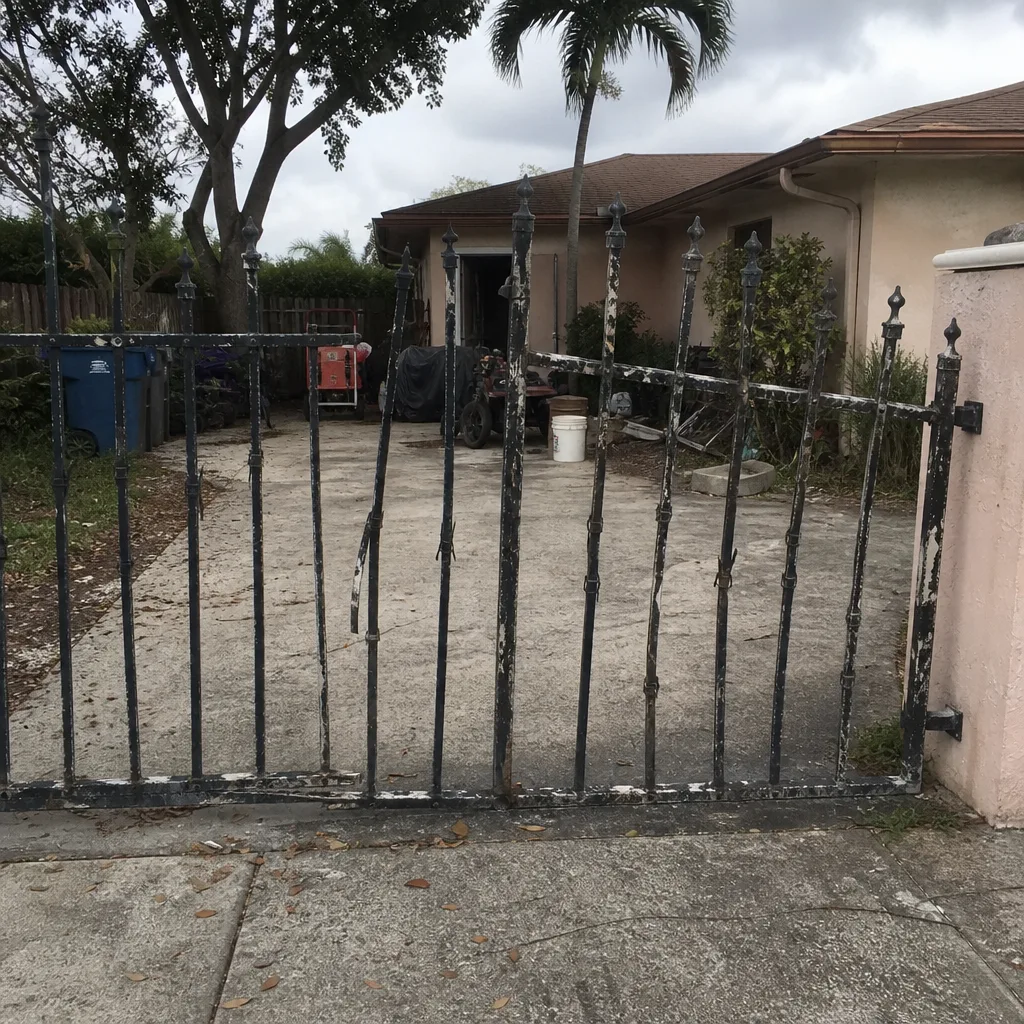 Before
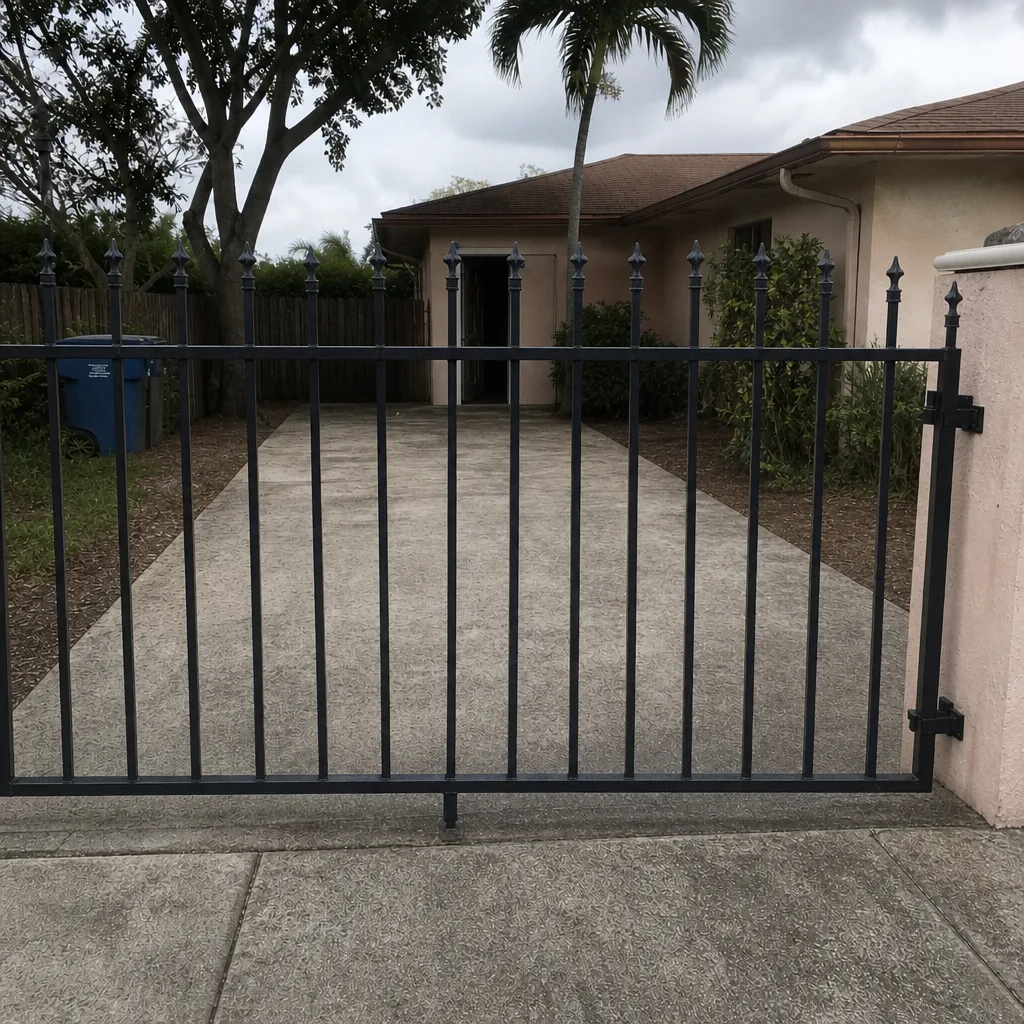 After
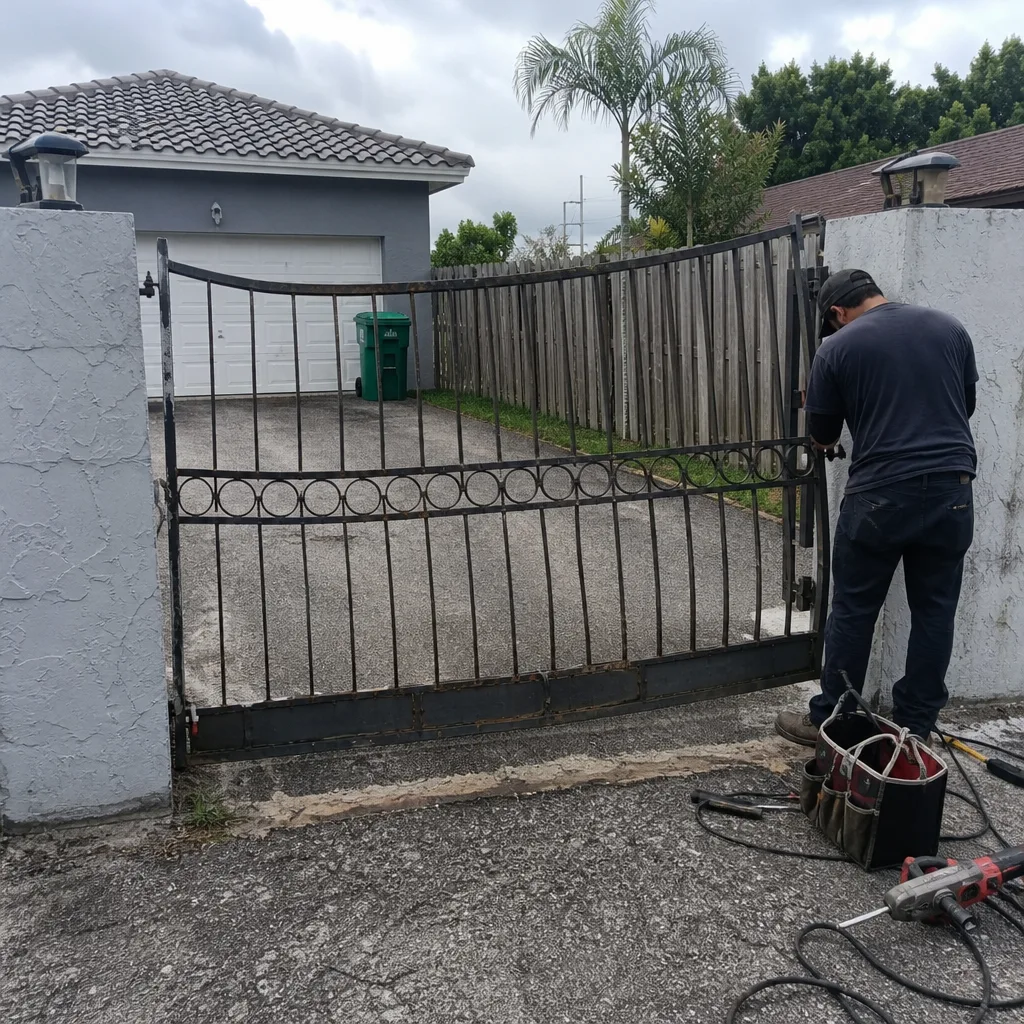 Before
 After
 Before
 After