
Last updated November 15, 2026
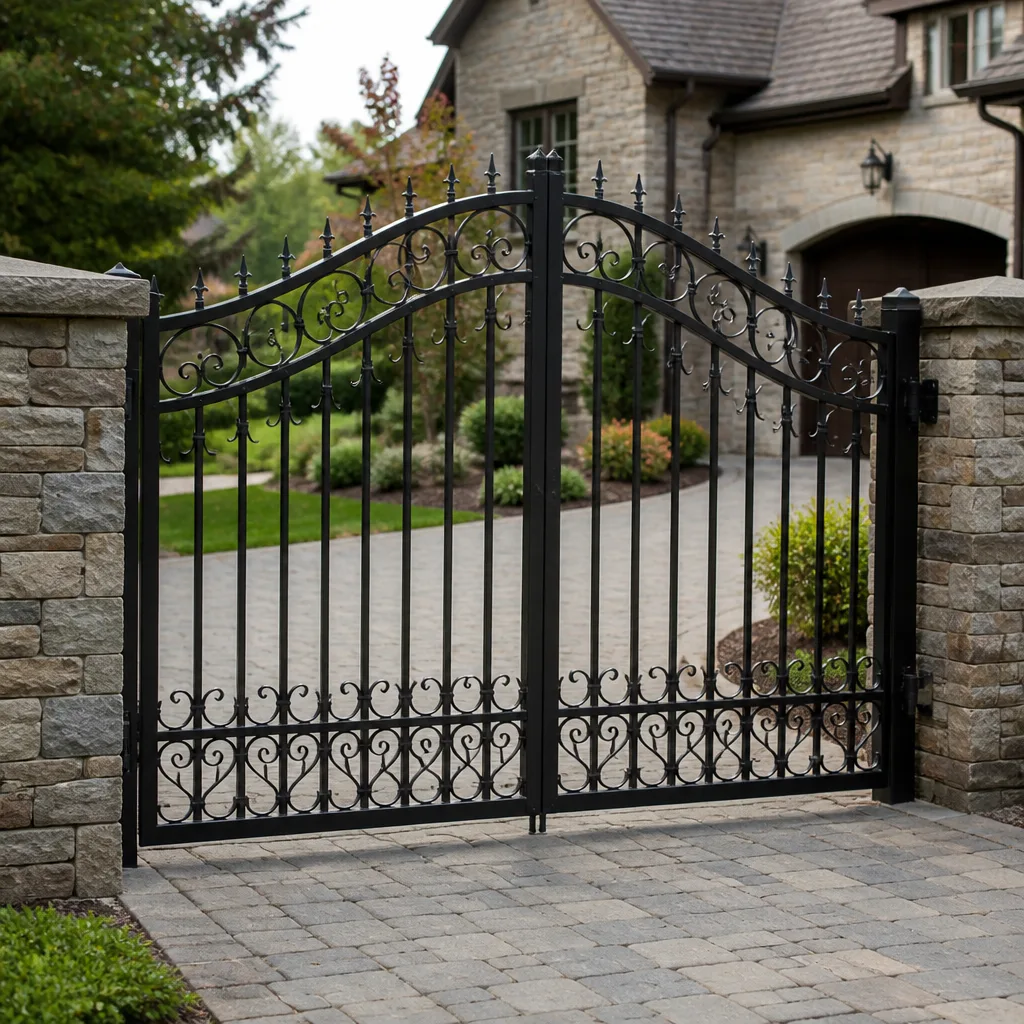 Wrought iron
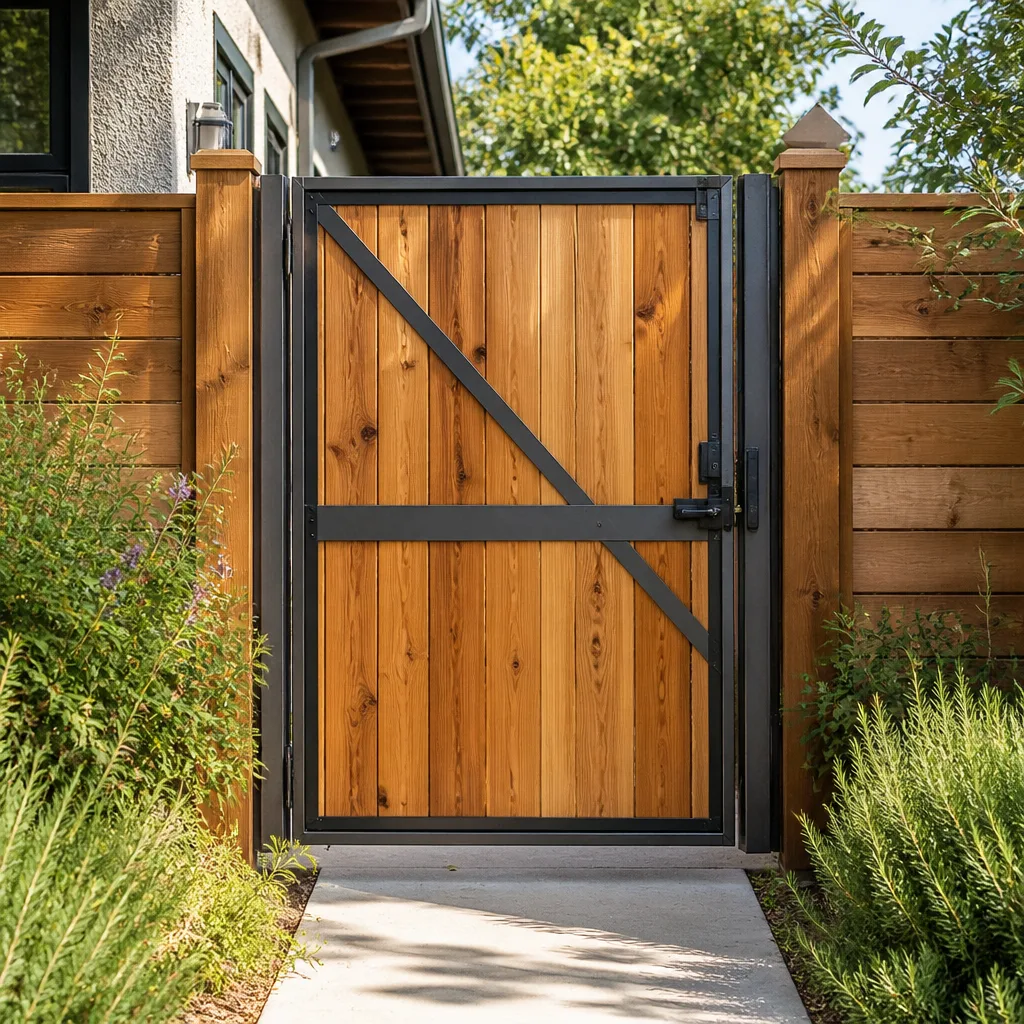 Wood & steel frame
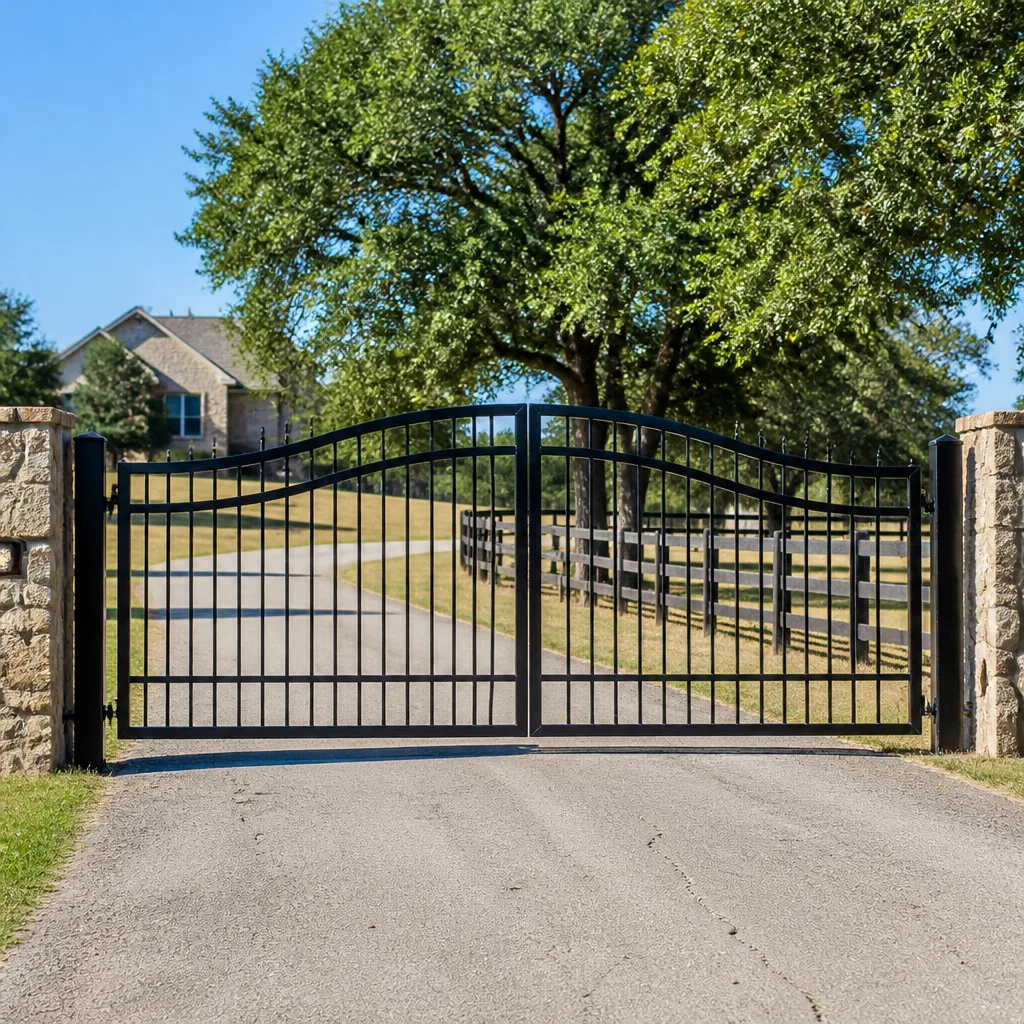 Farm & ranch
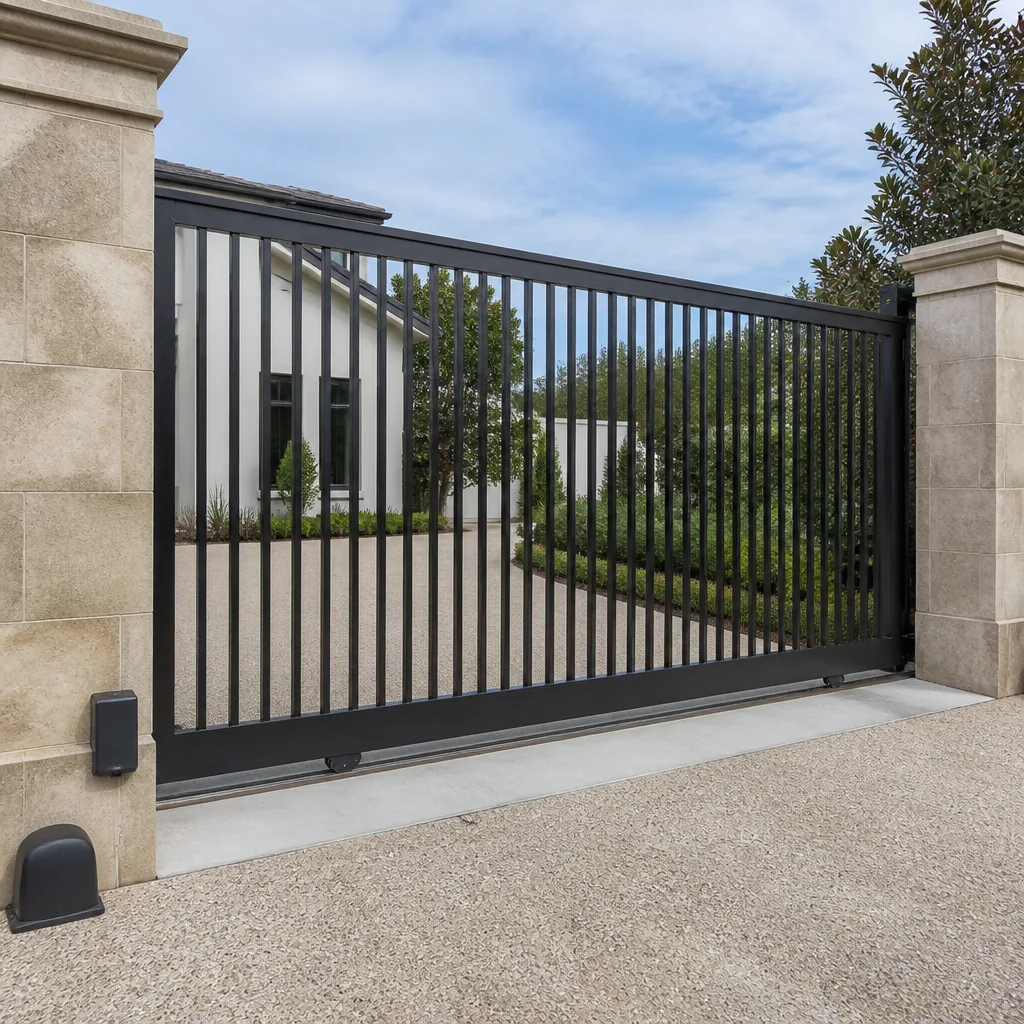 Sliding driveway gates
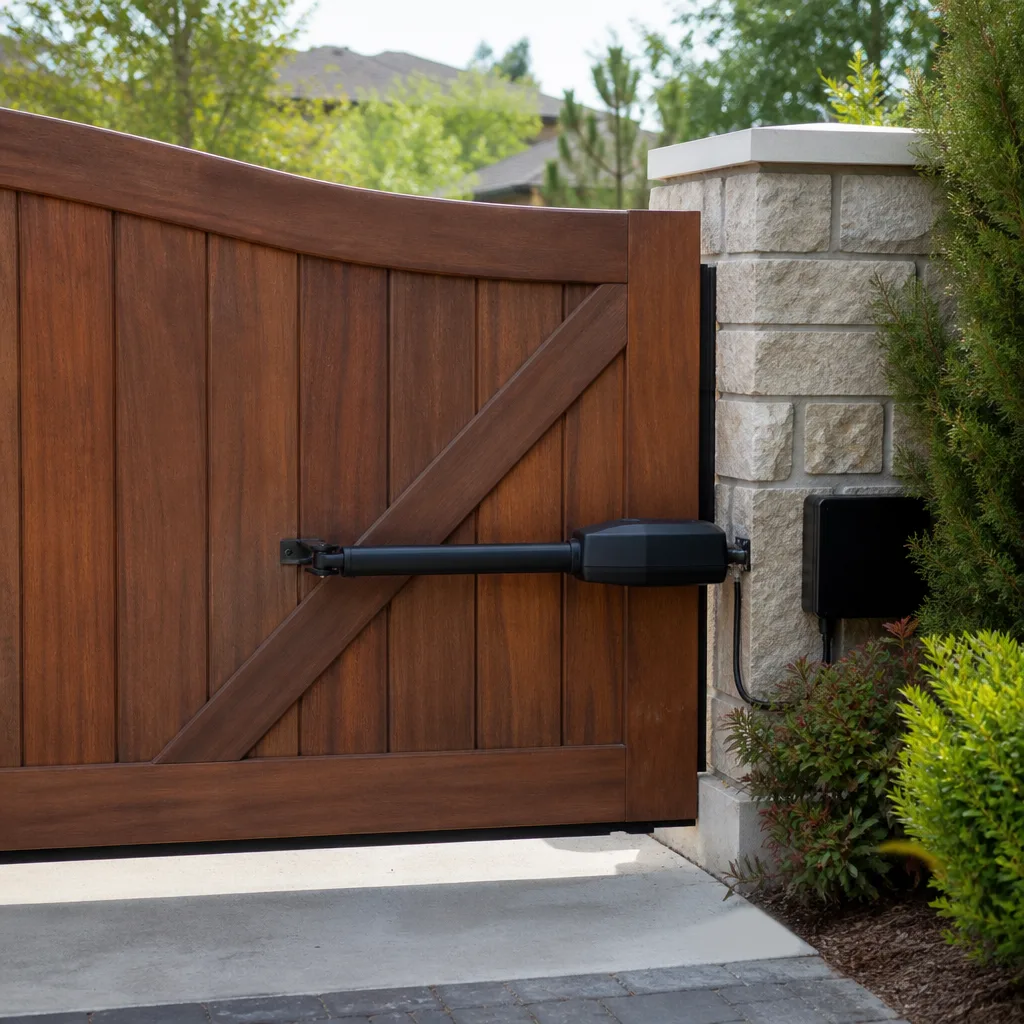 LiftMaster operators
Free on-site gate assessment - hinges, posts, and your LiftMaster or Nice gate operator checked before anything is quoted
The assessment is free and the quote is the invoice.
Get your free estimateThe Complete Guide to Gate Repair in Pembroke Pines
Most Pembroke Pines gate calls that get labeled “motor failure” aren’t motor failures at all. In our experience, the motor is usually fine. The real culprit is often a misaligned limit switch, a corroded logic board connection, or a track that’s drifted a quarter inch out of true. A technician who replaces a motor that didn’t need replacing has just charged you for the wrong part, and the gate will fail again.
Misdiagnosis is the most expensive mistake in gate repair, and it’s the one thing a generalist contractor is most likely to get wrong. This guide maps the failures we see across Pembroke Pines by gate type, not by symptom, so you can understand what’s actually happening before anyone touches your system.
Quick Answer
Gate repair in Pembroke Pines covers diagnosis and correction of manual and automated gates across four main types: sliding iron, swing aluminum, barrier arm, and pedestrian. Most failures trace back to the operator, controls, or hardware rather than the panels themselves, and the fix depends heavily on which gate type you have. A specialist who works on gates exclusively can usually identify the root cause in a single visit and quote a repair before any work begins.
Styles & brands we work with
- Wrought iron
- Wood & steel frame
- Farm & ranch
- Sliding driveway gates
- LiftMaster operators
Table of Contents
- Why Gates Fail in Pembroke Pines
- Sliding Iron Gates: The Failure Hierarchy
- Swing Aluminum Gates: Alignment, Hinges, and Swing Operators
- Barrier Arms and Pedestrian Gates: Commercial and HOA Systems
- How HOA Density Creates Specific Wear Patterns
- Gate Repair vs. Gate Adjustment
- Reading Your Error Code Log Before You Call
- Common Mistakes to Avoid
Why Gates Fail in Pembroke Pines
Gates in South Florida live a harder life than gates in most of the country, and the reasons are predictable. The humidity is relentless, and it does more damage to gate hardware than almost anything else. Logic boards corrode at their connection points, limit switches build up film that blocks their signal, and exposed terminals oxidize until the operator reads a fault that isn’t really there.
That’s the first factor. The second is the housing stock. Pembroke Pines grew fast across several decades, and the gates in this city span a wide range of ages and quality tiers. A gate installed in an older community may still be running on original hardware while a newer community down the road uses a completely different operator platform. There’s no single “typical” gate here – the city has variety, and diagnosis has to account for it.
Humidity exposure is the third and most underestimated factor. Hardware that sits in morning dew and afternoon rain, drying and wetting repeatedly, ages faster than hardware people expect. We’ve seen limit switches and logic board connections go bad long before the mechanical parts show meaningful wear. That’s why the first thing a gate specialist checks isn’t the mechanism. It’s the electronics.
The fourth is high-cycle use. We’ll cover that in detail below, but the short version is this: many gates in Pembroke Pines are running far more cycles per day than the operator was specified for. A system built for a handful of daily open-and-closes can wear prematurely under the traffic of a busy residential community. Knowing that pattern changes how you diagnose a gate that “keeps acting up.”
Put it together and you get a city where gate failures follow recognizable patterns. Our technicians have up to 9 years of experience, and that experience is gate-specific – every service call is a gate call. You can learn more about our Tidewater Gate Repair approach to the work.
Sliding Iron Gates: The Failure Hierarchy
Sliding iron gates fail in a fairly consistent order, and understanding that order helps you avoid replacing parts that are still doing their job. Sliding gates are heavy, they run on a track or a set of rollers, and the operator has to overcome real physical load. When something goes wrong, the symptom is often the same – the gate stops, reverses, or grinds – but the cause usually sits at one of four levels.
Here’s the failure hierarchy we work through:
- Track and roller wear. Debris in the track, worn rollers, or a track that’s shifted out of alignment all make the operator work harder. A gate that struggles can read as an operator fault when the real issue is mechanical drag.
- Limit switch misalignment. This is the most misdiagnosed failure on sliding gates. When the limit switch no longer registers the open or closed position, the operator runs to its safety timeout and stops. Homeowners read that as “the motor died.” It usually hasn’t.
- Control board and connections. Corroded terminals and logic board connections can produce intermittent faults, phantom reversal, and codes that point at the wrong component. Humidity accelerates this.
- Operator motor and gearbox. Genuine motor or gearbox failure is real, but it’s the last thing to check in the hierarchy – not the first.
We work on sliding iron gates with LiftMaster and Elite operators regularly, and the hierarchy holds across both. If the gate runs on a commercial platform like FAAC or DoorKing, the components are different but the diagnostic order is the same. Starting at the bottom of the hierarchy instead of the top is what keeps a repair from becoming an unnecessary motor replacement.
The other thing to know: a heavy sliding gate that comes off the track is a genuine safety concern. Never try to lift or force a panel back onto the track yourself. Call a professional service like our gate repair team and let someone with the right equipment handle it.
Swing Aluminum Gates: Alignment, Hinges, and Swing Operators
Swing aluminum gates are lighter than iron, which sounds like an advantage, and it mostly is. But the lighter panels flex, and that flex puts a different kind of stress on the hinges, the operator arm, and the frame itself. Alignment problems are more common on swing gates than people expect, and they often present as operator faults.
The most common swing gate problems, in order:
- Hinge sag. Over time, hinges wear and the gate drops slightly. That drop throws off the alignment the operator relies on, and the gate starts to bind or reverse.
- Operator arm travel. Swing operators push and pull the panel through an arc, and if the mounting has shifted, the arm travel no longer matches the gate’s arc. This is an alignment and adjustment issue, not a motor issue.
- Frame flex and warping. Aluminum panels can warp under heat and humidity cycling over the years. A warped frame can cause the gate to catch or scrape even when the hardware is sound.
- Photo eye and safety sensor faults. A dirty or misaligned photo eye will stop the gate repeatedly, and it looks like a motor failure. It usually isn’t.
- Control board faults. As with sliding gates, the board and its connections are a frequent culprit, and humidity is often the reason.
We work on a range of swing gate platforms, including residential systems from Ghost Controls and Viking. A Ghost Controls operator and a heavier commercial swing operator fail in different ways, and knowing which platform you have before the visit is exactly why brand fluency saves time. If the panel itself is warped or damaged beyond repair, we can quote a replacement as part of our Pembroke Pines service, so you’re not sourcing a second company to install what the first company couldn’t fix.
Barrier Arms and Pedestrian Gates: Commercial and HOA Systems
Barrier arms and pedestrian gates live in a different world from residential swing and slide gates. They’re built for access control, they’re usually tied to a card reader, keypad, or vehicle loop, and they run much higher cycle counts. That changes the failure profile entirely.
Barrier arms – the kind you see at community entrances and controlled-access properties – fail most often at the arm mechanism, the loop detector, or the access control interface. The arm itself can twist or crack from impact, and a worn counterbalance or pivot causes binding that mimics operator failure. Vehicle loop detectors are a frequent source of phantom triggers and “gate won’t close” calls. DoorKing is a common platform for this type of system, and understanding how the access control layer talks to the operator is half the diagnosis.
Pedestrian gates – walkway gates on card readers or keypads – fail differently again. The locking mechanism, the closer, and the access control electronics are the usual suspects. A pedestrian gate that won’t latch is often an alignment problem at the strike, not a lock problem.
Both of these gate types fall under the same principle: the gate system has layers, and the failure sits in one specific layer. A commercial access control setup has the operator, the safety devices, the access control panel, and the gate mechanism. A specialist who works across commercial platforms reads the whole system rather than just the motor.
If you manage a property and your entrance gate is intermittently holding open or refusing to close, that’s a symptom worth taking seriously. We treat every gate as a security system, and an entrance gate that won’t close is a security gap, not a nuisance.
How HOA Density Creates Specific Wear Patterns
Pembroke Pines has a lot of managed communities, and that density creates a wear pattern you won’t find in areas with more single-family, low-traffic gates. The core issue is what engineers call high-cycle use on low-cycle specification: a gate operator that was sized for a few dozen cycles a day being asked to run hundreds.
Here’s how it plays out. A community entrance gate on a busy residential street opens and closes for every resident, every delivery, every visitor. That’s high cycle volume, day in and day out. An operator spec’d for occasional residential use isn’t built for that duty cycle, and the components that wear first are predictable:
- Limit switches lose accuracy faster under constant cycling.
- Logic boards take more cumulative electrical load, and connection points corrode quicker in humidity.
- Rollers, bushings, and hinges wear at an accelerated rate.
- Safety devices – photo eyes and loops – see far more traffic and get bumped, dirtied, or misaligned more often.
What this means for a property manager or HOA board is that a gate that “keeps breaking” may not be a defective gate. It may be an under-spec’d operator on a high-traffic job. The right answer isn’t another band-aid repair; it’s evaluating whether the operator matches the actual cycle load. That’s a conversation worth having with a specialist who sees this pattern regularly.
For individual homeowners in lower-traffic gates, the wear pattern is gentler but the same components still lead the failure list. Knowing whether your gate is high-cycle or low-cycle tells you what to watch. And for anyone managing a community gate, understanding this pattern is the difference between reactive repairs and getting ahead of the next failure.
Gate Repair vs. Gate Adjustment
This is one of the most important distinctions in gate work, and it’s a place where an unscrupulous contractor can upsell a repair when an adjustment is all that’s needed. A gate adjustment is a correction of alignment, travel, or tension – a limit switch reset, a photo eye realignment, an operator arm travel adjustment, a strike plate alignment on a pedestrian gate. A gate repair is a replacement or correction of a failed component – a motor, a control board, a hinge, a roller, a locking mechanism.
Many gate “failures” are adjustments. A gate that reverses before it closes may just need its limit switch realigned. A swing gate that stops mid-travel may need its operator arm travel corrected. A pedestrian gate that won’t latch may need its strike adjusted a few millimeters. These are legitimate service calls, and they’re priced per job by the written estimate, not by how many parts get replaced.
Here’s the practical test. A good gate technician will tell you which one you’re dealing with and explain why. If a technician recommends replacing a motor without first checking the limit switches, the track, the rollers, the photo eyes, and the control board connections, ask why. The failure hierarchy matters, and a repair should start at the bottom of it.
Where homeowners get taken advantage of is when a failed adjustment gets presented as a failed component. We’ve seen it, and it’s the reason brand fluency and gate-only specialization matter. A specialist who understands your operator platform – whether it’s a LiftMaster, a Ghost Controls, or a heavier commercial FAAC – knows what an adjustment looks like versus a real failure. From a broken hinge to a failed control board, one call covers it, and the diagnosis tells you which.
Reading Your Error Code Log Before You Call
Modern gate operators keep an error code log, and reading it before you call anyone can save you real time. The log records the fault the operator reported when it stopped or reversed, and while the code doesn’t always name the exact failed part, it narrows the field dramatically. Here’s a practical way to read it.
- Find the log. On most operators, the control board has a diagnostic indicator, and many systems store a fault history accessible through the operator interface or a keypad. Check your owner’s manual for how to access it on your specific model.
- Note the most recent codes, not just the last one. A pattern of the same code repeating points at one cause. Random codes point at a connection or power issue.
- Note the error codes and the conditions. Did the gate fail on open, on close, or mid-travel? That context matters, and so does whether it was during a rain event.
- Check the obvious safety devices first. Photo eyes and safety edges trip codes that look like operator faults. A dirty or blocked photo eye produces a code that looks serious but resolves instantly once the obstruction is cleared.
- Write it down and have it ready. When you call, the log tells a specialist where to start before the visit even happens.
Common code families tend to cluster around the same things regardless of brand: limit and position errors, safety device faults, motor and overload conditions, and power or logic faults. On a LiftMaster or a DoorKing, the exact codes differ, but the categories map back to the same hierarchy. Our technicians are trained to service nine major gate brands – LiftMaster, FAAC, BFT, Linear, Viking, Ghost Controls, DoorKing, Elite, and Mighty Mule – so whether your property runs a LiftMaster or a FAAC, we already know the system.
The one thing you shouldn’t do is clear the log without reading it. The history is a diagnostic tool, and once it’s wiped, it’s gone.
Common Mistakes to Avoid
- Replacing the motor before checking the limit switches. This is the single most common and most expensive mistake. A limit switch misalignment looks like motor failure, and it costs a fraction of a motor replacement to fix.
- Confusing an adjustment with a repair. If a technician says you need a new component, ask whether an adjustment was ruled out first. In a humid climate like Pembroke Pines, alignment drift and connection corrosion are frequent and cheap to correct.
- Ignoring safety device faults. A photo eye or safety edge that trips repeatedly is protecting people. Clearing the code without fixing the cause leaves the gate running with a safety gap.
- Assuming a heavy gate on the ground is a track problem. A sliding gate that’s come off its track is dangerous to handle. Don’t force it back into place – call a professional.
- Letting a generalist learn your gate on the job. A contractor who works across many trades has divided attention. A gate specialist has seen your platform before the visit.
- Skipping the error code log. The log is a record of what the operator already knows. Reading it before you call speeds up the diagnosis and narrows the likely fix.
- Overlooking HOA cycle load. A community gate that keeps failing may be under-spec’d for its traffic. Repeated small repairs won’t solve a mismatch between the operator and the real cycle count.
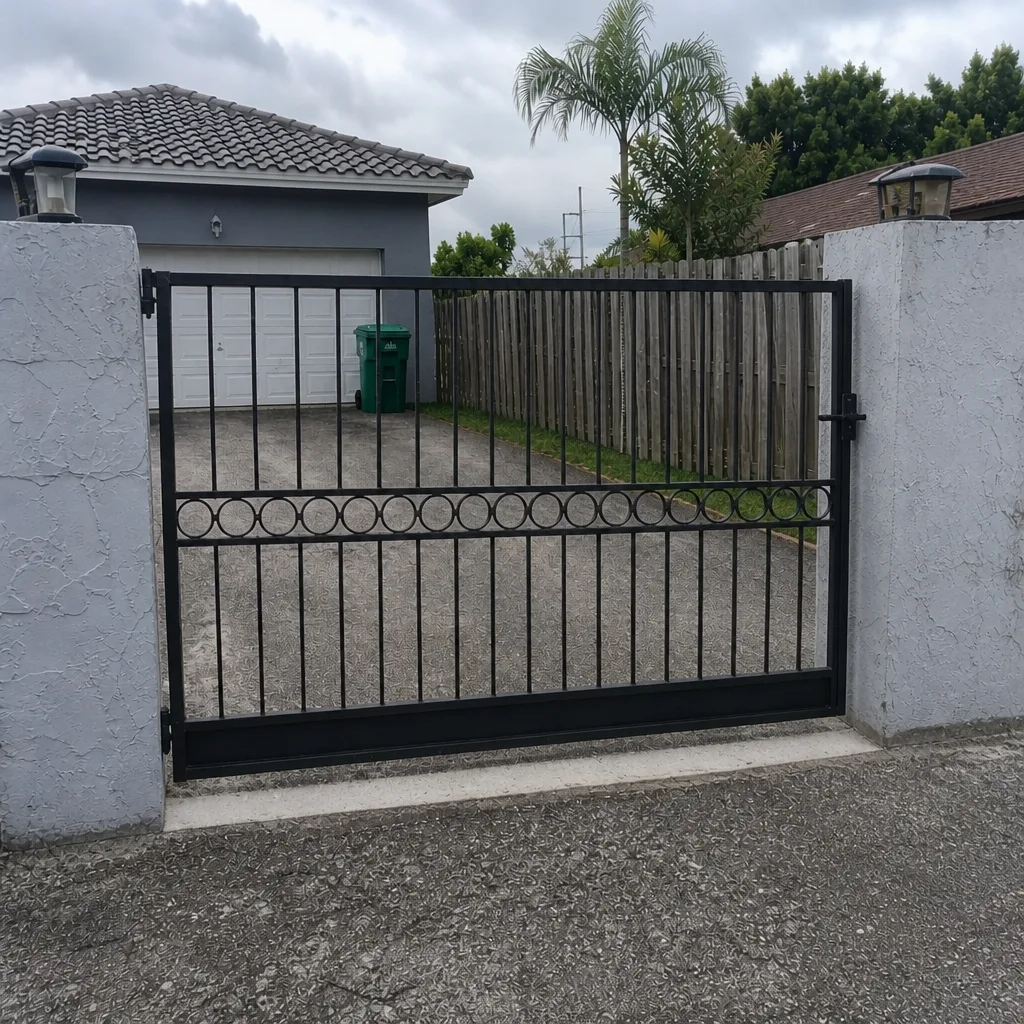
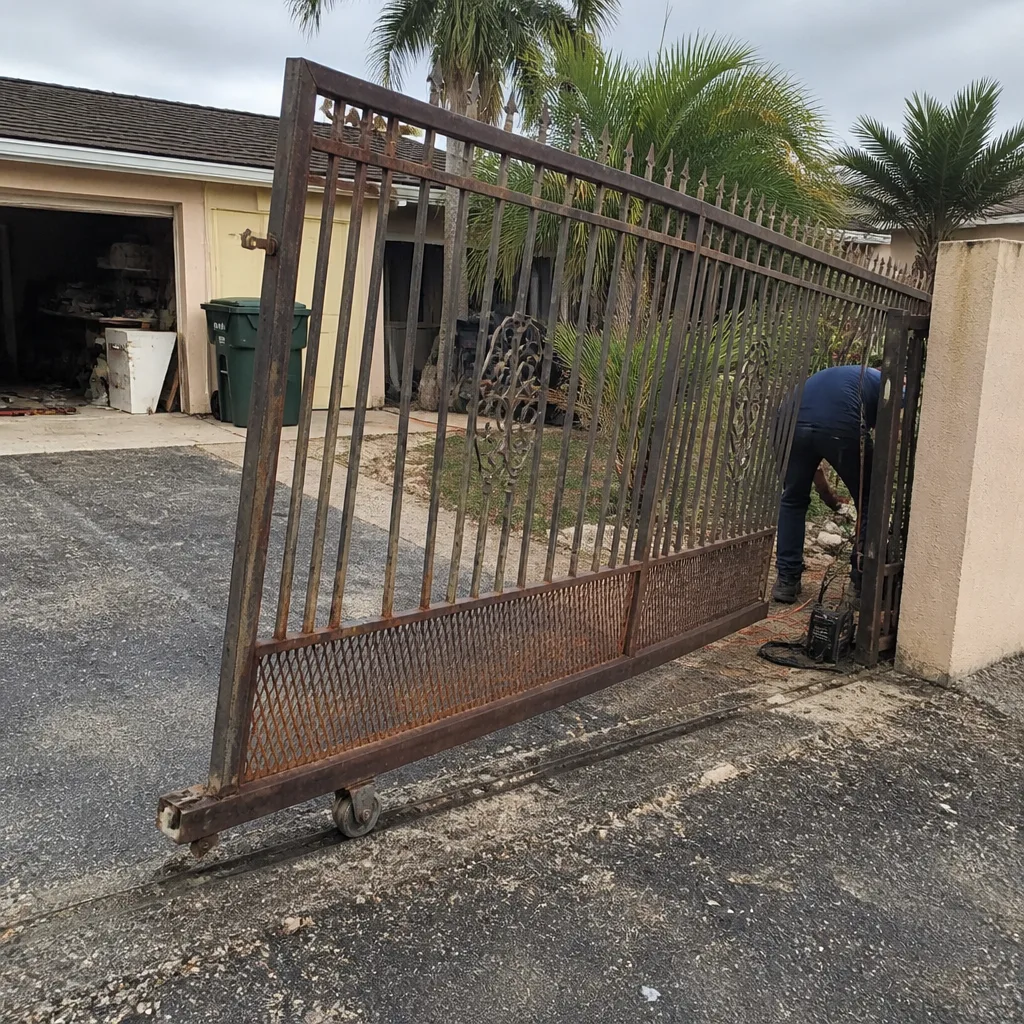
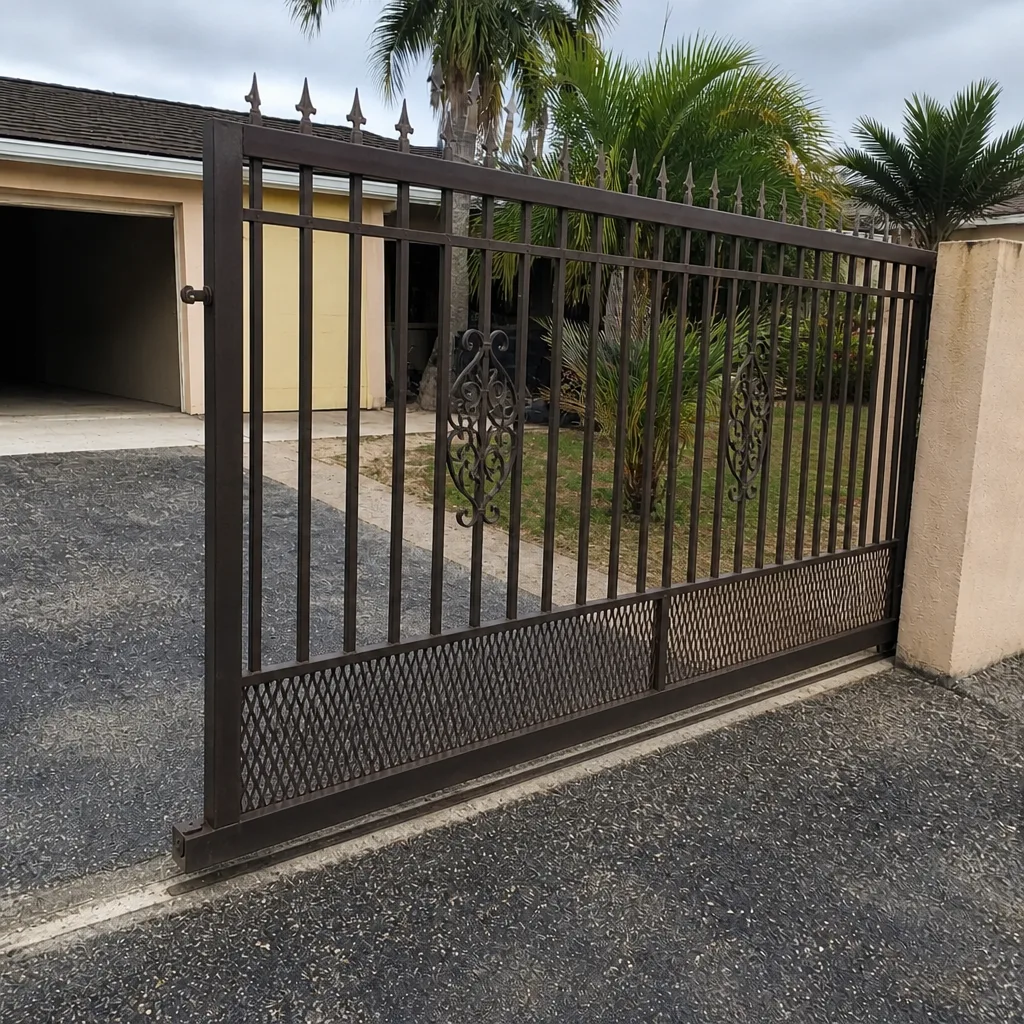
See the difference
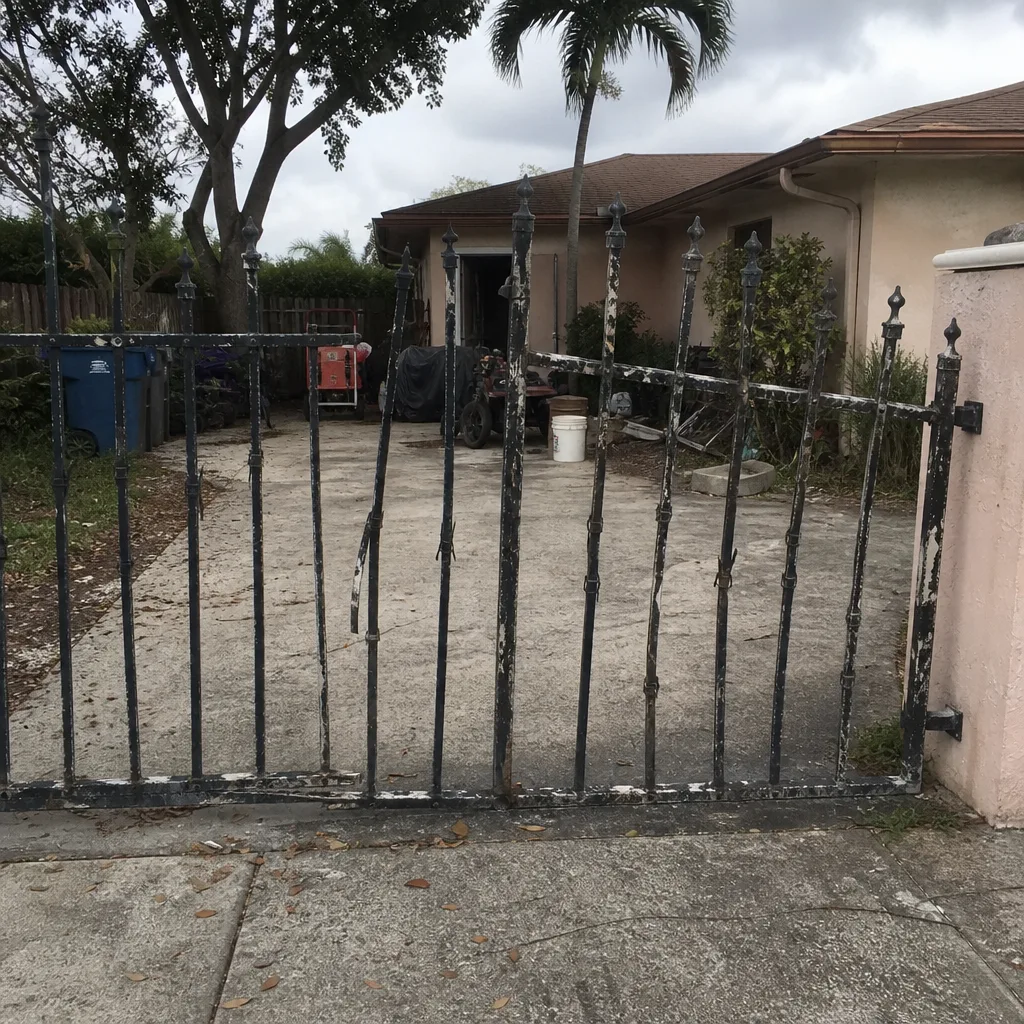 Before
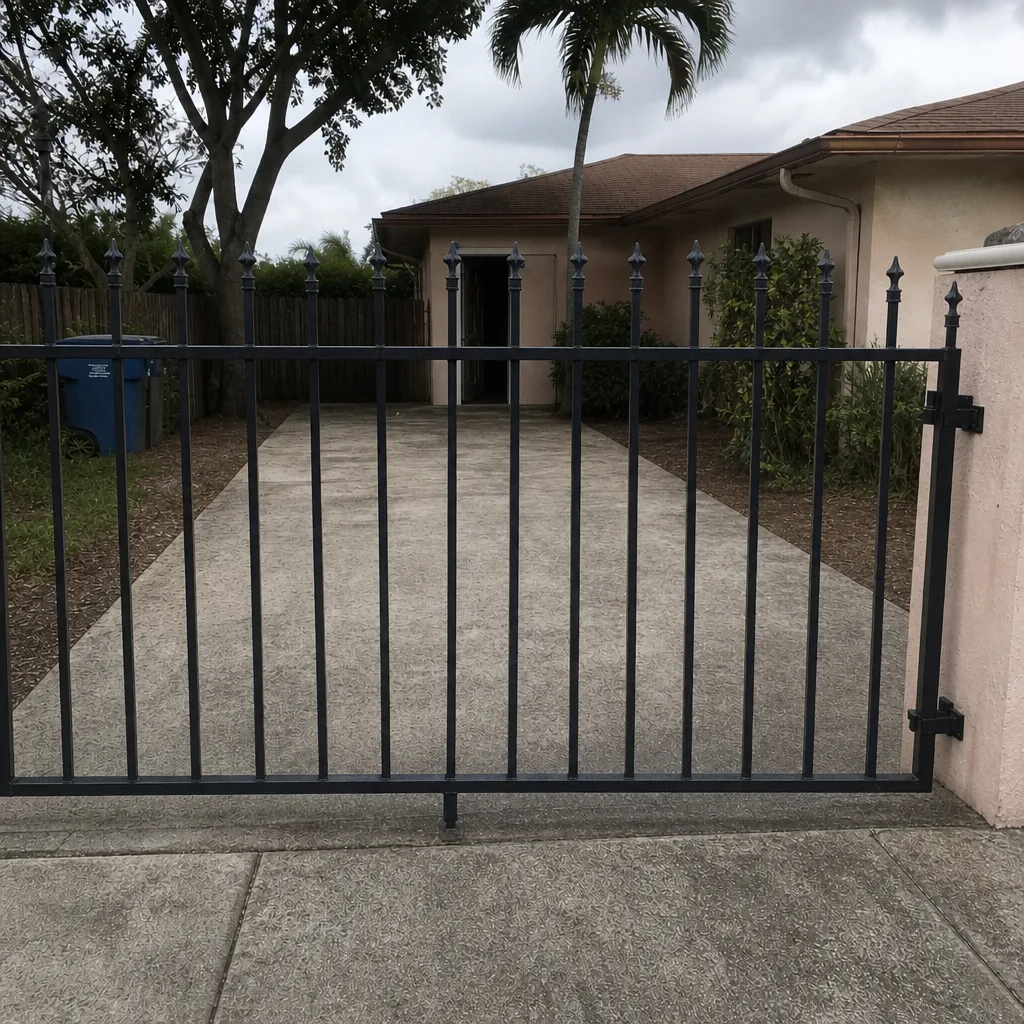 After
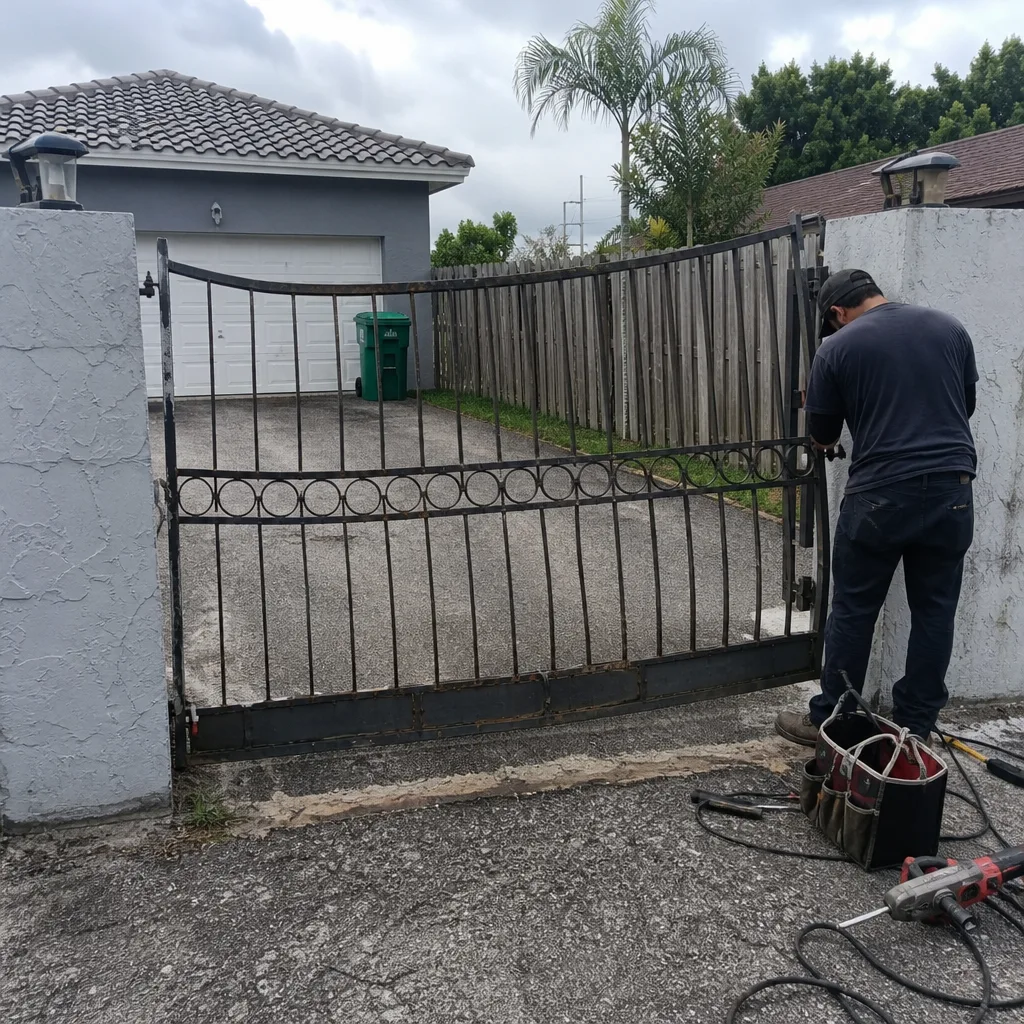 Before
 After
 Before
 After
When to Call a Professional
Some gate problems are safe to observe; others need a trained technician. Call a professional when a sliding gate has come off its track, when a gate operator is producing repeated fault codes, when a swing gate is binding or reversing consistently, when a pedestrian gate won’t latch or close fully, or when a commercial barrier arm is holding open or repeatedly triggering. Electric gate faults deserve particular care – the wiring, the power supply, and the control board carry real electrical risk, so don’t open a control enclosure and poke around if you don’t know the system. A failed operator or control board on a commercial access gate is also a security issue that shouldn’t wait. Tidewater Gate Repair offers free estimates in Pembroke Pines – call (877) 748-7198. We answer 24/7, with fast dispatch from 7am to 7pm, Sunday through Friday.
Frequently Asked Questions
The cost depends on the gate type and the failed component, and we price every job individually through a written estimate before any work begins. A simple adjustment or limit switch correction costs less than a control board or motor replacement. There’s no separate service-call fee or diagnostic charge – the estimate is free. Because a repair can range from an adjustment to a full component replacement, the written estimate is the only reliable way to know. Call (877) 748-7198 for a free estimate.
Same-day service is available for repair calls, and a gate that won’t close on a security property gets priority. We answer 24/7, with fast dispatch from 7am to 7pm, Sunday through Friday. A call outside dispatch hours is booked into the next opening. Call (877) 748-7198.
Yes – electric gate repair is one of our three defined services, alongside standard gate repair and gate installation. That covers operators, control boards, limit switches, safety devices, and access control interfaces. We work on both residential and commercial systems, including LiftMaster and Ghost Controls on the residential side and DoorKing and FAAC on the commercial side. Call (877) 748-7198 for a free estimate.
A gate that reverses before closing is almost always tripping a safety device or a limit switch, not failing mechanically. A misaligned or dirty photo eye, a safety edge fault, or a limit switch that no longer registers the closed position will all cause the operator to reverse. Check for physical obstructions at the photo eyes first, then read the error log. We can diagnose it in a single visit. Call (877) 748-7198.
Yes – the company services both residential platforms and commercial and HOA systems. That means a single-family swing gate running a Viking operator and a community entrance gate running a DoorKing or FAAC system are both within what we handle. Call (877) 748-7198 for a free estimate.
Most gate problems are repairable, and the failure hierarchy should be worked through before replacement is considered. If the operator, controls, and hardware are sound but the gate keeps failing, the real question may be whether the operator matches the cycle load – especially on high-traffic community gates. If the gate itself is warped, cracked, or damaged beyond repair, we also handle new installation, so the repair-and-replace decision can happen with one specialist. Call (877) 748-7198.
The Bottom Line
Gate failures in Pembroke Pines follow patterns, and once you know them, the guesswork disappears. The motor is rarely the first thing to check; limit switches, control board connections, safety devices, and humidity-driven corrosion are the usual culprits. The fix depends on your gate type – sliding iron, swing aluminum, barrier arm, or pedestrian – and on whether you’re dealing with an adjustment or a true repair. An HOA-heavy community gate may be under-spec’d for its cycle load, and knowing that changes the conversation. Read your error log, understand the failure hierarchy, and call a gate specialist. Call (877) 748-7198 for a free estimate. We answer 24/7, with fast dispatch from 7am to 7pm, Sunday through Friday.
Written by the team at Tidewater Gate Repair.