
Last updated November 15, 2026
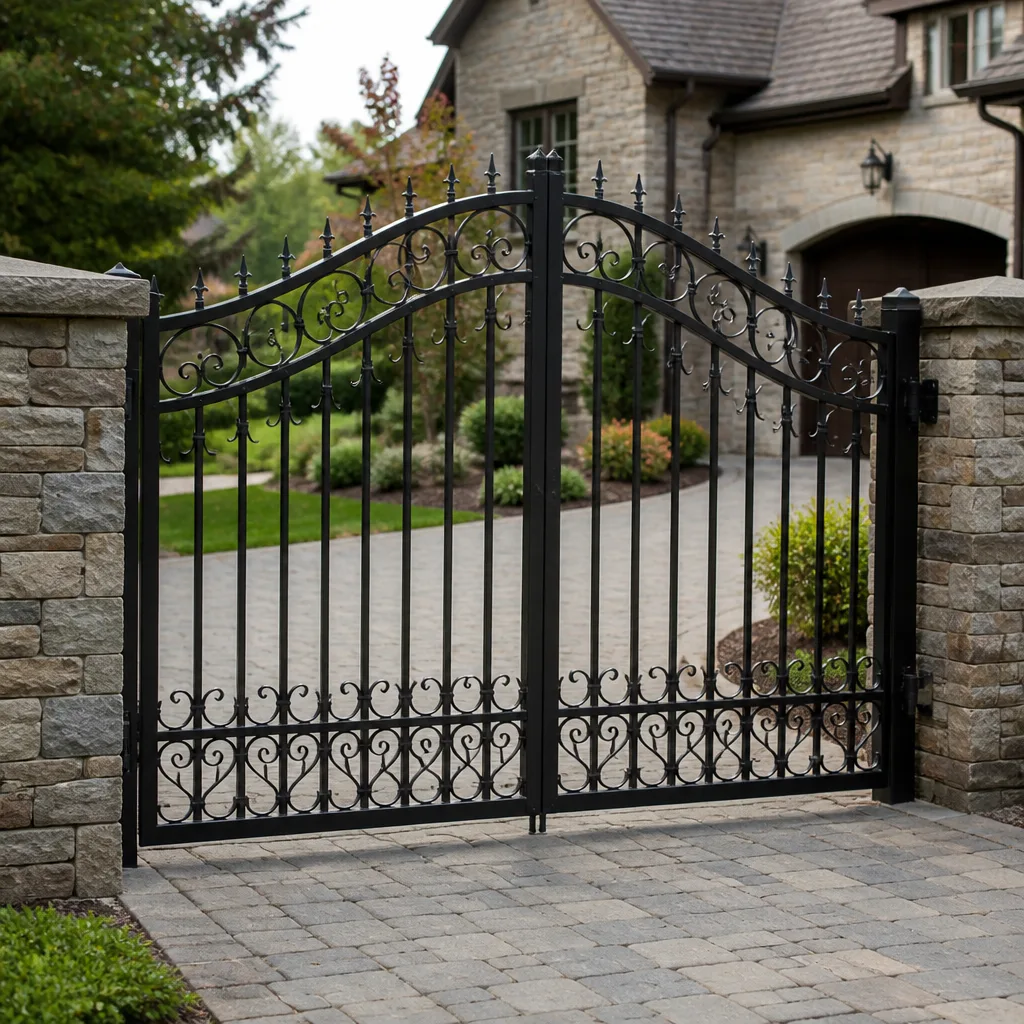 Wrought iron
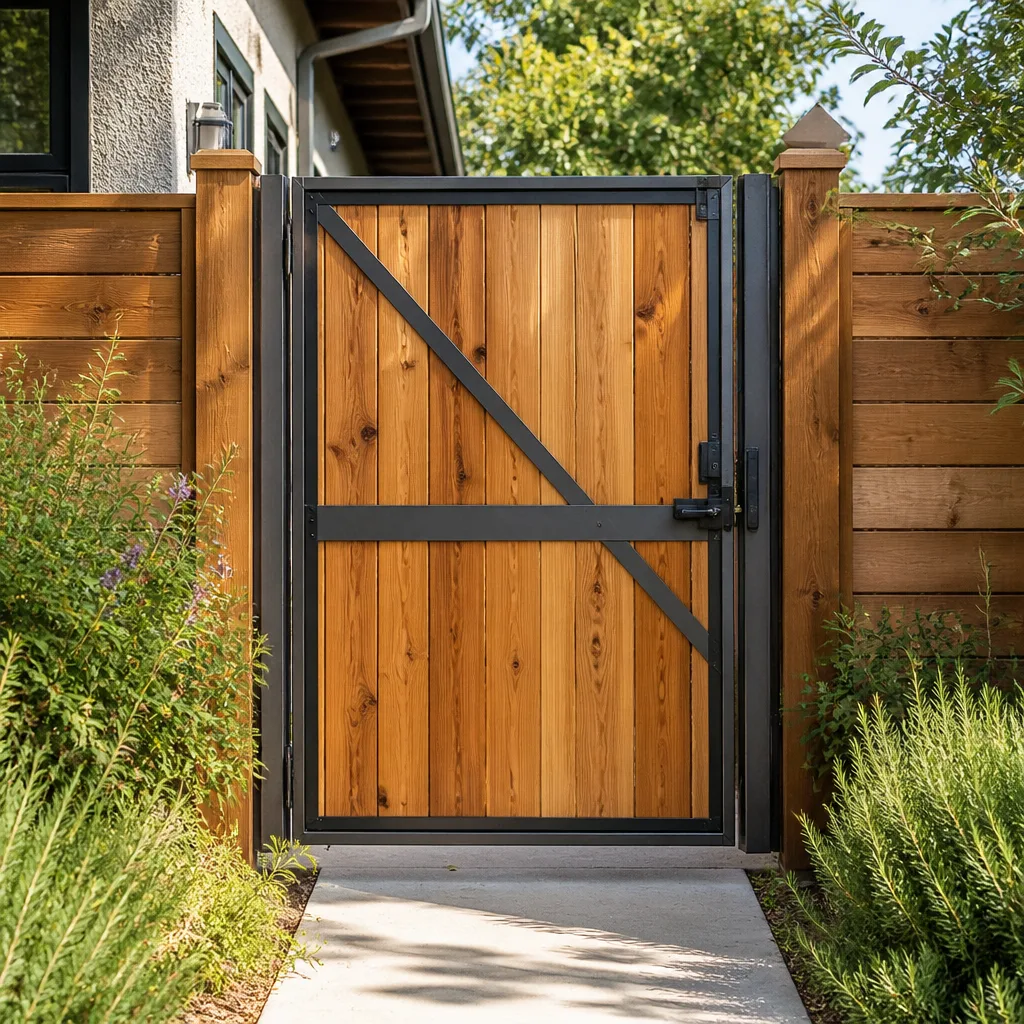 Wood & steel frame
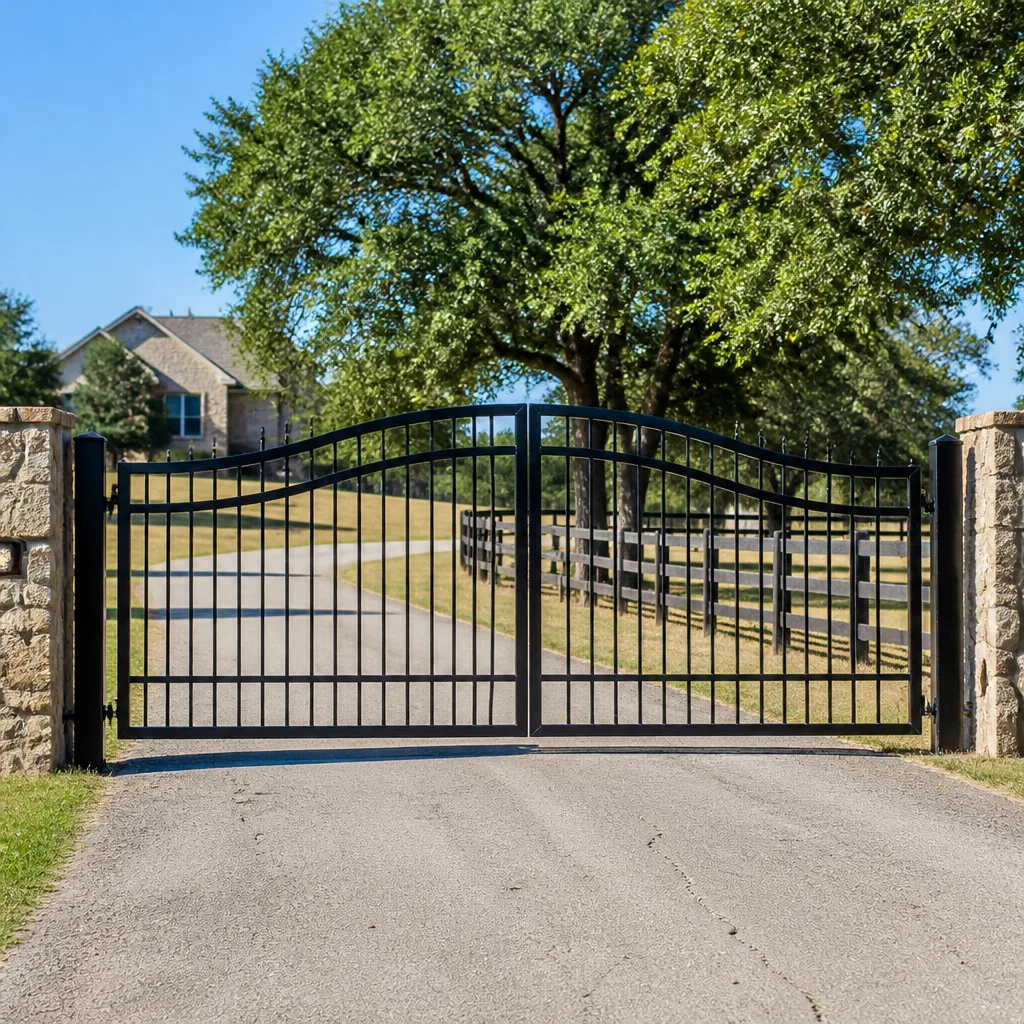 Farm & ranch
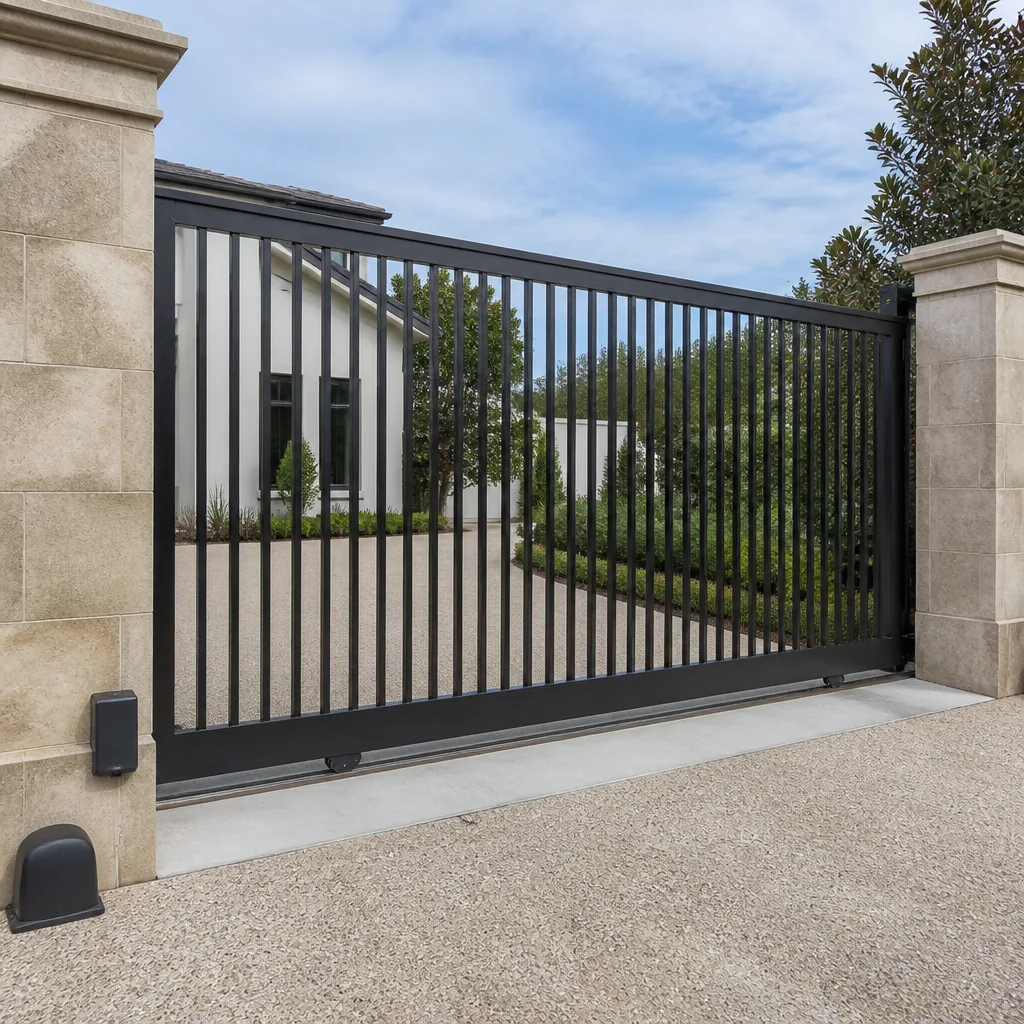 Sliding driveway gates
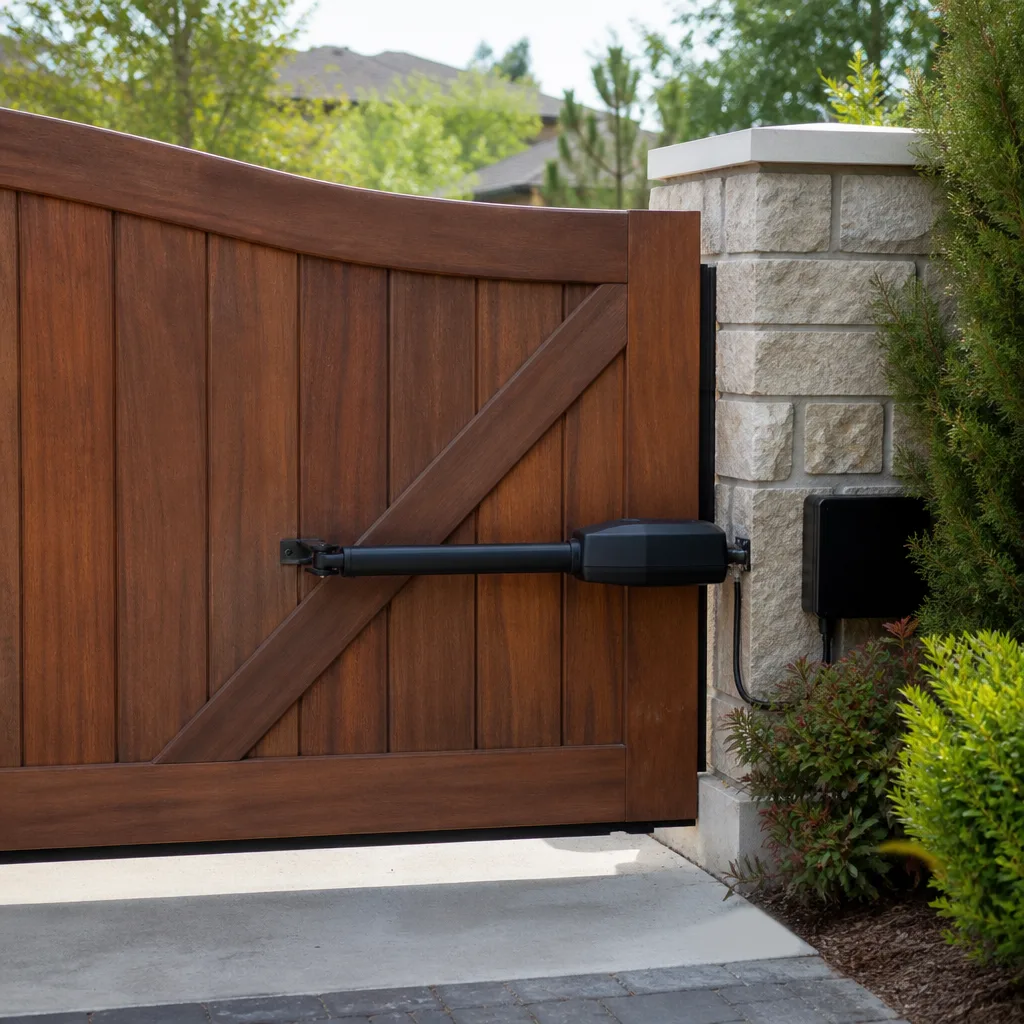 LiftMaster operators
Free on-site gate assessment - hinges, posts, and your LiftMaster or Nice gate operator checked before anything is quoted
The assessment is free and the quote is the invoice.
Get your free estimateGate Repair Permits, Codes & Inspections in Pembroke Pines, FL: What You Need to Know
Most gate work in Pembroke Pines doesn’t need a permit. Replacing a hinge, swapping a remote, or rebuilding a sagging latch is routine repair, and nobody from the city needs to look at it. The confusion starts when the work crosses into something structural or electrical, because that’s where a simple repair becomes permitted construction, and where an invoice from a few years ago can quietly turn into a paperwork problem when you sell your home. This guide draws the line clearly: what counts as like-for-like replacement, what triggers a permit, how inspections actually run, and where HOA architectural review overlaps with the city’s process.
Quick Answer
In Pembroke Pines, routine gate repair like replacing hinges, rollers, latches, or an existing motor with the same model generally doesn’t require a building permit. New gate installation, structural changes to posts or framing, and new or upgraded electric gate operators usually do, and those permits run through Broward County’s building code process with a UL 325 inspection. If you’re unsure which side of the line your job sits on, the answer is to call and ask before work starts.
Styles & brands we work with
- Wrought iron
- Wood & steel frame
- Farm & ranch
- Sliding driveway gates
- LiftMaster operators
Table of Contents
- Where the Permit Line Actually Falls in Pembroke Pines
- What “Like-for-Like Replacement” Really Means
- How HOA Architectural Review and City Permits Overlap
- UL 325 Compliance and What an Inspector Checks
- What Happens on Inspection Day
- How to Check Whether Prior Gate Work Was Permitted
- How to Verify a Contractor Is Pulling Permits Correctly
- Why South Florida Conditions Shape Gate Compliance
Where the Permit Line Actually Falls in Pembroke Pines
The clearest way to think about it: Pembroke Pines permit rules track what the work changes, not how much it costs. A repair restores a gate to the condition it was already in. A permit applies when you’re introducing something new to the property – a gate that wasn’t there, a taller or wider gate, a different post configuration, or a motorized operator where only a manual gate existed before.
Here’s how the split typically looks:
- No permit usually needed: hinge and roller replacement, latch and lock repair, straightening a bent frame, replacing a track roller, swapping a remote or keypad, replacing a control board with the same unit.
- Permit typically required: a brand new gate installation, replacing an operator with a different model or a higher-capacity unit, changing the gate’s structural footprint, adding or altering the electrical circuit feeding the operator, and any work that changes how the gate opens onto a public right-of-way.
- Grey zone: replacing a failed operator with the identical model. Some jurisdictions treat an exact same-model swap as repair; others want to see a permit because the operator is a listed electrical device attached to a structure. This is exactly the kind of question to settle with the city’s building department before the technician arrives, and a gate-only company deals with it often enough to know what to ask.
If you’ve been putting off a gate repair in Pembroke Pines because you’re worried the job will balloon into a permit process, that’s usually not the case. Most calls we handle are pure repair – the gate moves wrong, the operator clicks and does nothing, the panel has dropped off its track. Those are maintenance. The permit question applies to construction and new equipment, and it helps to know which bucket your problem belongs to before you call.
One more thing worth saying plainly: whether or not a permit applies, the price is quoted and agreed before any work starts. You’ll know what the job costs before a technician touches the gate, and the written estimate sets the final number.
What “Like-for-Like Replacement” Really Means
Like-for-like replacement means putting back the same component, of the same type, in the same location, with the same capacity. It’s the phrase that decides whether your job needs a permit, and it gets stretched in ways that cause problems later.
Two examples make the difference clear. Replacing a burned-out LiftMaster control board with the same board model is like-for-like. Replacing a light-duty residential operator with a heavier commercial-grade FAAC unit because the gate has gotten heavier over the years is not, even though the gate itself looks unchanged. The first is repair. The second is an equipment upgrade, and upgrades get inspected.
What counts as genuinely like-for-like:
- Same component category – a roller for a roller, a hinge for a hinge, an operator for an operator.
- Same model or a direct equivalent – not a larger, faster, or higher-duty unit.
- Same mounting points and same wiring path – no new conduit, no rerouted power.
- Same safety configuration – if the original gate had photoelectric sensors, the replacement keeps them and they work.
Where it gets murky is when a gate has been modified over the years. In older Pembroke Pines neighborhoods, we run into gates that have been patched, widened, or repowered more than once, and the current setup doesn’t match what was originally installed. Replacing a component on a gate that’s already been changed in ways nobody documented makes the like-for-like call harder. That’s the moment to slow down and ask the building department directly rather than assume.
Our technicians have up to 9 years of experience working across both residential platforms like Mighty Mule and Ghost Controls and commercial systems, and the honest answer in these cases is usually: let’s find out what’s actually installed before we decide how to replace it.
How HOA Architectural Review and City Permits Overlap
Here’s the part that surprises homeowners most: getting a city permit doesn’t mean your HOA has approved the work, and getting HOA approval doesn’t mean you’re clear to build. Both processes can apply to the same gate, and they run on completely separate timelines.
Pembroke Pines has a substantial stock of deed-restricted communities, and if your property sits inside one, architectural review is almost always a separate step from municipal permitting. The two processes don’t talk to each other. Your HOA is looking at appearance, style, height, color, and materials. The city is looking at structural integrity, electrical safety, and code compliance. A gate that passes one can fail the other, and the failure is usually expensive because you’re redoing work or repainting it.
How the overlap usually plays out:
- HOA review first, in most communities. Submit your plans, photos, and specifications to the architectural review committee before you schedule the work. Approval windows vary by community, so budget time for it.
- City permit alongside or after. Once the HOA signs off, the permit process can run. In some communities the HOA will ask to see your permit number before final sign-off. Others want to see it up front.
- Both apply to the finished product. The gate has to look right per HOA and function safely per code. Neither approval is a substitute for the other.
The practical takeaway: if your home is in an HOA, the gate decision starts there, not with the permit. Skipping that step gets you a gate that meets code and violates your deed restrictions, which can mean removing or repainting work you just paid for. Tidewater Gate Repair works with properties across Pembroke Pines and we’re familiar with how these reviews tend to frame gate specifications – but the approval itself is always between you and your community’s architectural committee.
UL 325 Compliance and What an Inspector Checks
UL 325 is the safety standard for gate operators and automated gate systems in the United States. It’s the standard that governs how an operator must detect obstructions and reverse to prevent injury, and it’s what an inspector will reference when signing off on a permitted electric gate installation. If your operator doesn’t meet it, the inspection fails, and the work can’t close out.
What UL 325 requires, in practical terms, is that the operator system include some method of entrapment protection. That’s usually a combination of:
- Built-in inherent entrapment protection – the operator senses resistance or stall and reverses.
- External sensors – photoelectric eyes across the gate path, or edge sensors on the gate leaf.
- Audible and visual warnings that the gate is about to move.
Most residential operators we service, from Mighty Mule up to heavier residential platforms, ship with some combination of these. The failure isn’t usually the operator itself – it’s the install. Sensors mounted too low, sensors improperly aligned, sensors disabled because they kept tripping, edge sensors that were never wired in at all. An inspector looks for these, and a gate that’s been working fine for years can still fail because the safety setup was incomplete from the start. That’s why the electric gate repair conversation and the permit conversation so often overlap – you’re fixing what was never done right the first time.
Our technicians are trained on operators from Ghost Controls, DoorKing, and other brands that appear on both sides of the residential and commercial divide, and the pattern we see across Pembroke Pines is remarkably consistent: a previous installation lacked the paired safety devices, and the gate passed unnoticed until someone tried to permit work years later.
What Happens on Inspection Day
An inspection for gate work is brief, focused, and not something to over-dramatize. The inspector shows up, meets you or your contractor on site, and works through a checklist. The whole visit often runs 20 to 40 minutes, less if everything is right, longer if it isn’t.
- Verify the permit. The inspector confirms the permit matches the work being performed.
- Visual inspection of structure. Posts, hinges, frame and gate leaf are checked for the installation being consistent with what was permitted.
- Operator and controls. The control panel is opened and wiring is examined for code compliance, proper grounding, and correct disconnects.
- Safety devices. Photoelectric sensors, edge sensors, and warnings are tested for function. The inspector will trigger a sensor and watch the gate respond.
- Operational test. The inspector operates the gate through a full cycle, checking the reversal, the limits, and the timing.
- Sign-off or correction notice. If the work passes, the permit closes. If not, a correction list is issued and a re-inspection is scheduled once the issue is fixed.
What fails inspections most often in our experience: sensors that were aligned but drifted, wiring that was run in a way the inspector doesn’t accept, and structural work that doesn’t match what was on the permit drawings. The third one is the painful one, because the fix can mean modifying the gate itself.
The lesson is that an inspection is not the first time the work should be checked against the standard. A gate specialist who knows what an inspector will look for will catch those issues before the inspection. If your permitted gate work needs a repair first, the electric gate repair assessment is where a real inspection begins.
How to Check Whether Prior Gate Work Was Permitted
If you didn’t install the gate and you’re not sure the work was permitted, you can find out. It takes a phone call or an online lookup to the city or county, and it’s worth doing before you sell, refinance, or do more work on the gate.
The way to check:
- Gather whatever paperwork exists – the previous seller’s disclosures, any contractor invoice, any HOA approval record.
- Check with the City of Pembroke Pines building department and Broward County for a permit history at the property address. Permit records are searchable and usually free to view.
- Compare the permit scope against what’s actually installed – a permitted manual gate with a motor bolted on later is not covered by the original permit.
- If the work wasn’t permitted and it’s the kind of work that required a permit, ask about the retroactive permit process. In Broward County, retroactive permits are usually available but often require a site inspection before approving, and sometimes require opening up finished surfaces.
If it turns out the prior work was unpermitted, you have two realistic paths. Pull the retroactive permit and fix anything the inspection flags, or disclose it to a buyer and negotiate. Both are far cheaper than discovering the issue during a title search two days before closing. In our experience, most sellers discover the problem late precisely because they never thought to check a gate installation from years earlier.
How to Verify a Contractor Is Pulling Permits Correctly
Anybody with a truck can say they’re pulling a permit. Verifying it is straightforward if you know where to look, and it protects you from inheriting a problem that outlasts the repair.
- Ask for the permit number before work begins. The permit number is issued when the application is filed. If the contractor can’t produce it up front, the permit wasn’t pulled.
- Confirm the permit matches the work. A permit for structural work doesn’t cover an operator installation. A permit for a fence doesn’t cover a gate. Read the scope.
- Check the permit records yourself. City and county databases are public. Look up the address and confirm the permit appears.
- Ask who’s pulling it. Whichever contractor is responsible for the work should be the one pulling the permit and named on it. If they’re asking you to pull a homeowner permit to save a step, that’s a signal the job may be outside their normal work.
- Confirm the inspection is being scheduled. A permit with no scheduled inspection isn’t a completed job. The final inspection closes the permit and gives you the documentation that protects you at sale.
A gate specialist isn’t just someone who knows the hardware. They know the permit structure around their work, which is why this conversation sits naturally inside gate repair rather than being bolted on as an afterthought. When the gate fails and the paperwork question follows, you want a team that’s already familiar with both.
We work on gates – only gates. Every service call is a gate call. That focus means our technicians aren’t guessing at what the city expects on a permitted installation, because it’s part of the job, not a sideline.
Why South Florida Conditions Shape Gate Compliance
Broward County’s climate shapes how gate hardware ages and how long permitted work lasts before it needs repair. The combination of sustained heat, intense summer sun, and heavy rainy-season downpours puts specific stress on gate systems, and it matters for anyone planning permitted work.
What we see repeatedly across Pembroke Pines:
- Operators fail faster than in milder climates. Control boards and motor capacitors run hot, and heat is the biggest single killer of residential gate operators. A unit that would last a decade in a cooler market often shows failure sooner here.
- Hinges and rollers wear. Rain and humidity accelerate the wear on metal moving parts, especially where lubrication has lapsed. Rust on a hinge reduces the gate’s swing clearance and strains the operator.
- Sensor alignment drifts. Photoelectric sensors need clean, aligned optics. Heavy rain and dust from nearby construction can misalign them or dirty the lens, and a misaligned sensor is one of the most common inspection failures.
- Wood and finish degrade. A gate that’s part of an HOA-approved visual scheme needs a finish that holds up under South Florida sun and rain. That’s a maintenance issue, but it’s an HOA compliance issue too.
None of that changes the permit rules, but it’s relevant to them. A permitted installation is supposed to last, and in Pembroke Pines gate hardware takes more punishment from the climate than in cooler parts of the country. It’s one more reason to have a specialist do the work with the right equipment, rather than a generalist who happens to install gates.
Common Mistakes to Avoid
- Assuming no permit is ever needed. Repair generally doesn’t need one. New installation, structural changes, and new or upgraded operators usually do. The line isn’t obvious, and guessing wrong is what creates problems later.
- Getting the HOA approval after the permit. In an HOA community, that order can end in a tear-out. Check the architectural rules first, then pull the permit.
- Treating a same-model operator swap as automatically permitted-exempt. Exact-model replacements are often treated as repair, but the exact rule belongs to the building department. Confirm before installing.
- Assuming the operator alone is UL 325 compliant. The standard covers the complete system – the operator, the sensors, and the warnings. An operator installed without the paired safety devices can fail inspection even if the unit itself is compliant.
- Never checking whether prior work was permitted. This is the mistake that costs the most at sale. Checking is free. Ignoring it is not.
- Paying a contractor who says “the permit isn’t necessary.” Sometimes that’s true. When it isn’t, you carry the risk, and “we didn’t know” doesn’t fix the title problem.
- Skipping the final inspection. An open permit is a headache at sale even when the work was done perfectly. Get the final sign-off and keep the paperwork.
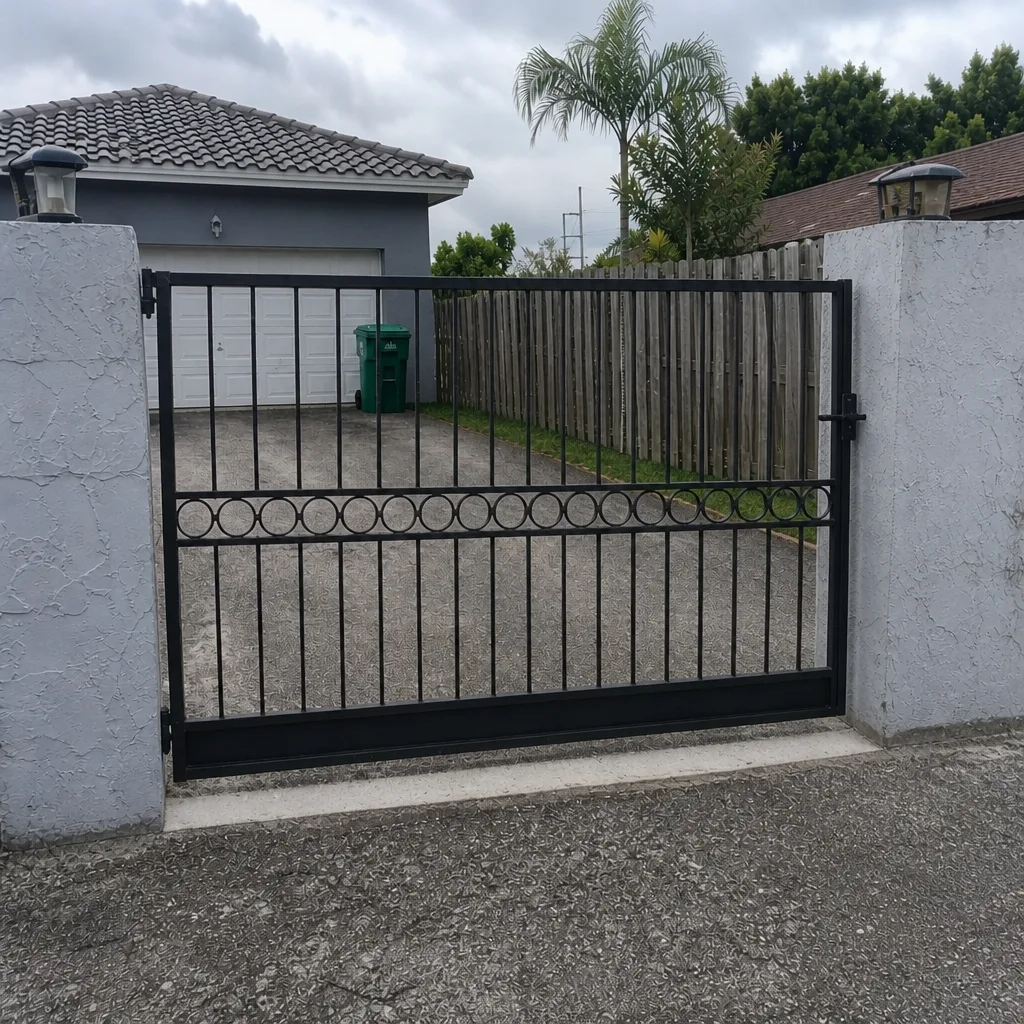
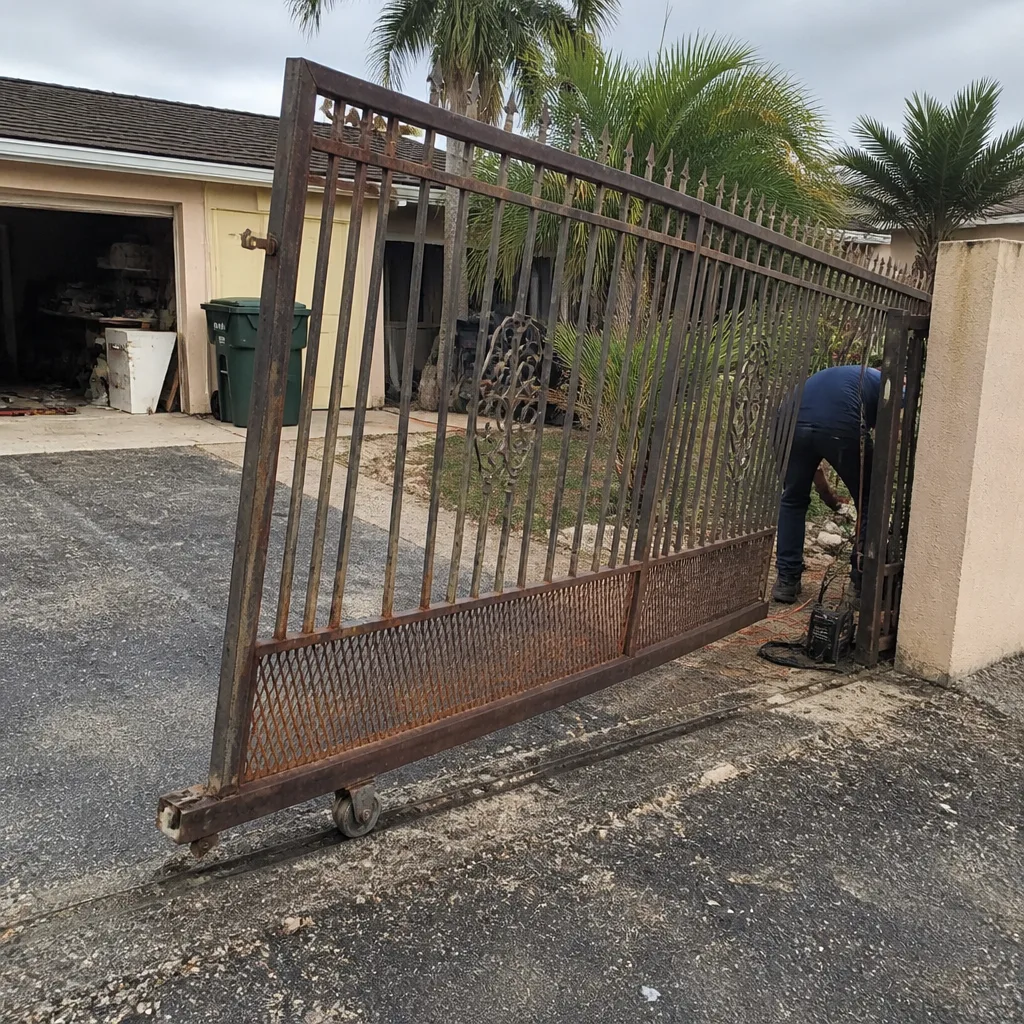
See the difference
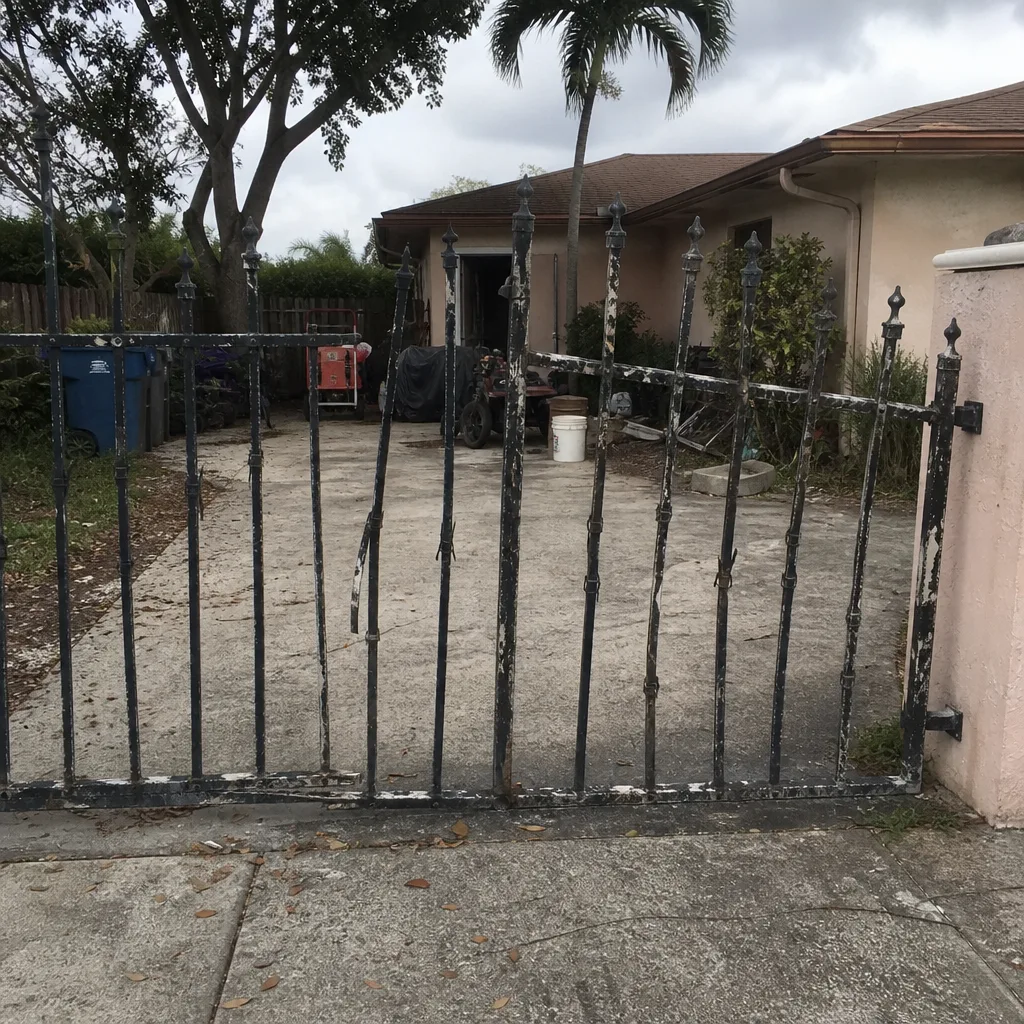 Before
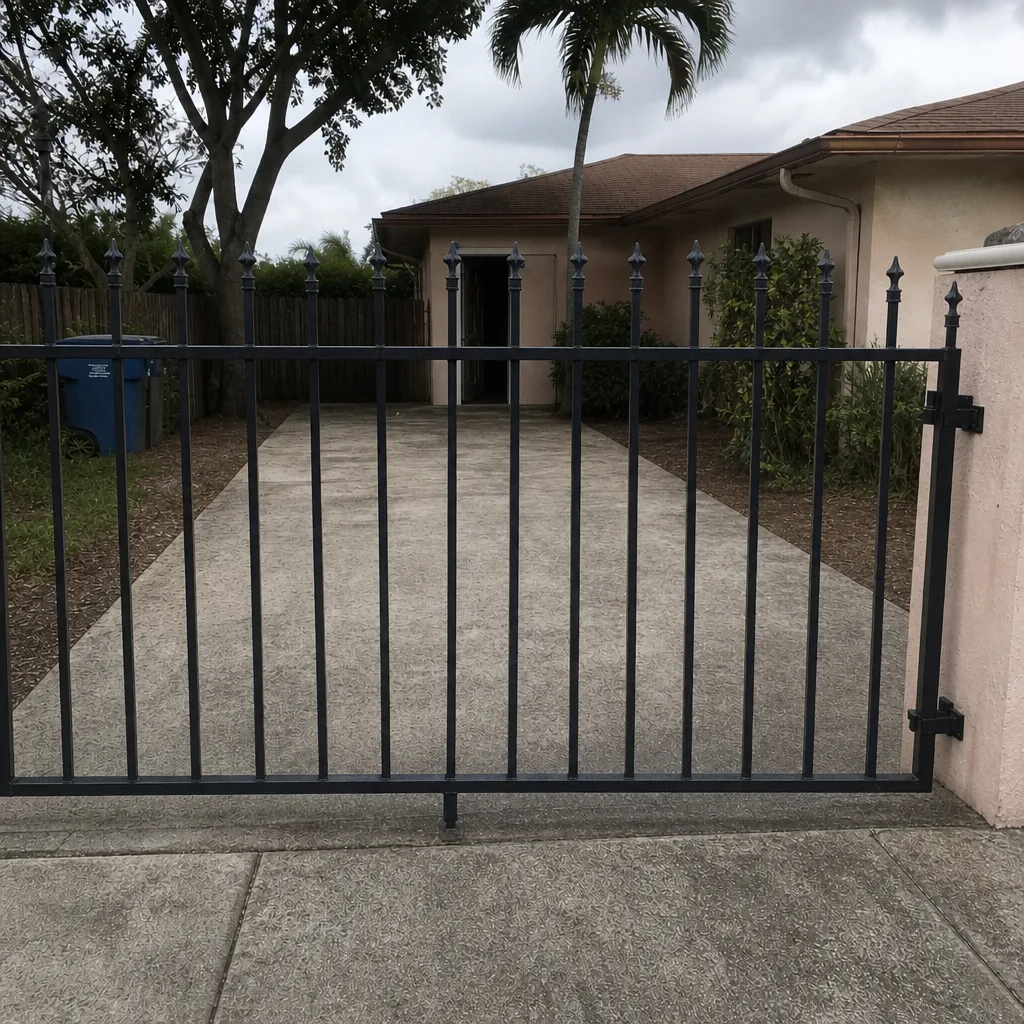 After
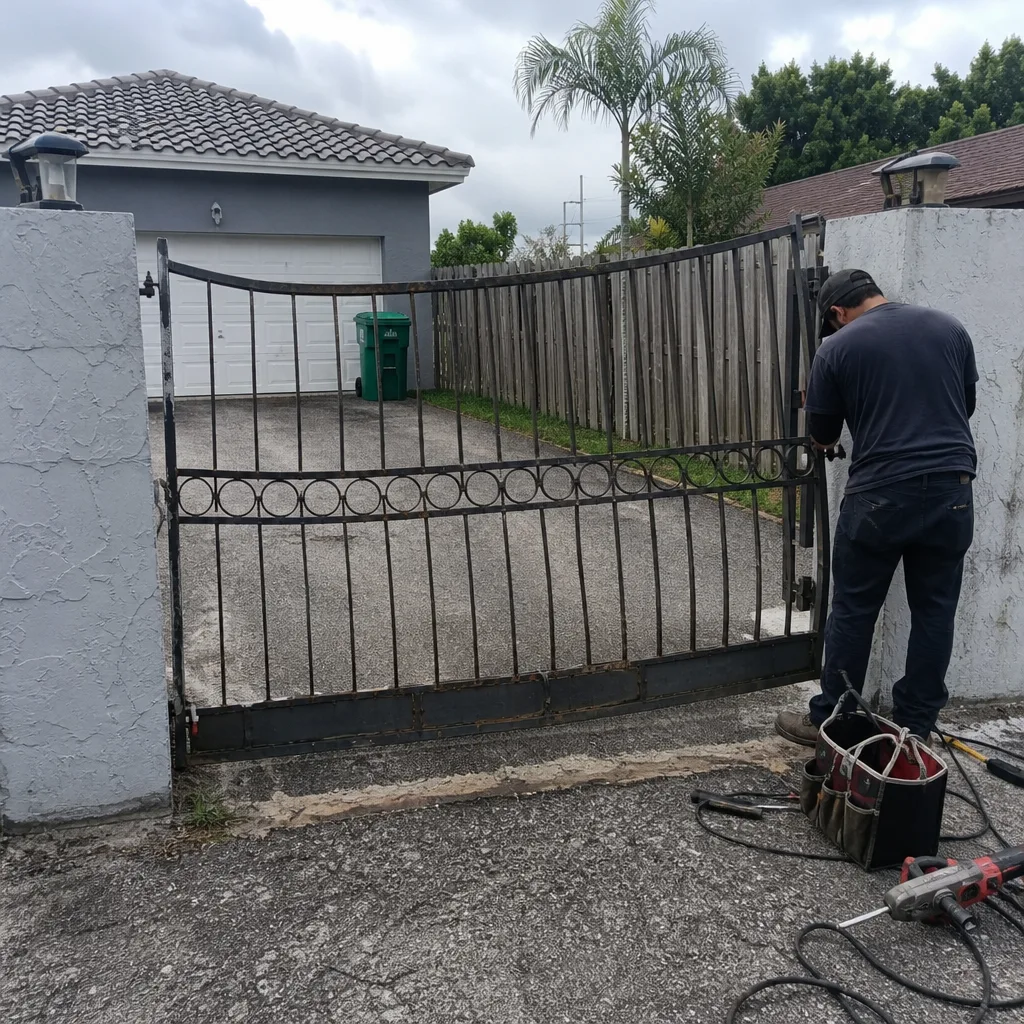 Before
 After
 Before
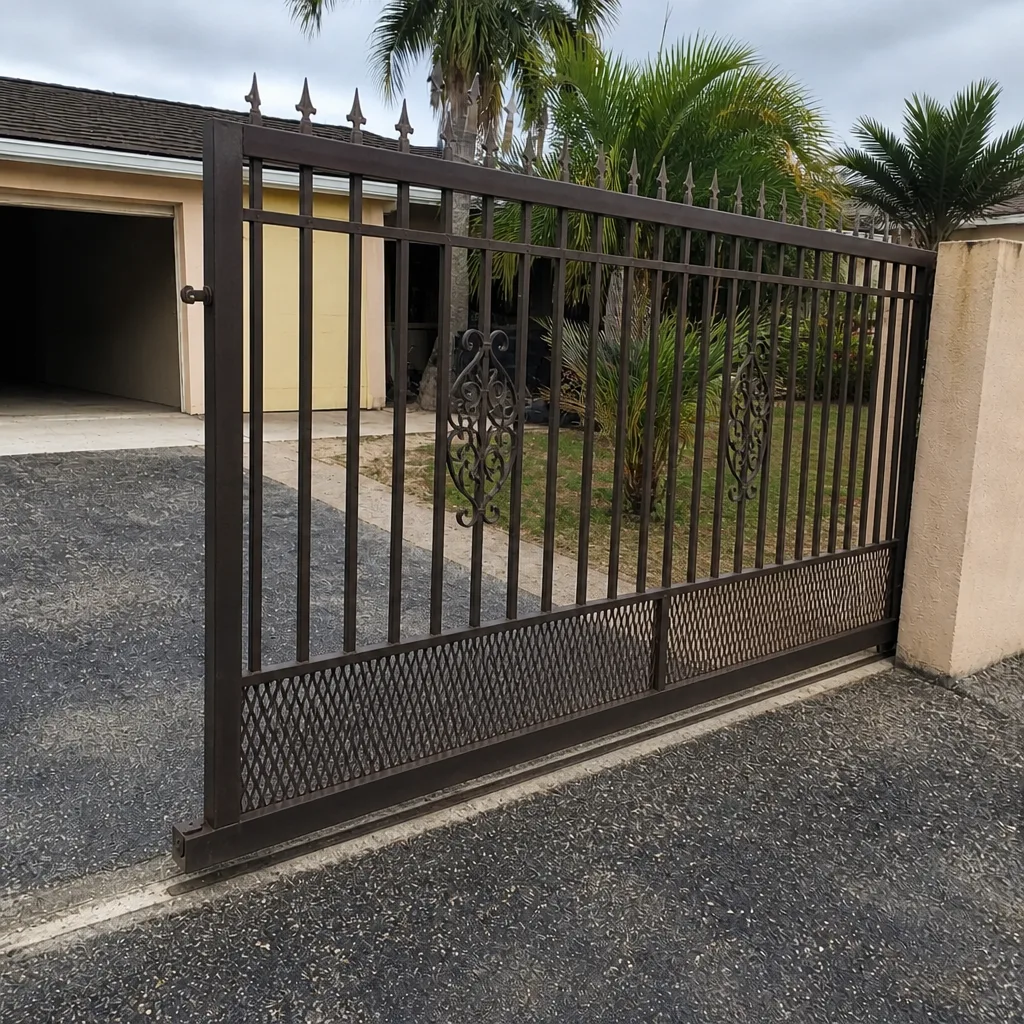 After
When to Call a Professional
Some gate problems are obvious calls. A gate that won’t close, an operator that clicks and does nothing, a slide gate that’s come off its track, a hinge that’s bent past the point of saving. Others are quieter: a gate that works but drags, an operator that reverses for no obvious reason, a sensor warning that comes and goes. Both categories are where a specialist earns their keep, because they know the difference between the repair and the permitting question that follows it. If you’re about to buy a home with a gate, or you’ve noticed the gate on your property has been patched over the years without documentation, that’s also the moment to have someone look. Whether your property runs a LiftMaster or a DoorKing, we already know the system. Tidewater Gate Repair offers free estimates in Pembroke Pines, and you can call Tidewater Gate Repair at (877) 748-7198.
Frequently Asked Questions
Most gate repairs in Pembroke Pines don’t require a permit. Replacing hinges, rollers, latches, tracks, or a failed component with the same model is generally handled as routine maintenance. A permit typically comes into play for new installation, structural changes, or a new or upgraded operator. If the work is a repair and not a construction change, the permit question usually doesn’t apply. Call (877) 748-7198 for an exact quote – estimates are free.
Replacing an operator with the same model is often treated as repair and doesn’t always require a permit, but replacing it with a different model, a different capacity, or anything that changes the electrical circuit usually does. The safest and quickest path is to ask the Broward County or Pembroke Pines building department directly, or have a gate specialist assess the specific job first. Call (877) 748-7198 for an exact quote – estimates are free.
A Pembroke Pines gate inspection verifies that the permitted work matches what was approved, checks structural items like posts and hinges, examines the operator and control panel wiring, tests the safety devices against UL 325, and operates the gate through a full cycle. Inspections usually run 20 to 40 minutes, and the most common failure points are misaligned or missing sensors rather than the operator itself. Call (877) 748-7198 for an exact quote – estimates are free.
Look up the property address in the City of Pembroke Pines and Broward County permit databases – the records are public and searchable. If a permit exists, read the scope to confirm it matches what’s actually installed. If no permit appears and the work was the kind that required one, ask the building department about the retroactive permit process. Call (877) 748-7198 for an exact quote – estimates are free.
HOA approval and city permits are separate processes with separate timelines – one doesn’t substitute for the other. If HOA review is complete, you can move forward with the permit application. If it’s the other way around, check the HOA’s architectural rules before scheduling any permits or work, because a code-compliant gate can still violate deed restrictions. Call (877) 748-7198 for an exact quote – estimates are free.
The inspector issues a correction notice listing the specific items that need fixing, and a re-inspection is scheduled once the corrections are made. Most corrections are sensor alignment, wiring issues, or brought-to-code structural items. A failed inspection isn’t a dead end; it’s a documented list of what’s left to do. Call (877) 748-7198 for an exact quote – estimates are free.
The Bottom Line
The permit line in Pembroke Pines runs between repair and construction. Routine fixes generally don’t need a permit. New gates, structural changes, and new or upgraded operators usually do. If your home is in an HOA, run the architectural review before pulling the permit. If the work touches an electric operator, expect the inspector to check against UL 325, which covers the full safety setup, not just the unit. If you’re buying or selling, check the permit history on your gate before the paperwork moves. And if you’re not sure which category your job falls into, ask a specialist instead of assuming – the cost of the wrong assumption is charged to the homeowner, not the contractor. Call (877) 748-7198 for a free estimate. We answer 24/7. Fast dispatch from 7am to 7pm, Sunday through Friday.
Whether you’re working with a Ghost Controls residential operator, an Elite commercial system on a managed property, or anything in between, our technicians work on gates in Pembroke Pines and the surrounding area and can tell you what your job needs before it starts. You can read more about our Pembroke Pines service area or reach us directly for a free estimate.
Written by the team at Tidewater Gate Repair.