
Last updated November 15, 2026
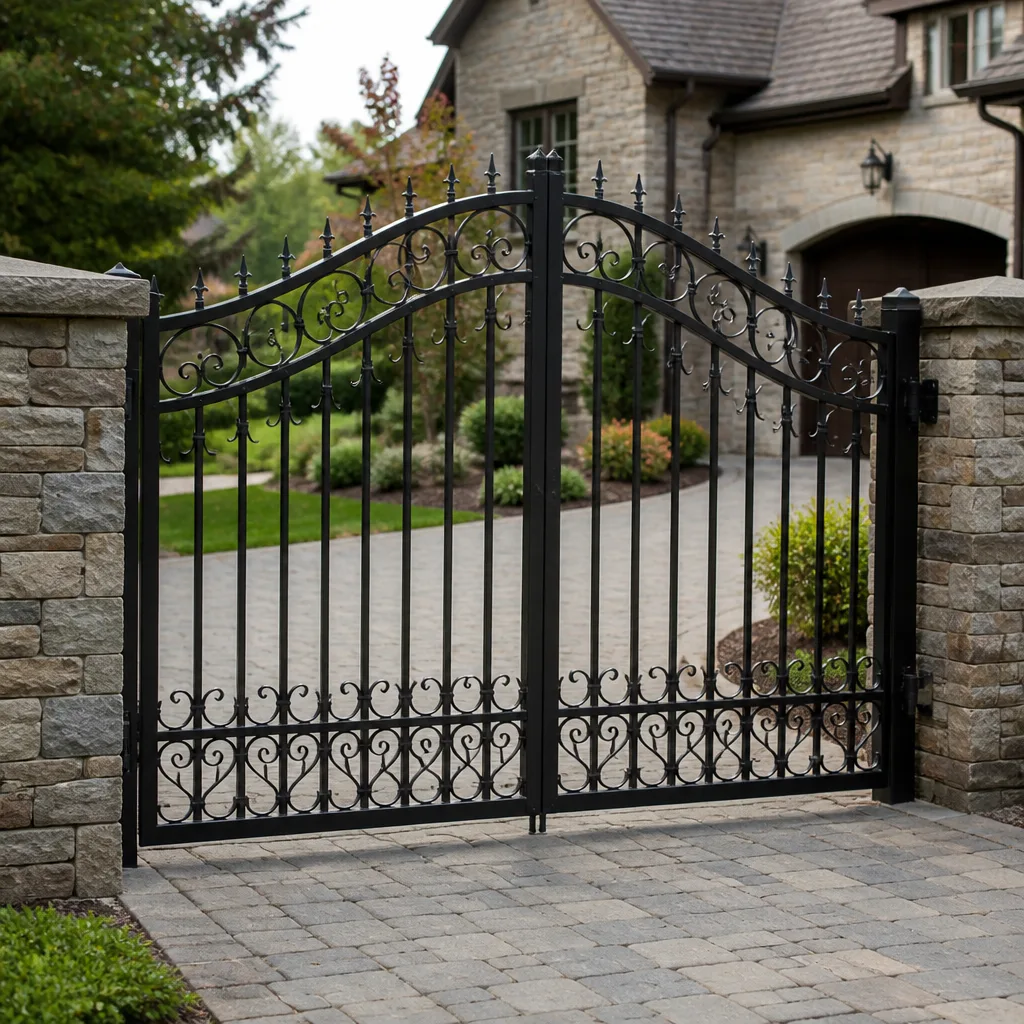 Wrought iron
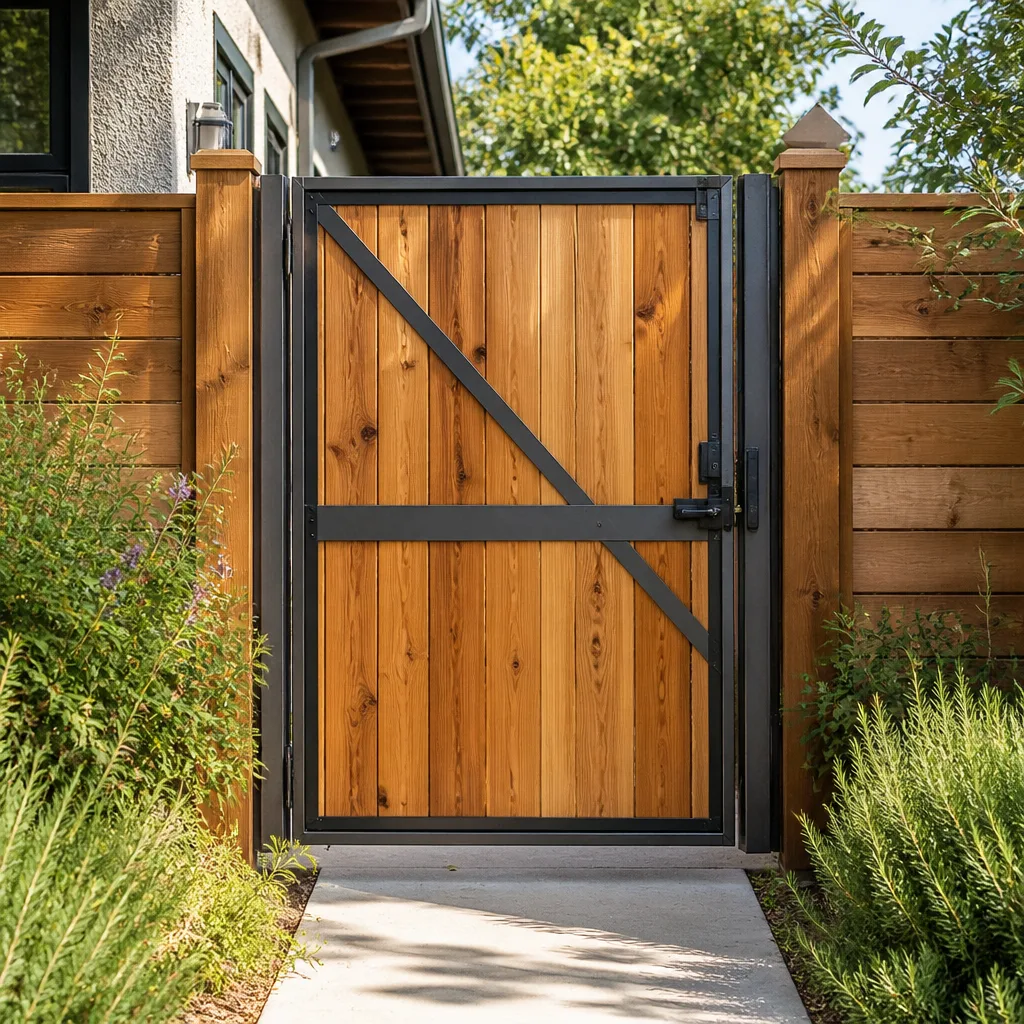 Wood & steel frame
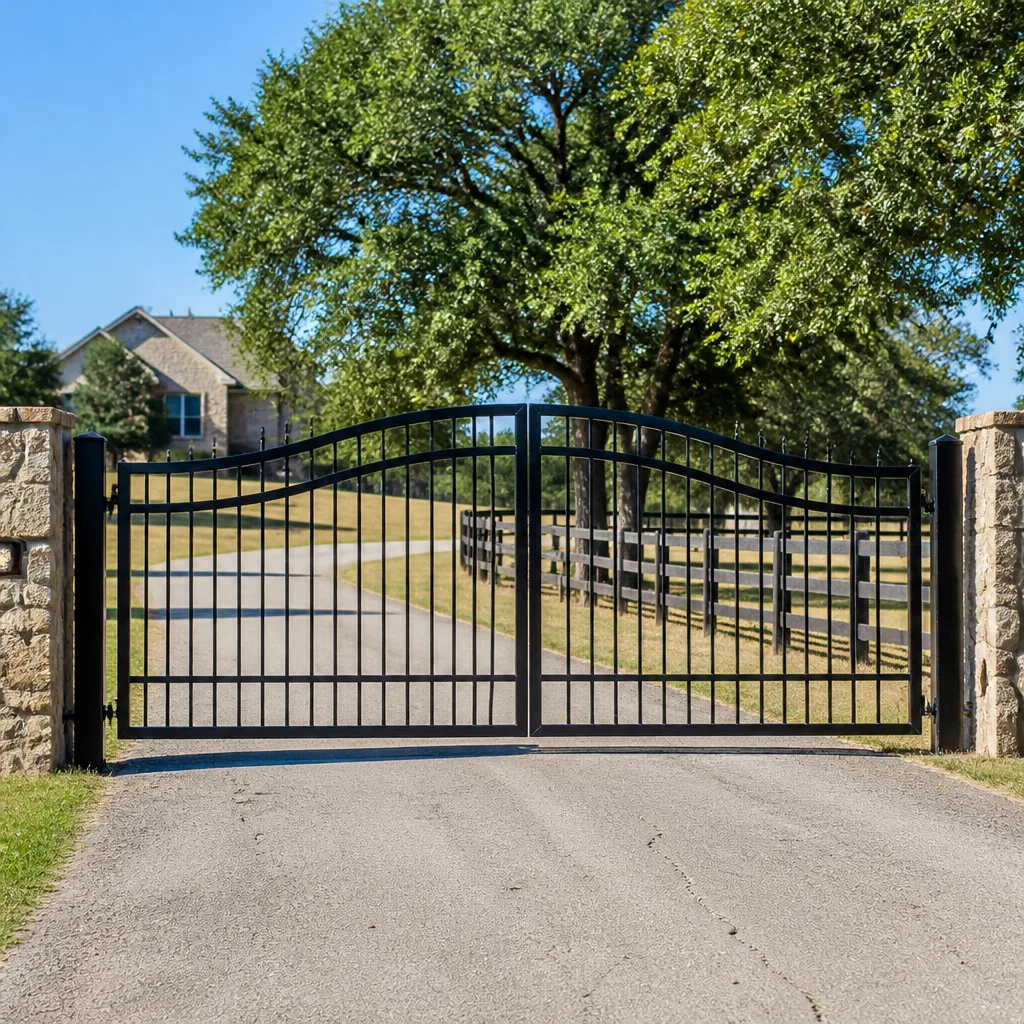 Farm & ranch
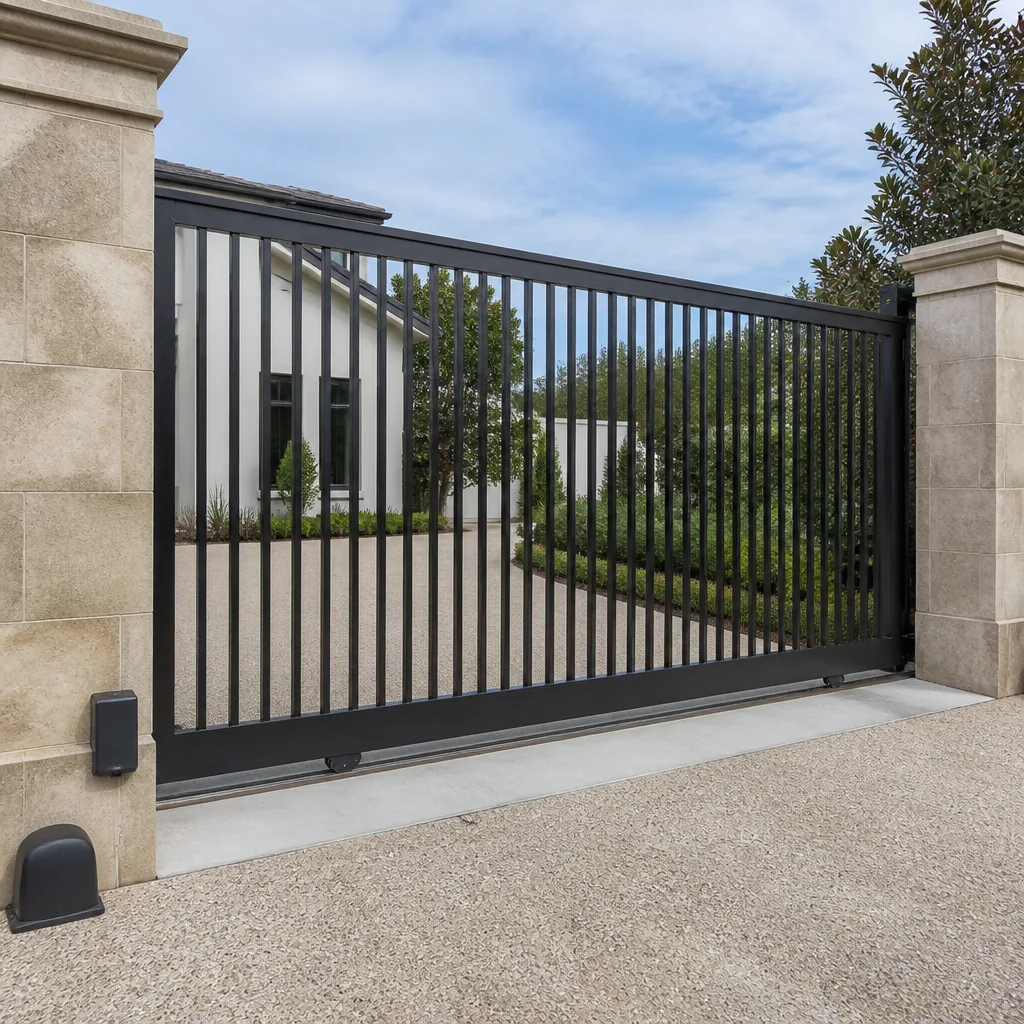 Sliding driveway gates
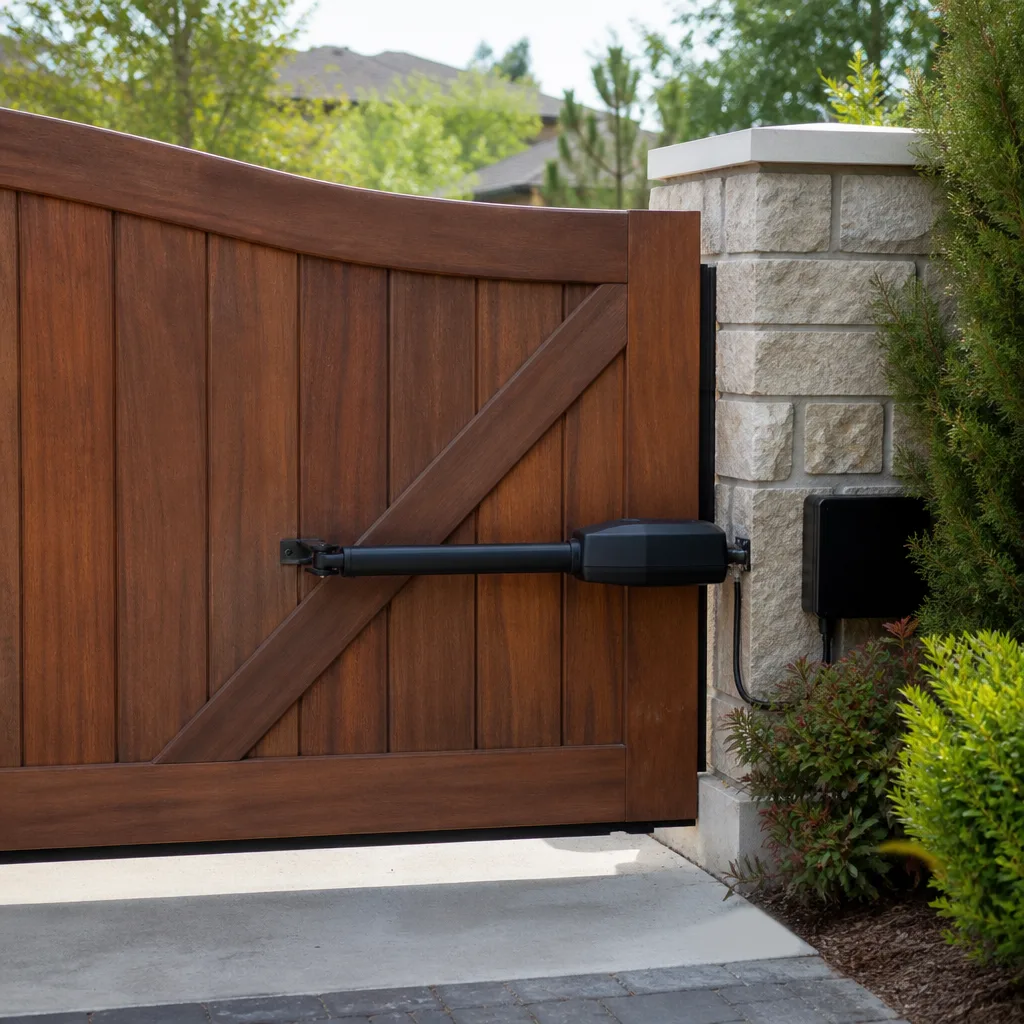 LiftMaster operators
Free on-site gate assessment - hinges, posts, and your LiftMaster or Nice gate operator checked before anything is quoted
The assessment is free and the quote is the invoice.
Get your free estimateHow to Hire a Gate Repair Contractor in Pembroke Pines: A Step-by-Step Guide
A contractor can hold a valid Florida license and still have never laid hands on the gate operator brand installed on your property. That’s the gap this guide closes. Licensing covers a trade category; it says nothing about whether the person quoting your repair knows the difference between a LiftMaster control board and a FAAC one. In Pembroke Pines, where gated communities and HOA-managed properties are common, that gap matters more than most homeowners realize until a “simple fix” turns into a second and third visit. Below you’ll find the license classifications that actually apply, five technical questions that separate specialists from generalists, and the red flags hiding in gate repair bids. We wrote this from the perspective of a gate-only company, so you’ll see the questions we’d expect any qualified contractor to answer.
Quick Answer
Hire a gate repair contractor in Pembroke Pines by verifying their Florida license classification, confirming documented training on your specific gate operator brand, and requesting a written scope of work that lists every component to be tested or replaced before any work begins. The single fastest filter is a technical question about your operator’s control board or safety sensors – a dedicated gate specialist answers immediately, while a generalist often stalls or hedges. Always get the price in writing and agreed before work starts.
Styles & brands we work with
- Wrought iron
- Wood & steel frame
- Farm & ranch
- Sliding driveway gates
- LiftMaster operators
Table of Contents
- Which Florida License Classifications Cover Gate Repair?
- Five Technical Questions That Reveal a True Gate Specialist
- How to Verify Brand Training on Gate Operators
- Red Flags Specific to Gate Repair Bids
- What a Proper Written Scope of Work Should Include
- Why Diagnosis Comes Before Pricing
- Electric Gate Repair vs. Manual Gate Repair: Different Skill Sets
- Common Mistakes to Avoid
- When to Call a Professional
Which Florida License Classifications Cover Gate Repair?
Florida doesn’t offer a single “gate repair” license. Gate work can fall under more than one classification depending on what’s being repaired and whether the gate is automated, so the first question to ask isn’t “are you licensed?” – it’s “which license, and does it cover this work?” A contractor who can answer that clearly is already ahead of the field.
Here’s how the categories generally break down, and where each one stops:
- General contractor licenses cover structural and building work but often don’t speak to operator and low-voltage control work on automated gates.
- Specialty trade licenses (fencing, access control, electrical) each cover a slice. A fencing license may authorize installation of the gate and its frame without authorizing electrical work on the operator’s power or control board.
- Electrical work on the operator’s power run, transformer, or control wiring typically requires a licensed electrical contractor in Florida unless the scope is narrowly defined by the gate contractor’s own classification.
What this means for a Pembroke Pines homeowner: a contractor licensed for installation may not be licensed for the electrical side of an automated gate, and vice versa. Ask which classification they hold, and ask them to explain in plain language which parts of your job that classification covers. The weakest answers are vague – “we’re fully licensed” without naming the classification – or a quick pivot to “we’ve been doing this a long time.” Neither answers the question.
Also confirm what the city of Pembroke Pines requires for your specific job. Permits and inspections for gate installation or significant electrical work vary by scope, and the city’s building department is the authority, not the contractor or this guide. Ask your contractor whether the job requires a permit and who pulls it. If they can’t answer, that’s a signal.
Five Technical Questions That Reveal a True Gate Specialist
Licensing tells you what category a contractor is legally cleared to work in. It says nothing about whether they’ll actually diagnose your gate correctly. These five questions are built so that a genuine gate specialist and a generalist answer very differently. You don’t need to understand the answers deeply – you just need to notice who pauses, hedges, or deflects.
- “What brand is my gate operator, and what’s the typical failure point on that model?” A specialist who works daily on electric gate repair across brands will recognize common operators by sight and name the likely weak components – battery backup on a LiftMaster, control board on a FAAC, limit switch wear on a BFT. A generalist will often ask you to read the label and check back.
- “How do you diagnose an intermittent gate that sticks once or twice a week?” A good answer walks through a testing sequence: motor amperage draw, safety sensor state, limit switch alignment, control board diagnostics. A vague answer (“we’ll find it”) means you’re paying for on-the-job learning.
- “What safety components are installed on my gate, and how will you test them?” Any automated gate has reversing or obstruction detection and often photo-eye sensors. A real specialist describes the specific test procedure. A generalist waves at the gate.
- “If you find the control board is failing, will you replace it or repair it – and why?” The specialist explains the difference in reliability and cost, and the reasons behind each path for your specific operator. The generalist says “we’ll see what we find.”
- “Will the price change after diagnosis?” A dedicated gate company will tell you the estimate is free, the price is set per job by a written estimate, and the price is agreed before any work starts. A generalist may give a “ballpark” number that grows once they’re on site.
Notice that none of these questions require you to become a technician. You’re just watching how the contractor handles being asked about a specific system. The ones who treat Tidewater Gate Repair and similar gate-only companies as the standard expect this line of questioning; the ones who work on everything often don’t.
How to Verify Brand Training on Gate Operators
Many gate operators – LiftMaster, FAAC, BFT, Linear, and others – publish technical documentation, service bulletins, and training resources for contractors. The question is whether your contractor has actually used them. Here’s how to check without needing to read a technical manual yourself.
- Ask which operator brands they service regularly – not “can service,” but “actually see in the field.” A contractor who installs and repairs LiftMaster and FAAC every week will describe failure patterns specific to each. Someone who “supports all brands” often means “we’ll take the call and figure it out.”
- Ask for a specific component failure they’ve seen on your exact operator. “What usually goes first on this model?” separates the people who touch the equipment from the people who glance at it.
- Ask how they access brand-specific service documentation. A working gate contractor generally has a relationship with the manufacturer for wiring diagrams, firmware updates, and part sourcing. A vague answer here is common among generalists and rare among specialists.
- Ask whether the technician arriving will be the same person who diagnoses and quotes. On a gate-only service call, that’s usually yes – the person diagnosing is the person quoting. That single point of continuity is worth a lot.
One careful note on claims: a contractor is not “authorized” by a manufacturer just because they work on the brand. Many excellent gate contractors are entirely independent – they know Pembroke Pines gate systems because they work on them daily, not because a manufacturer anointed them. What you want is documented, hands-on experience with the specific hardware, not a marketing label.
In our experience, brand fluency is the single fastest way to tell the two contractor types apart on the phone. When a homeowner describes a gate that reverses immediately on close and asks about a LiftMaster, a specialist’s questions come within seconds. A generalist’s first question is usually “what kind of gate is it?”
Red Flags Specific to Gate Repair Bids
Not all bad bids are obvious. In gate work, the warning signs tend to hide in structure rather than price. Watch for these:
- Vague line items. “Repair gate” or “fix operator” is not a line item – it’s a placeholder. A proper bid names specific components: motor, control board, safety sensors, hinges, track, chain, or rollers. If you can’t match the line item to a physical part on your gate, keep asking.
- No mention of the diagnostic process. A specialist explains how they’ll figure out what’s wrong before quoting the repair. A bid that jumps straight to a price with no diagnostic step either means they haven’t looked closely or they plan to pad the invoice.
- Same-day quotes without inspection. Any repair quote issued over the phone, before anyone has laid eyes on the gate, is a guess. The gate may have a seized operator, a failed control board, a misaligned limit switch, or a safety sensor sitting in direct Pembroke Pines afternoon sun that’s behaving intermittently. You cannot price what you haven’t seen.
- Pressure to sign before work is detailed. Contracts signed before the scope of work is written invite disputes. Every component should be listed and every price should be in writing before you say yes.
- Blended electrical and mechanical pricing. If your gate’s operator needs control board work or power-side repairs, those should appear as separate line items – not lumped into “miscellaneous labor.”
- “We’ll credit the diagnostic fee toward the repair” as a pressure tactic. A straightforward written estimate, agreed before work starts, is cleaner than a fee structure built to keep you on the hook.
- No mention of testing safety features after repair. A gate repair quote should include testing the reversing system and photo-eye sensors before the technician leaves. A bid that skips this step tells you safety isn’t in the plan.
There’s a specific local wrinkle worth flagging: in Pembroke Pines neighborhoods with mature landscaping around gate entrances, gate tracks and hinges routinely collect sap, sand, and leaf debris. A contractor who quotes “hinge replacement” without ever looking at the hardware may be missing that simple maintenance issue – and may be understating the true cost once they’re on site.
What a Proper Written Scope of Work Should Include
The single most valuable document in a gate repair contract is the written scope of work. It’s what protects you if the job goes sideways, and it’s what a dedicated gate specialist is comfortable writing before work starts. Here’s what it should contain:
- Operator make and model. The exact brand – LiftMaster, FAAC, Linear, BFT, or whichever – and the model identifier. This matters because parts, wiring, and diagnosis differ by model.
- Presenting problem in plain language. “Gate reverses after 3 feet of travel on close,” not “gate malfunction.” The complaint drives the diagnostic path.
- Diagnostic steps performed. What the technician actually tested, and what each test returned. This is your audit trail if the repair doesn’t hold.
- Named parts to be replaced, with brand and quantity where possible. Control board, motor, safety sensor pair, hinge set, roller set, torsion-free spring mechanism (on manual gates), chain, or track. Vague “miscellaneous hardware” is not acceptable.
- Labor described separately from parts. This lets you see what the work actually costs, not just the total.
- Post-repair testing procedure. Specifically which safety systems will be verified and how.
- Total price and payment terms. The price in writing, agreed before the first tool comes out of the case.
- Exclusions. Anything not included – cosmetic touch-up, landscaping restoration, electrical work outside the contractor’s license class – should be named so there’s no surprise.
What’s missing from a proposal that leads to disputes? Usually all of the above. The vague bid reads something like “Gate repair labor & parts $X.” That’s not a scope – it’s a promise written in fog. If your contractor won’t put it in writing, walk away.
Why Diagnosis Comes Before Pricing
Gate failures present with similar symptoms and completely different causes. A gate that won’t close may have a stuck photo-eye, a failing limit switch, a control board on the fritz, a warped panel, or a power problem at the operator’s transformer. Each of these has a different price. That’s why a real gate contractor diagnoses before quoting, and why a “same-day quote” over the phone is usually worth less than the paper it’s written on.
A proper gate diagnostic in Pembroke Pines typically involves:
- Testing the operator’s motor draw under load
- Walking the safety sensor beam and triggering the reversing function
- Verifying limit switch alignment at both ends of travel
- Inspecting the control board for burn marks, moisture damage, or firmware state
- Checking the gate’s physical hardware: hinges, rollers, track, and chain if present
- Confirming power at the operator’s transformer and confirming the disconnect works
Many of those steps involve electrical and mechanical components where mistakes cause injury. Automated gates carry stored energy and heavy moving panels; operators are powered equipment. We don’t walk anyone through DIY repair on a gate that has an operator, hinges under tension, or reversing systems. If a gate cannot be safely tested by a trained technician, that gate gets a specialist – not a homeowner, not a handyman, and not a general contractor “who also does gates.”
Once the diagnostic is complete, the estimate is free, and the price is set per job in writing. You’ll know what’s being repaired, what it will cost, and why. When we work on gates, that’s the point in the call where the homeowner stops worrying and starts deciding.
Electric Gate Repair vs. Manual Gate Repair: Different Skill Sets
Manual and automated gates fail in different ways, and the skill sets to repair them aren’t the same. If your gate has an operator, the diagnostic needs to cover both the mechanical gate and the electrical control system. A contractor who handles only one side of this needs a second contractor for the other – and that handoff is where jobs get expensive and messy.
- Manual gate repair is mostly mechanical: hinges, sagging, panel alignment, latches, ground contact, track or roller wear, and post stability. The tools are straightforward, but the failure points are heavy metal components that carry real weight – sagging gates can crush hands and injure shoulders when they swing or slide unexpectedly.
- Electric gate repair adds the operator, control board, wiring, safety sensors, reversing systems, and power. This is a distinct skill set that involves low-voltage diagnostics, understanding each manufacturer’s control logic, and knowing how to test safety systems so they actually work when a child or a car enters the gate path.
For Pembroke Pines properties with an automated gate – common in gated communities and HOA-managed entrances – the practical question is whether the contractor can diagnose both the mechanical and the electrical side in one visit. If your operator is a FAAC or a LiftMaster, ask specifically how they test the control board and the safety sensor loop. If your answer is “we’ll sub that out,” you’ve just learned the contractor isn’t a gate specialist; they’re a gate broker.
This is exactly the problem that a dedicated gate repair company avoids by covering both manual and electric systems in one call. From a broken hinge to a failed control board, one visit handles it.
Common Mistakes to Avoid
- Hiring the first contractor who answers. A quick callback is not a credential. Ask the five questions above before you book – the answers separate the specialists from the generalists within a two-minute call.
- Accepting a phone quote for a gate you haven’t described in detail. Any price issued before a look at the gate is a guess, and guesses in gate repair tend to come with change orders. Expecting a written estimate after diagnosis is the standard, not the exception.
- Confusing a fencing contractor with a gate specialist. Fencing and gate work overlap at the edges. A fencing contractor can usually handle frame and hinge fixes, but when the operator’s control board, safety sensors, or low-voltage wiring fails, they’ll typically refer you out or improvise. Verify the specialization before you book.
- Skipping the operator brand question. In Pembroke Pines, gate operators span a wide range of brands and models. A contractor who doesn’t ask which brand you have, or who names the wrong failure points for that brand, is learning on your dime.
- Not asking who pulls the permit. For installations or substantial electrical work, Pembroke Pines may require a permit and inspection. The answer should be clear and written down, not “we’ll sort it out.”
- Accepting a scope of work that says “miscellaneous.” A gate repair scope names components. If your proposal doesn’t, the final invoice has room to grow.
- Ignoring safety testing in the bid. A repair that fixes the gate but leaves the reversing sensor non-functional has made the problem worse, not better. Safety testing should be named in the scope and confirmed on completion.
When to Call a Professional
Some gate problems are obvious – a bent gate stuck mid-travel, an operator that won’t respond to any command, or a control board that throws errors after a storm. Others are quieter: a gate that reverses intermittently on close, a hinge that sags a quarter inch more each month, or a safety sensor that “works” in the morning but not by afternoon heat. Each of those is a signal to call a professional, because the fix on all four is different, and only a trained technician with the right diagnostic equipment can tell which one you’re dealing with.
Never attempt to repair a gate that has a powered operator, hinges under load, or safety systems in a compromised state. The stored energy in a heavy gate panel and the live wiring inside an operator are hazards a specialist manages with training and tools, not guesswork. For manual gates, a hinge replacement looks simple until the gate panel is off the post – still not a job for a homeowner without proper equipment.
Tidewater Gate Repair offers free estimates in Pembroke Pines – call (877) 748-7198. We answer 24/7. Fast dispatch from 7am to 7pm, Sunday through Friday.
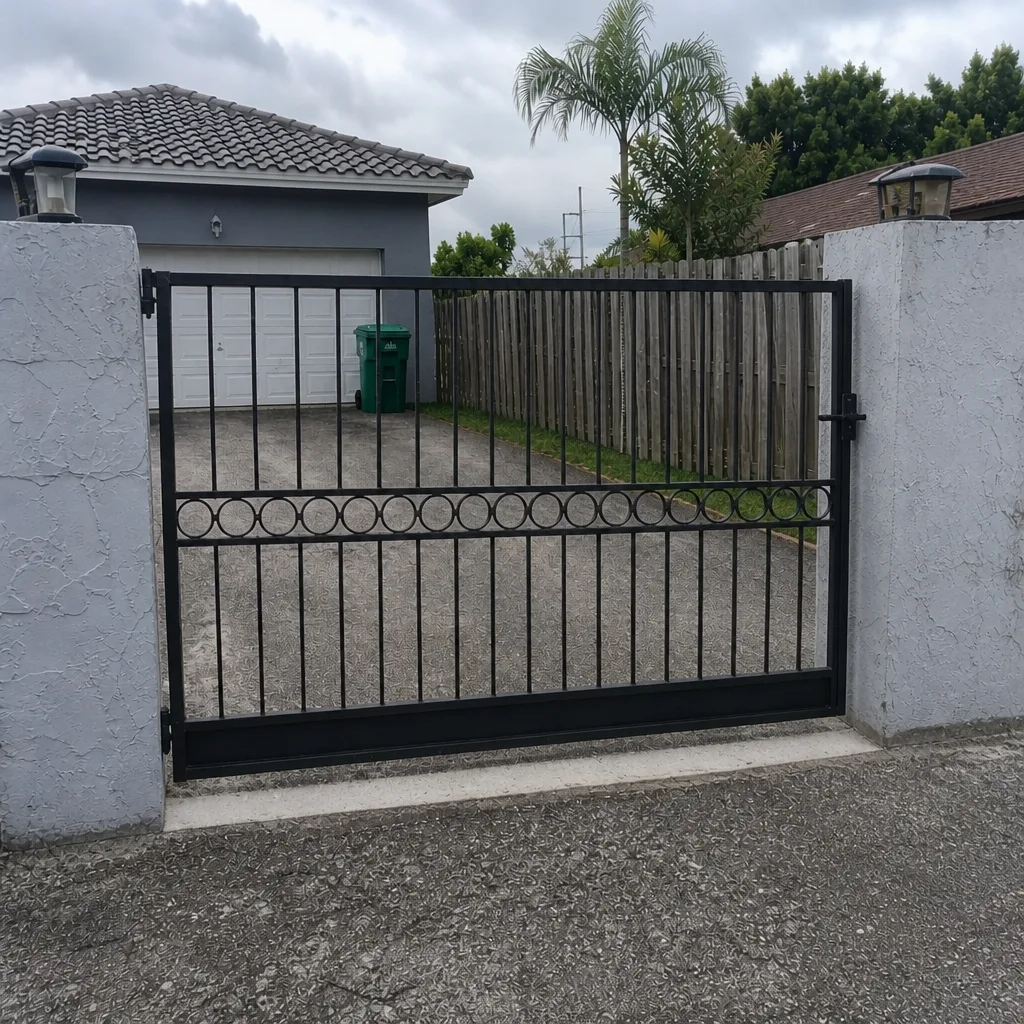
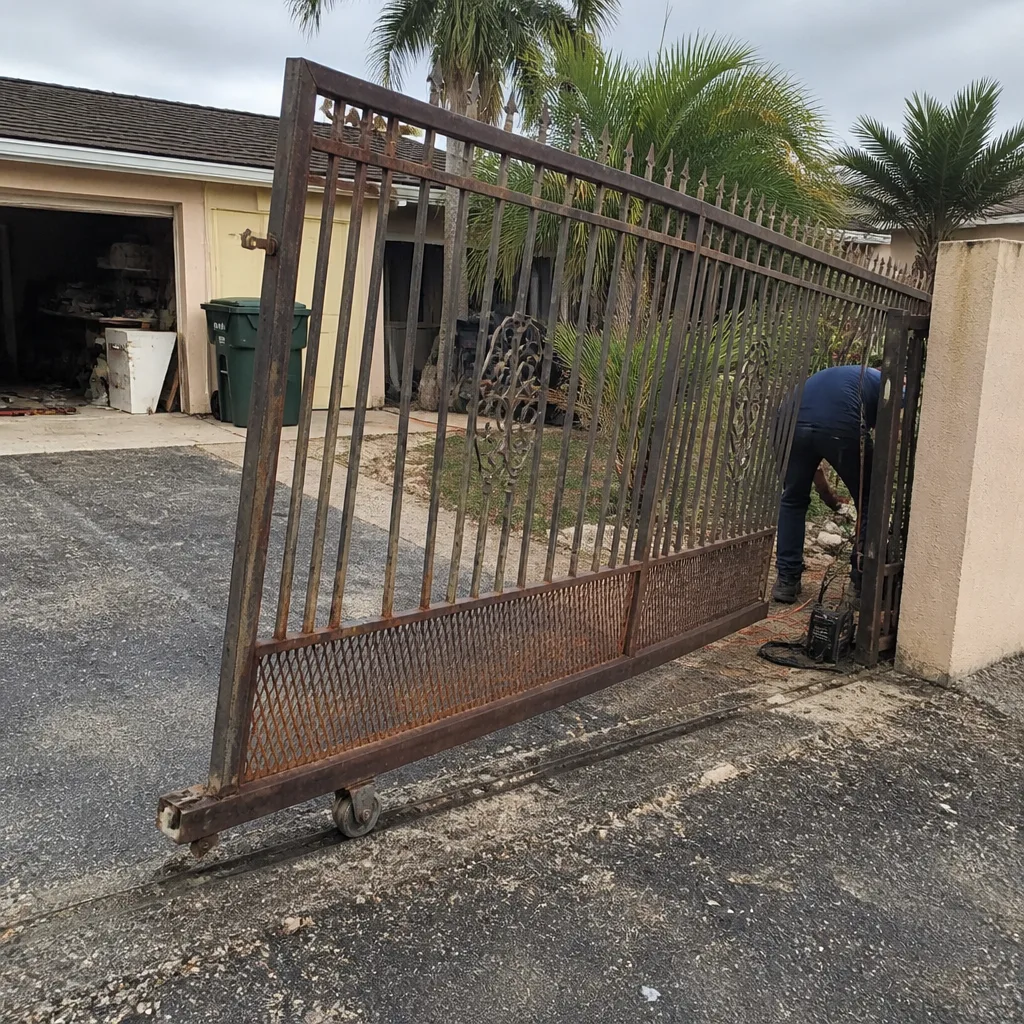
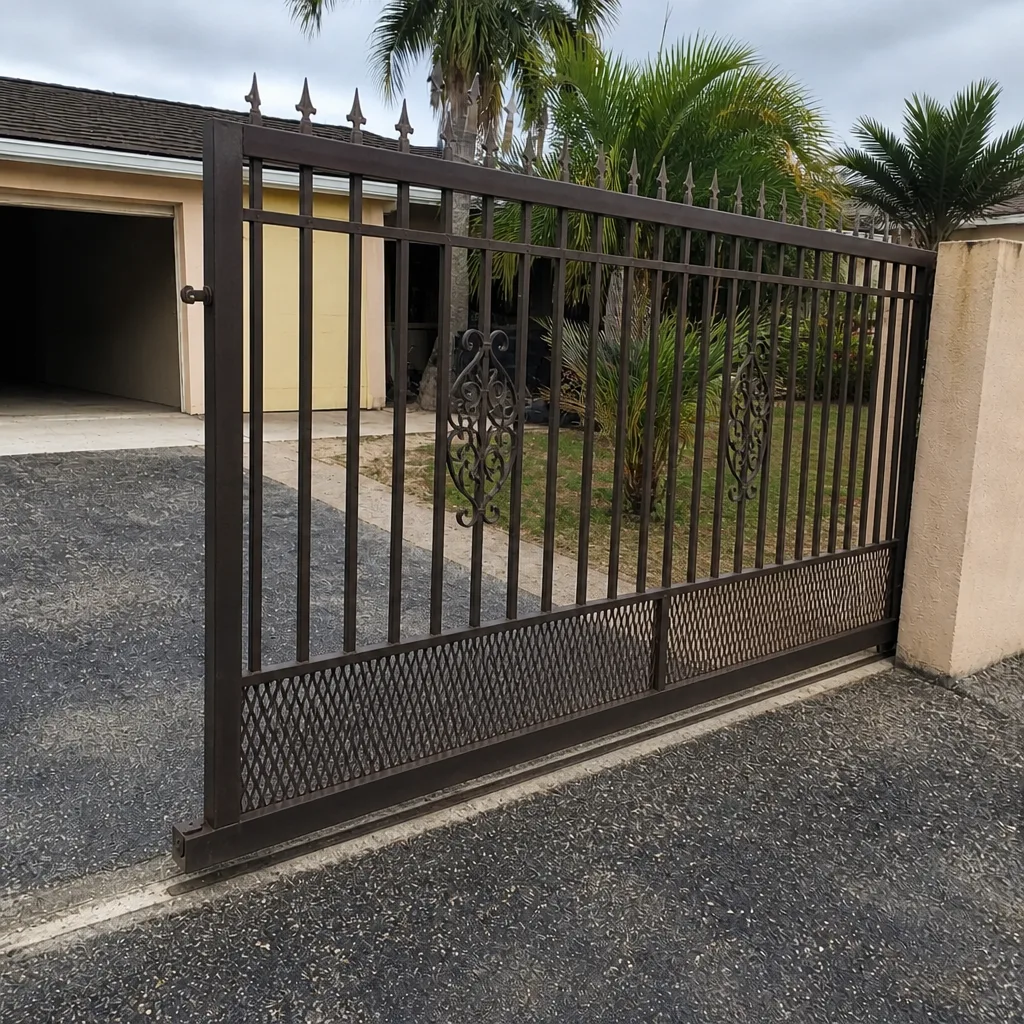
See the difference
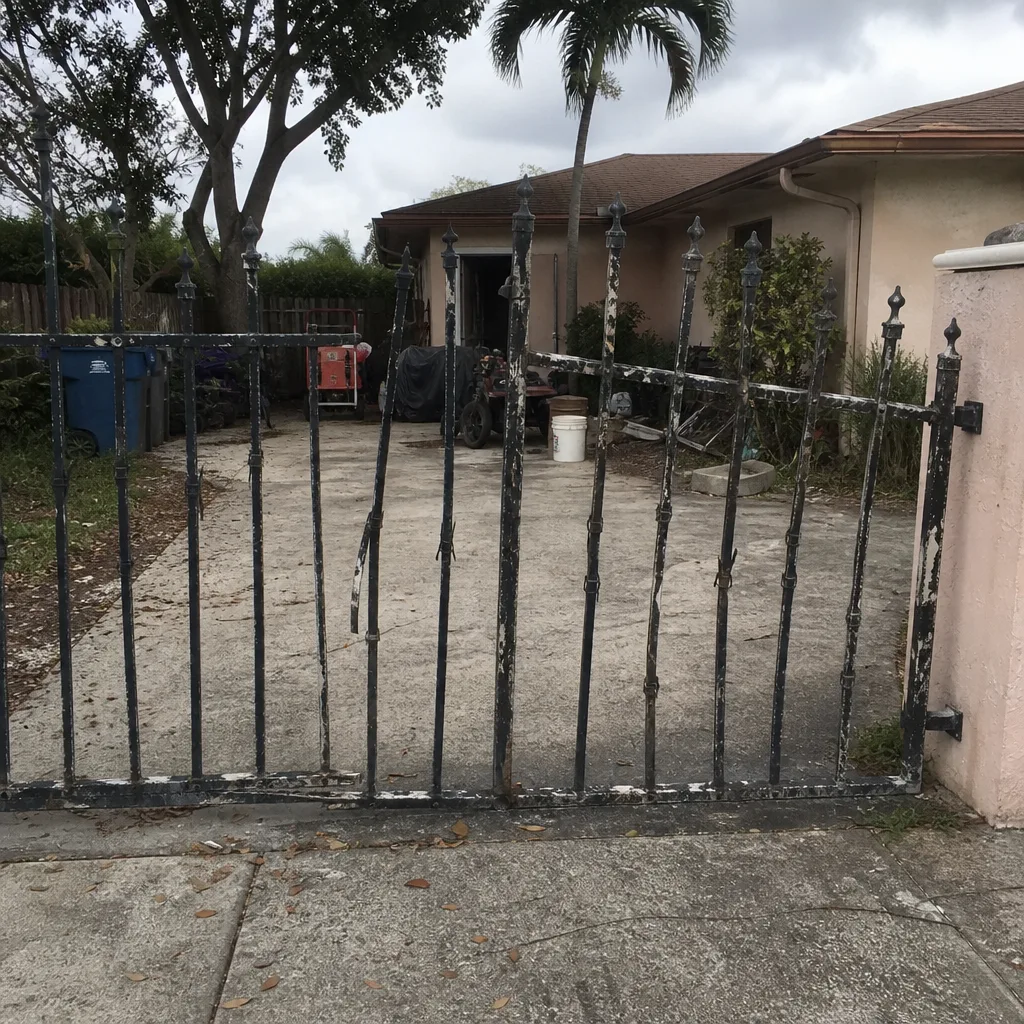 Before
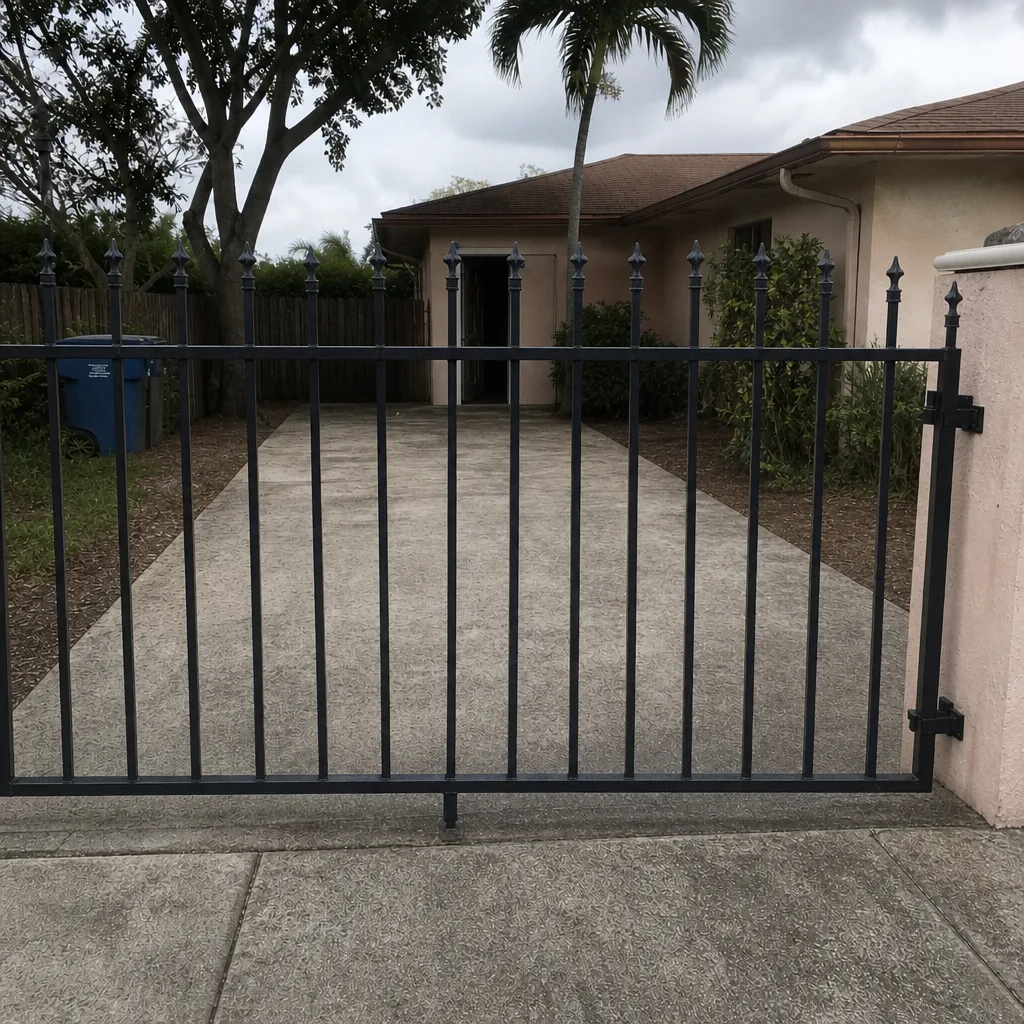 After
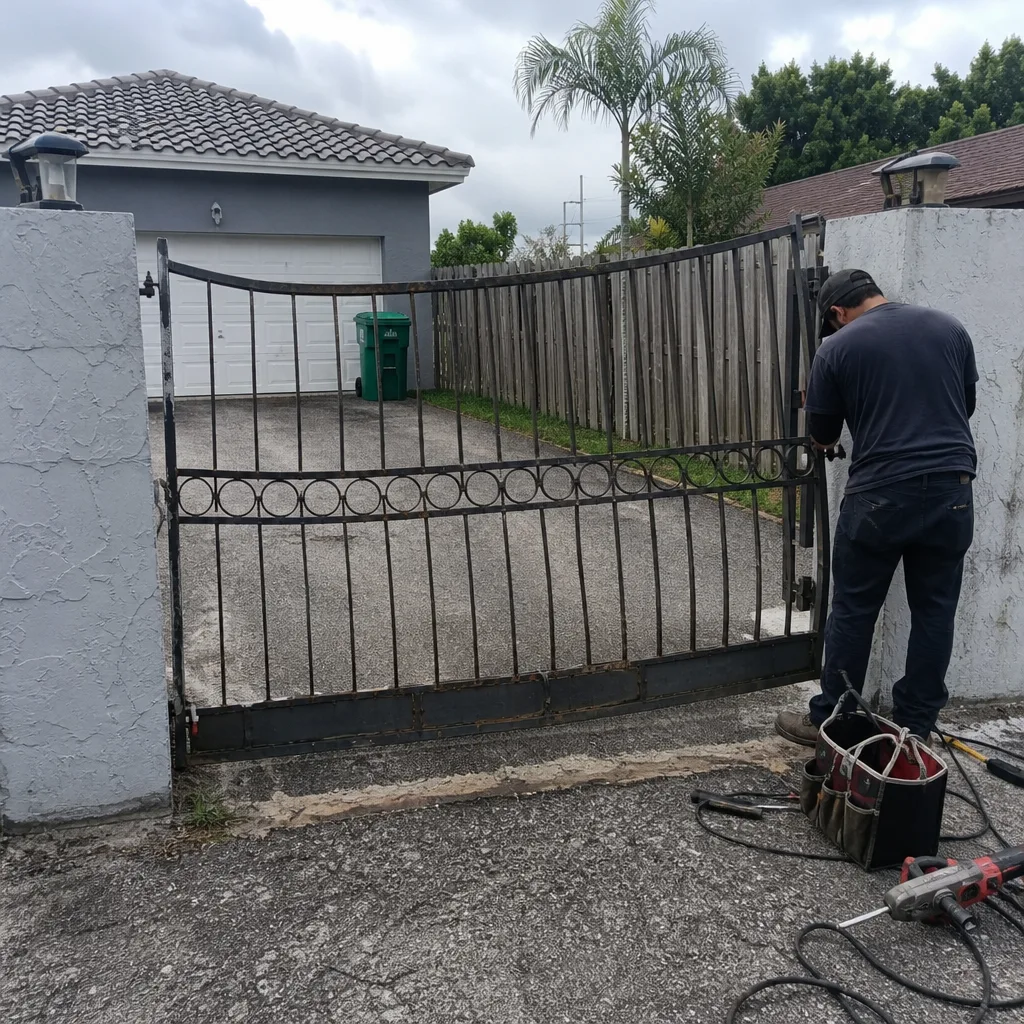 Before
 After
 Before
 After
Frequently Asked Questions
For a mechanical fix like a hinge or a latch, a general contractor or fencing contractor can often handle it. For anything involving the operator, control board, safety sensors, or power, a gate specialist is what you want – the diagnostic speed and part familiarity change the outcome. Call (877) 748-7198 for an exact quote on your specific gate; estimates are free.
Ask which brands they service regularly, ask what typically fails first on your exact model, and ask how they access brand documentation and parts. A working gate contractor answers these specifically; a generalist hedges. Remember that “authorized” and “experienced” are different claims – many excellent gate contractors are independent, not manufacturer-designated.
Because gate failures with similar symptoms have very different causes and very different repair costs. A real estimate follows a diagnostic on site. In our case, the estimate is free and the price is set in writing before any work starts. Call (877) 748-7198 to schedule a diagnostic.
The operator make and model, the problem described in plain language, the diagnostic steps performed, the named parts being replaced, labor separate from parts, the post-repair safety testing procedure, and the total price agreed in writing. If “miscellaneous labor” is the most specific phrase on the proposal, get another bid.
Permit requirements depend on the scope – repairs to existing components usually don’t, while installations and significant electrical work often do. Ask your contractor to confirm with the city’s building department for your specific job and to state clearly who pulls the permit. A contractor who can’t answer this is worth replacing.
Yes. One of the reasons we focus only on gates is that both sides of the repair – mechanical and electrical – live under one company. From a sagging hinge to a failed FAAC control board, one call covers it. Call (877) 748-7198 and describe what the gate is doing; we’ll book a time to diagnose it.
Often, yes. We answer 24/7, and fast dispatch runs from 7am to 7pm, Sunday through Friday. A call outside dispatch hours is booked into the next opening. Give us a call and describe the gate’s behavior so the technician arrives prepared.
The Bottom Line
Hiring a gate repair contractor in Pembroke Pines comes down to three things: verifying the license classification actually covers your job, asking the technical questions that separate gate specialists from generalists, and insisting on a written scope of work with named parts and an agreed price before work starts. The gap between a contractor who works on gates every day and one who works on them occasionally shows up first on the phone, and again when the invoice arrives. Whether your gate runs a LiftMaster, a Linear, a FAAC, or a BFT, the questions in this guide work on every brand. Ask them, and pay attention to how the answers come back.
When you’re ready for a specialist look at your gate, we’re here. Call (877) 748-7198 for a free estimate. We answer 24/7. Fast dispatch from 7am to 7pm, Sunday through Friday. For more on our services in Pembroke Pines, see our overview of Pembroke Pines coverage.
Written by the team at Tidewater Gate Repair.