
Last updated November 15, 2026
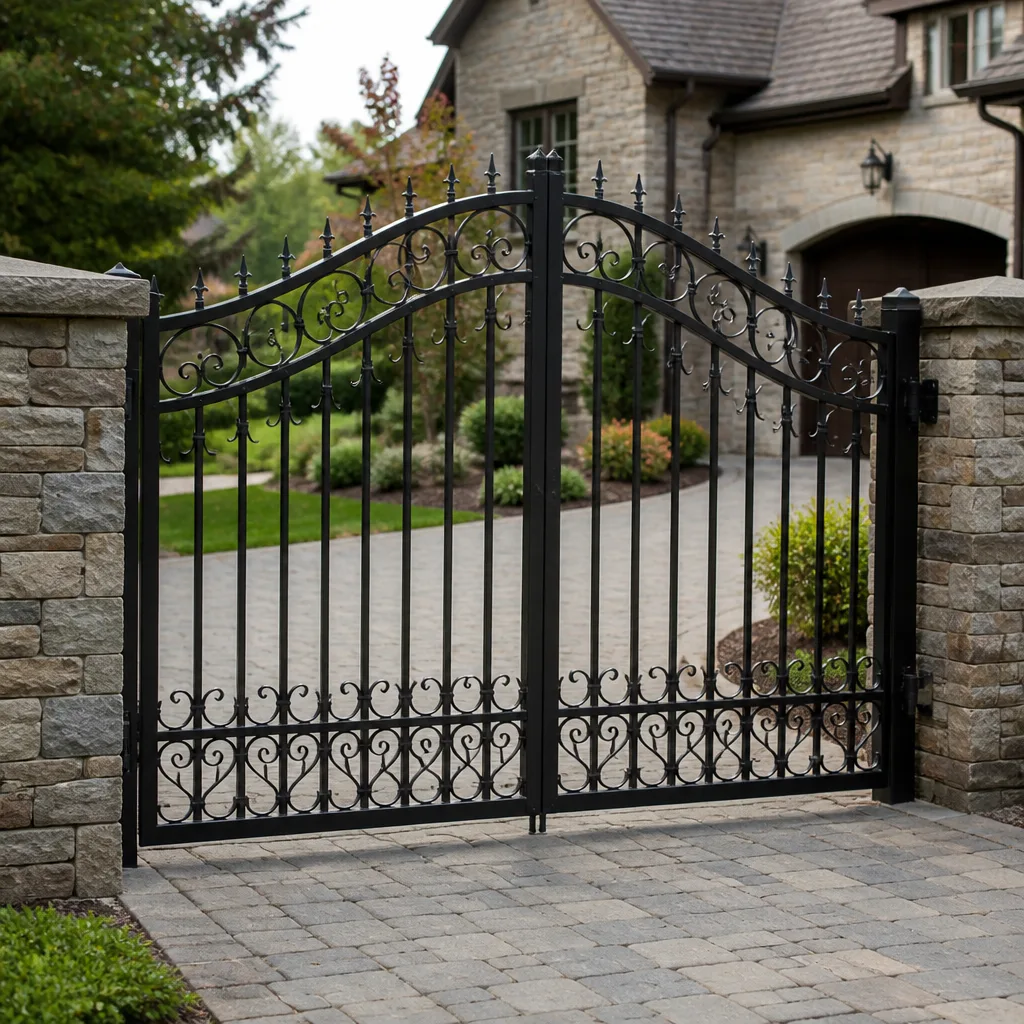 Wrought iron
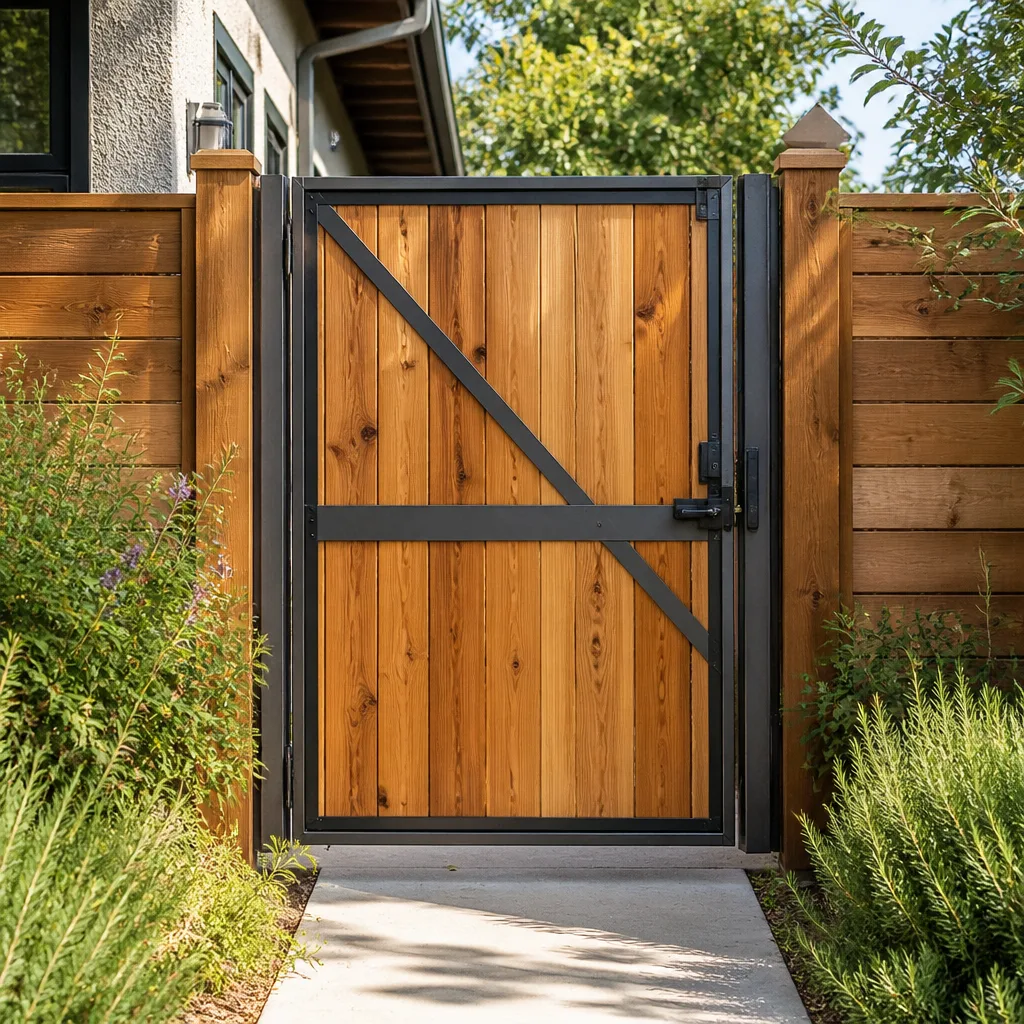 Wood & steel frame
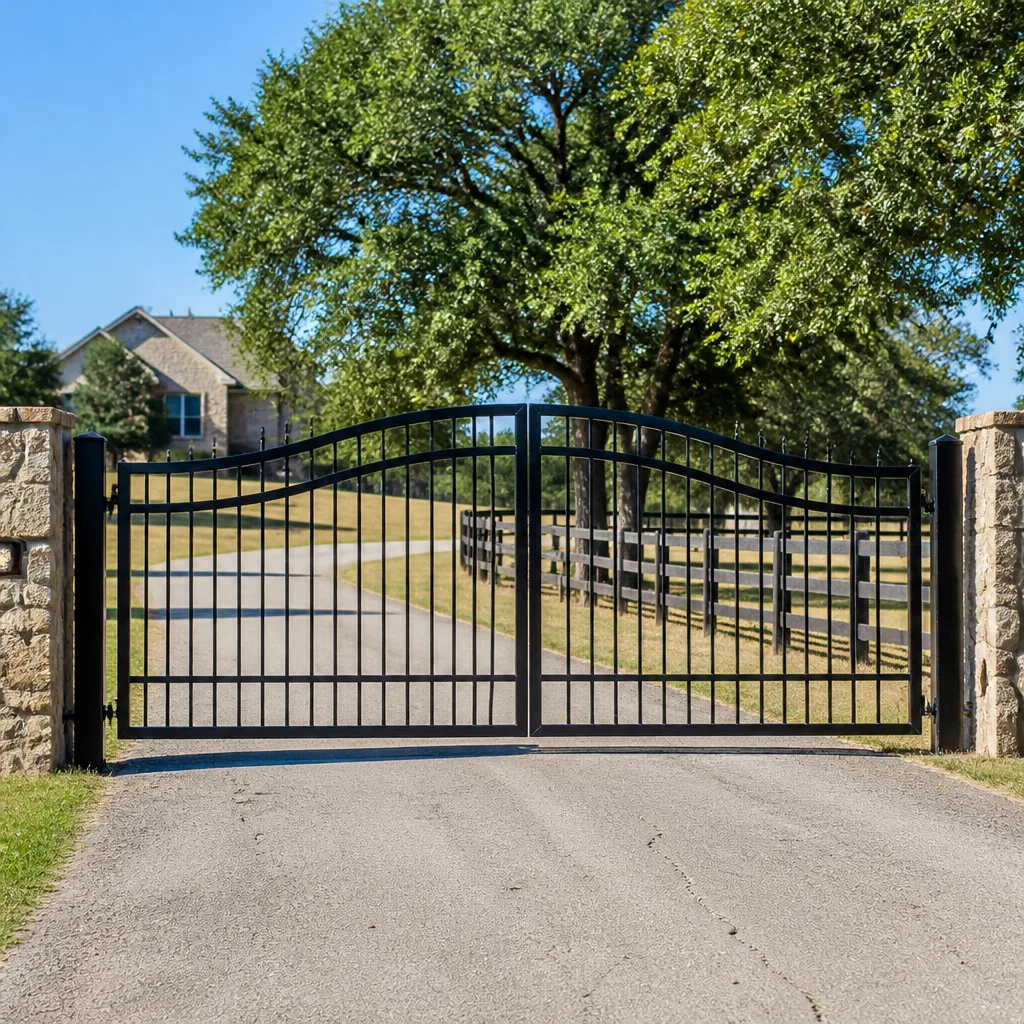 Farm & ranch
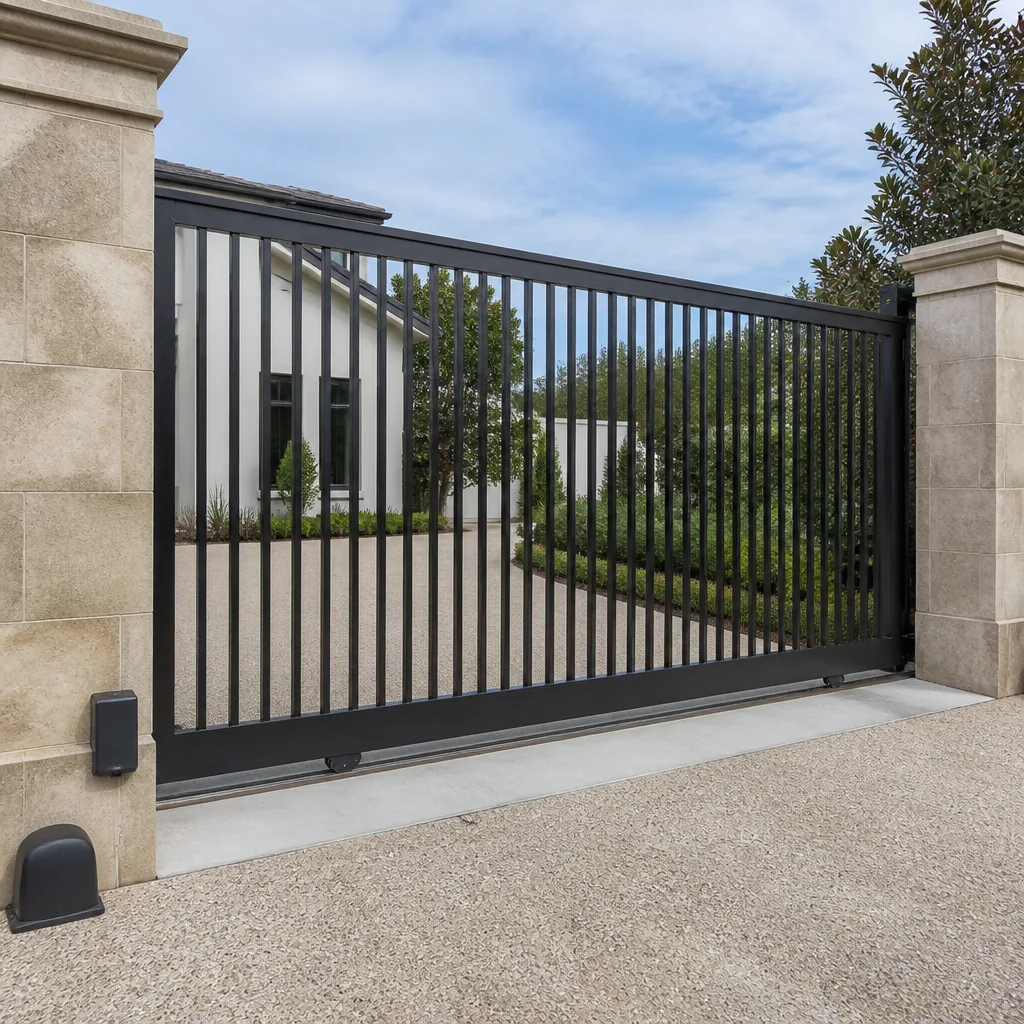 Sliding driveway gates
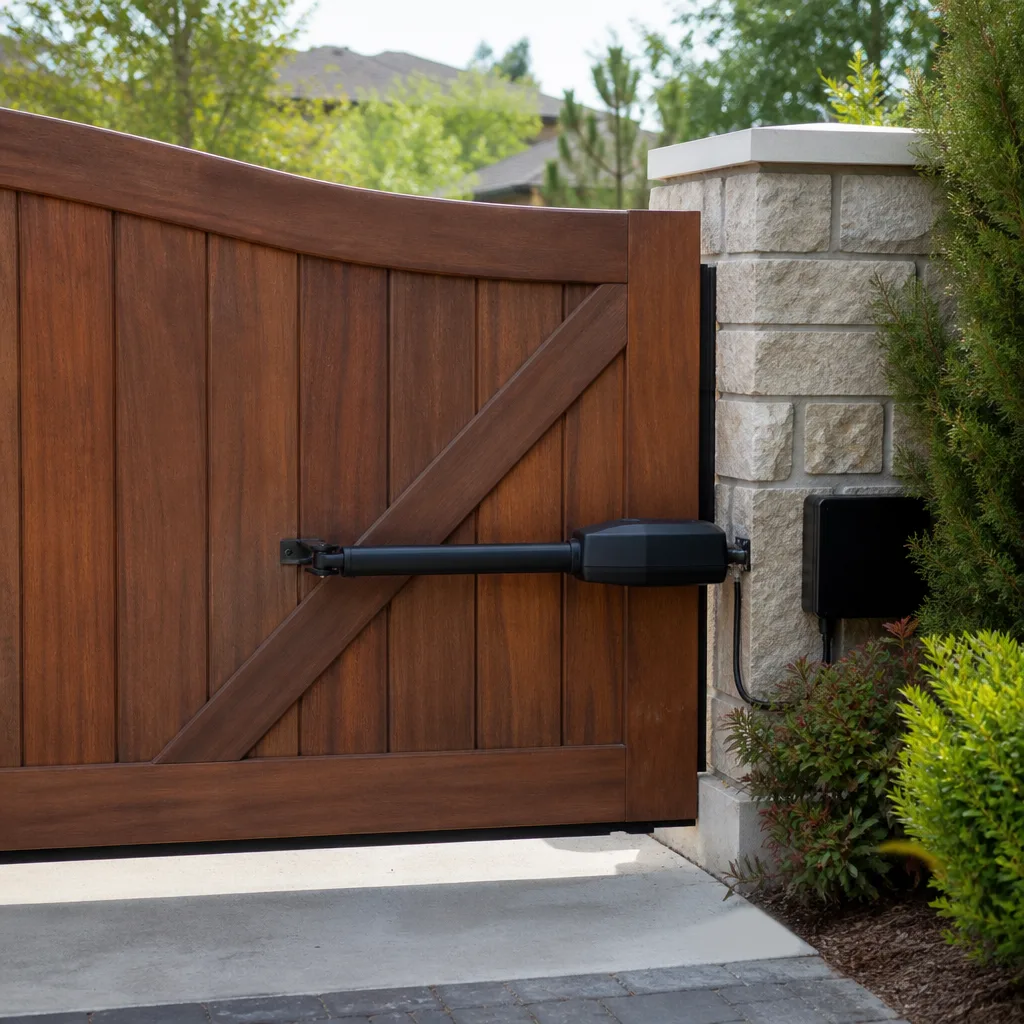 LiftMaster operators
Free on-site gate assessment - hinges, posts, and your LiftMaster or Nice gate operator checked before anything is quoted
The assessment is free and the quote is the invoice.
Get your free estimateSeasonal Gate Repair Care for Pembroke Pines: Year-Round Homeowner’s Guide
Most gate maintenance advice you’ll find online assumes four seasons: a cold winter that freezes hinges, a spring thaw, a hot summer, a leaf-drop fall. Pembroke Pines doesn’t work that way. Our year runs on a different calendar – a dry season, a wet season, and a hurricane prep window wedged between them – and each stretch stresses a gate in ways a generic checklist never accounts for. The gate that groans in October is usually reporting on rain that started soaking into its connections back in June. This guide walks you through that real calendar, month by season, so you know what to seal, what to test, and what to inspect before the next storm rolls through Pembroke Pines.
Quick Answer
Seasonal gate maintenance in Pembroke Pines follows three phases, not four: pre-wet-season prep in April and May (seal, lubricate, and test every connection before daily storms begin), hurricane-season readiness from June through November (know your manual release, secure the gate before a named storm, and inspect carefully afterward), and dry-season attention from December through March (watch for thermal expansion gaps, cracked rubber seals, and dust building up in tracks). Gate operators in South Florida need shorter service intervals than manufacturer manuals written for temperate climates suggest, because heat, humidity, and rain cycling wear electrical components faster here.
Styles & brands we work with
- Wrought iron
- Wood & steel frame
- Farm & ranch
- Sliding driveway gates
- LiftMaster operators
Table of Contents
- Why Pembroke Pines Gates Follow a Three-Season Calendar
- Pre-Wet-Season Prep: April and May
- Hurricane Season Protocol: Release, Secure, Inspect
- Post-Storm Inspection: What Shows Up Now vs. Weeks Later
- Dry Season Effects Homeowners Underestimate
- Why Your Gate Operator Needs a Shorter Service Interval Here
- What Brand-Savvy Service Looks Like in Pembroke Pines
- Common Mistakes to Avoid
- When to Call a Professional
- Frequently Asked Questions
Why Pembroke Pines Gates Follow a Three-Season Calendar
If you moved to Pembroke Pines from a colder part of the country, the maintenance schedule you knew doesn’t transfer. There’s no freeze to worry about, so the winter prep that matters up north – draining, insulating, protecting against ice – has no equivalent here. What replaces it is moisture. From roughly June through October, this part of South Florida settles into a pattern of afternoon thunderstorms that soak everything exposed to the sky, then let the sun bake it dry, then soak it again the next day. That daily wet-and-dry cycle is the single biggest driver of gate wear in Pembroke Pines, and it hits the same components over and over for months.
The calendar that actually fits our climate looks like this:
- Pre-wet-season window (April to May): the last stretch of reliably drier weather before daily storms begin. This is when sealing, lubricating, and testing pay off most, because you’re working on dry surfaces and catching problems before they’re stressed.
- Wet and hurricane season (June through November): daily rain cycling plus the peak months for named storms. Maintenance during this window is about monitoring, tightening, and knowing how to release and secure your gate.
- Dry season (December through March): lower humidity, more dust, wider temperature swings between day and night. This is when thermal expansion and dry-rotted rubber show themselves.
Treat that as your working framework for anything on a Pembroke Pines property, whether it’s a single-family home in Silver Lakes or a gated community off Pines Boulevard. The gate hardware is the same; the timing of what you do to it is what changes.
Pre-Wet-Season Prep: April and May
The two months before the daily storms return are the most valuable maintenance window on the South Florida calendar. Work done in April and May holds up better than the same work done in July, because you’re sealing and adjusting dry components instead of fighting moisture that’s already inside them. Here’s what that prep looks like in order:
- Inspect and clear every track and roller path. Grit left over from the dry season grinds against rollers all summer. Clear sliding gate tracks completely and check that rollers roll freely rather than drag.
- Seal exposed connection points and fastener heads. Water finds the same weak spots every year: bolt heads, hinge pins, and the connections around the operator’s control box. A careful seal on these before June slows the corrosion that causes seizing.
- Lubricate hinges, latches, and pivot points with a product suited to humid conditions. Standard household oil washes away in heavy rain. A heavier, weather-resistant lubricant lasts through a wet season instead of a few weeks.
- Test the manual release on any automated gate. This is the one item people skip. You don’t want to discover the release is seized during a storm event – test it while the weather is calm, and free it up if it’s stiff.
- Check the operator enclosure for gaps and seal damage. Look at the housing around the motor and control board. Any cracked gasket or open seam lets in the rain that causes electrical faults later in the season.
- Look at the gate’s alignment and hardware tension. A gate that’s slightly out of alignment in May will sag further once the ground stays saturated. Correct it before the soil gets soft.
If you own a LiftMaster or Mighty Mule system, most of what we’ve described applies to the mechanical gate itself, but the operator enclosure gets extra attention. In our experience, April and May prep on an automated gate catches the majority of small issues that would otherwise become mid-season repair calls in Pembroke Pines.
Hurricane Season Protocol: Release, Secure, Inspect
When a named storm is forecast, the goal for your gate changes from “keep it working” to “keep it from becoming a hazard.” A gate left in normal operating mode during high wind can be driven into its travel limits, twisted off its track, or damaged at the operator when the motor fights forces it can’t control. Here’s how to handle it, step by step:
- Put the operator into manual release before the storm arrives, using the release method described in your operator’s documentation. Disengage the motor so the gate swings or slides freely and wind can’t work against a powered mechanism.
- Secure the gate in its open or latched position based on how your gate is built and how the storm’s wind direction is forecast. A gate pinned against a solid stop has less room to slam.
- Remove or tie down anything loose near the gate – decorations, signs, loose panels – so wind doesn’t throw them into the gate or the operator housing.
- Photograph the gate and operator before the storm. A clear before/after record makes any damage assessment straightforward afterward.
- Do not power the operator back up until you’ve inspected it after the storm. Water intrusion into a control box can turn a simple fault into a short when the system re-energizes.
If your gate is a commercial-grade system on an HOA entrance – a FAAC or DoorKing operator, for example – the release procedure may differ, and it’s worth knowing it before you need it. If you’re unsure how to release your specific operator, that’s a conversation worth having before storm season, not in the middle of it. For homeowners in Pembroke Pines dealing with an electric gate that’s already acting up ahead of a storm, that’s a repair priority, not something to defer.
Post-Storm Inspection: What Shows Up Now vs. Weeks Later
The damage you can see right after a storm is rarely the whole story on a gate system. Some problems are immediate and obvious; others are seeded during the storm and only surface as the weeks pass. Knowing the difference helps you decide when to inspect and when to just watch.
Visible immediately after the storm
- Bent or twisted gate panels and rails
- Gates off their track or hanging unevenly on hinges
- Loose or missing bolts and fasteners
- Visible water pooled in or around the operator housing
- Cracked or displaced posts, especially where soil stayed saturated
What shows up in the weeks that follow
- Control board faults from moisture that crept in during the storm and sat inside the enclosure
- Intermittent operation – the gate works, then stalls, then works again – a classic sign of corrosion on electrical contacts
- Remote or keypad failures that appear once internal components have had time to oxidize
- Motor strain or overheating from a gate that’s slightly out of alignment after the storm but not obviously damaged
This is why a post-storm inspection is worth doing in two stages: a visual pass immediately after, then a functional check of the operator a few weeks later once the wet season’s daily storms have cycled a few more times. It’s also why electric gate repair is a distinct service from mechanical gate repair – the failures behave differently and get diagnosed differently. If your automated gate is doing any of the intermittent things on the second list, it’s worth a professional look rather than waiting to see if it clears up.
Dry Season Effects Homeowners Underestimate
You’d think the dry season would be the easy stretch for a gate in Pembroke Pines, and in terms of rain damage, it is. But the months from December through March bring a different set of stresses that catch people off guard, particularly because the gate seems fine and there’s no storm on the horizon to blame.
Thermal expansion gaps
Dry-season days in Pembroke Pines can be warm while nights cool off more than in summer. Metal gates expand and contract through that daily swing. Over a season, fasteners that were snug in the fall can work loose, and a gate that aligned perfectly in summer can develop gaps or rattles. Check fasteners on hinges, latches, and operator mounts once or twice during the dry season rather than assuming last season’s torque held.
Rubber seals cracking
The rubber seals and gaskets around the operator housing are the components most likely to crack during dry weather, because rubber loses flexibility when humidity drops and the sun keeps working on it. A cracked seal in February is the entry point that lets the first rains of June into the control board. Replace cracked seals in the dry season, before the wet season finds them.
Dust ingress into tracks and mechanisms
Dry conditions mean more airborne dust, and a sliding gate’s track collects it. Grit in a track wears rollers faster than rain does. A simple clear and wipe of the track during the dry season prevents the grinding that shows up as roller failure by spring.
None of these dry-season issues feel urgent in the moment. They’re all quietly setting up problems for later. The homeowners who avoid the mid-summer repair calls are usually the ones who used the dry months to catch them.
Why Your Gate Operator Needs a Shorter Service Interval Here
The maintenance interval stamped in most gate operator manuals was written with a temperate climate in mind – a place with cold winters and moderate summers. Those manuals assume the motor and control board aren’t working in continuous heat and humidity, and they assume months of the year where the system isn’t cycling through wet and dry. Pembroke Pines doesn’t offer those conditions. Our operators run in warm, humid air year-round, and during the wet season they absorb a daily dose of moisture that temperate-climate manufacturers never planned for.
What that means practically:
- Electrical components – control boards, wiring connections, limit switches – corrode faster here and warrant more frequent inspection than a manual’s schedule suggests.
- Lubricants break down sooner in constant heat and humidity, so mechanical components need re-lubrication more often.
- The wet season compresses most of a year’s moisture exposure into a few months, so a single service check in spring won’t carry you through to fall.
In our experience, the right approach in South Florida is to check the operator more often than the book recommends and use the climate as the schedule, not the manual. A system serviced once before the wet season and again after the worst of it – plus a quick functional check in the dry months – holds up far better than one serviced on a generic annual plan. The brand matters less than the schedule. Whether your property runs a LiftMaster or an Elite, the calendar is the same.
What Brand-Savvy Service Looks Like in Pembroke Pines
Gate brands don’t behave identically, and the seasonal maintenance differences show up in how each system handles our climate. At Tidewater Gate Repair we work on gates – only gates – and we service nine brands: LiftMaster, FAAC, BFT, Linear, Viking, Ghost Controls, DoorKing, Elite, and Mighty Mule. That breadth matters because a residential Mighty Mule and a commercial DoorKing on a Pembroke Pines HOA entrance need different seasonal attention, and the technician who arrives should already know the difference.
For residential systems, the seasonal focus tends to be on the mechanical gate itself – alignment, hinges, tracks – plus the operator enclosure seal. For commercial-grade systems like FAAC or DoorKing, the electrical side of seasonal prep gets more weight, because a failed control board on a community entrance affects every resident who uses that gate. Knowing the hardware before arrival is what makes the difference between a service call that resolves the issue and a visit that turns into a second appointment.
When you do need a repair rather than routine care, the seasonal guide is only part of the picture. Diagnosis on a gate that’s been through a wet season requires understanding both the mechanical gate and the electrical system driving it – which is why the same team should handle both if your property has an automated system. If you’ve been looking for someone to handle electric gate repair as a defined specialty rather than a generalist’s side job, the seasonal framework is a good test of who you’re talking to: anyone who services gates seriously will recognize the climate calendar we’ve laid out here.
For a broader overview of what gate service covers in this area, including our gate repair offering, the details line up with the seasonal priorities above.
Common Mistakes to Avoid
- Following a temperate-climate maintenance schedule. If your operator manual was written for a place with four seasons, its interval recommendation understates what a Pembroke Pines gate needs. Climate should drive the schedule, not the manual.
- Skipping the manual release test. Testing your gate’s manual release only during a storm emergency is too late. Check it during the dry season so you know it works when you actually need it.
- Powering the operator back up immediately after a storm. Water inside the enclosure needs to be checked before re-energizing. Turning it on to “see if it works” can turn a wet control board into a failed one.
- Ignoring small alignment issues in the wet season. Saturated soil makes small gate misalignments worse, and a misaligned gate puts continuous strain on the operator motor. Fix it early.
- Replacing rubber seals on a wet-season timetable. Cracked seals should be caught in the dry season, when you can replace them before the rain arrives. Waiting until you see water inside is too late.
- Assuming a gate that works is a gate that’s maintained. The most common surprise we see is a gate that functioned fine all season and then failed at the first storm, because nothing had been inspected underneath.
- Letting a generalist handle an automated gate system. A gate operator’s electrical components need a technician who services gates specifically. Multitrade handiwork on a control board usually costs more in the end.
When to Call a Professional
Some seasonal work is manageable on your own – clearing a track, checking that fasteners are snug, testing the manual release. Other situations call for a trained technician, and it’s worth knowing where that line sits. Call a professional if your gate operator shows intermittent behavior (works, then stalls, then works), if water got inside the operator enclosure during a storm, if the gate has come off its track or is hanging unevenly, if the manual release won’t operate freely, or if you’ve completed seasonal prep and the gate still isn’t behaving. Electrical components on an automated gate carry real risk; troubleshooting a control board or wiring without the right training isn’t a homeowner task. Tidewater Gate Repair offers free estimates in Pembroke Pines – call (877) 748-7198. We answer 24/7, with fast dispatch from 7am to 7pm, Sunday through Friday.
Frequently Asked Questions
Twice a year is the practical minimum for an automated gate here, timed to the climate calendar rather than a fixed month. Service once in April or May before the wet season begins, and again after the worst of the wet season, plus a quick functional check during the dry months. A manual gate can often go longer between professional checks if you’re handling the seasonal cleaning and lubrication yourself. Call (877) 748-7198 for an exact quote on a seasonal service visit – estimates are free.
Put the gate operator into manual release using the method in its documentation, secure the gate in its open or latched position according to your gate’s design and the forecast wind direction, and remove loose objects nearby. Photograph the gate before the storm for a damage record. Do not re-energize the operator after the storm until you’ve inspected the enclosure for water.
Moisture that gets into the operator enclosure, control board, or wiring connections causes most post-rain failures. It’s the most common electric gate repair issue we see in Pembroke Pines during the wet season, and it usually traces back to a seal that was already cracked before the rain arrived. A dry-season seal inspection is the best prevention.
Often, yes. Intermittent remote or keypad problems that develop after a wet season are typically corrosion on electrical contacts rather than a failed remote. It’s a sign moisture reached a component that should have stayed dry, and it’s worth a professional diagnostic before it spreads to the control board. Call (877) 748-7198 for a free estimate on the diagnosis and repair.
Track clearing, fastener checks, and a manual release test are reasonable homeowner tasks. Sealing connection points, opening the operator enclosure, and any work involving the control board or wiring should go to a technician – those components are where moisture damage turns into real cost. When in doubt, a free estimate visit sorts out what’s routine and what’s a repair.
It matters for the details of seasonal service, not the overall schedule. Different operators have different release procedures, different enclosure designs, and different electrical layouts. A company that works across brands – LiftMaster, FAAC, BFT, Linear, Viking, Ghost Controls, DoorKing, Elite, and Mighty Mule – arrives already knowing the hardware. If you’re in Pembroke Pines and want a professional who works on gates, only gates, the seasonal visit is the right starting point.
See the difference
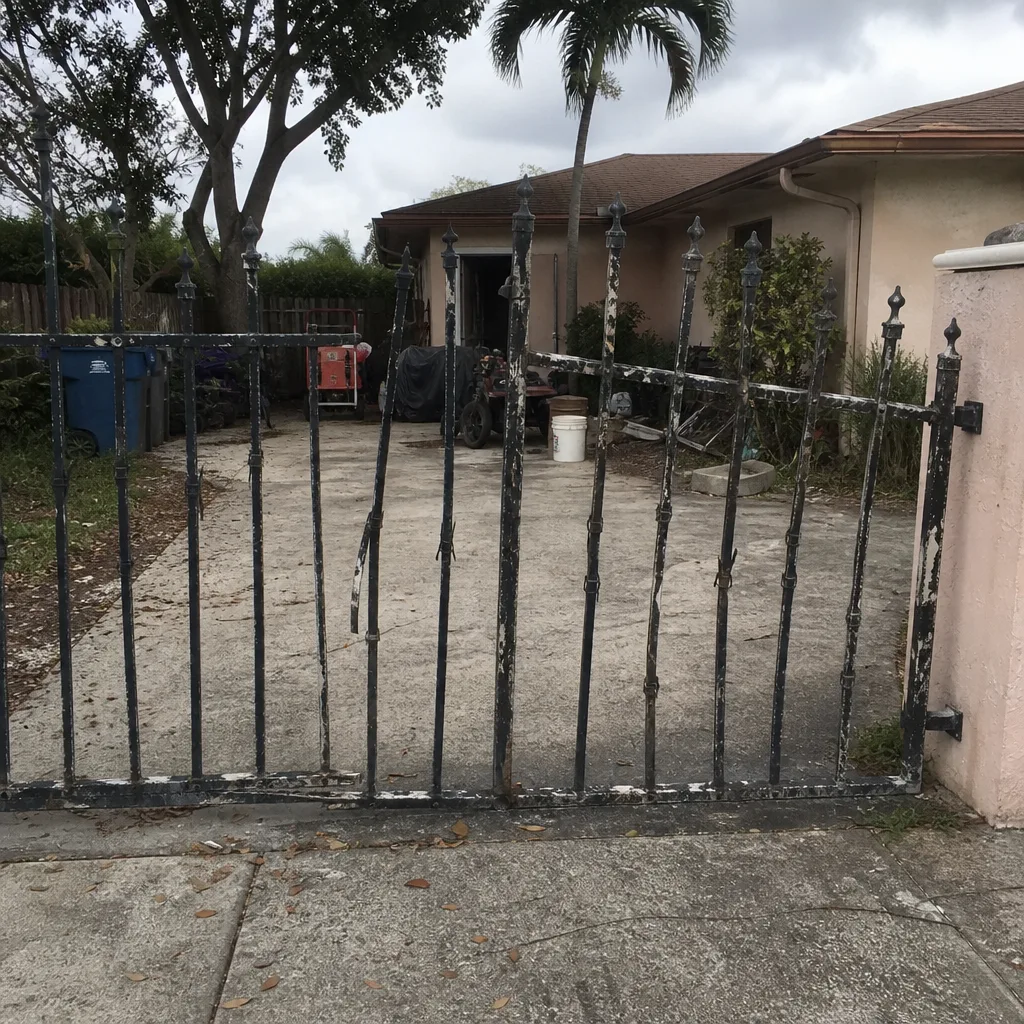 Before
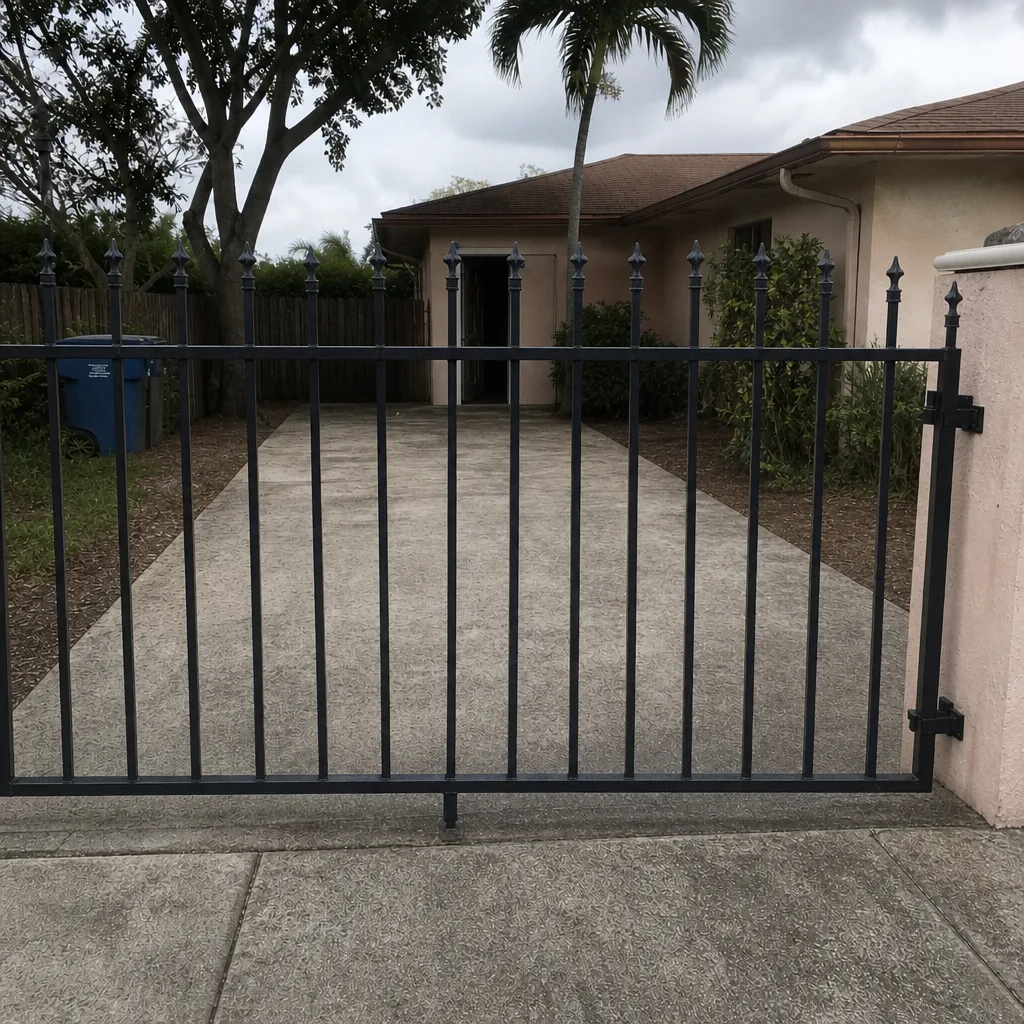 After
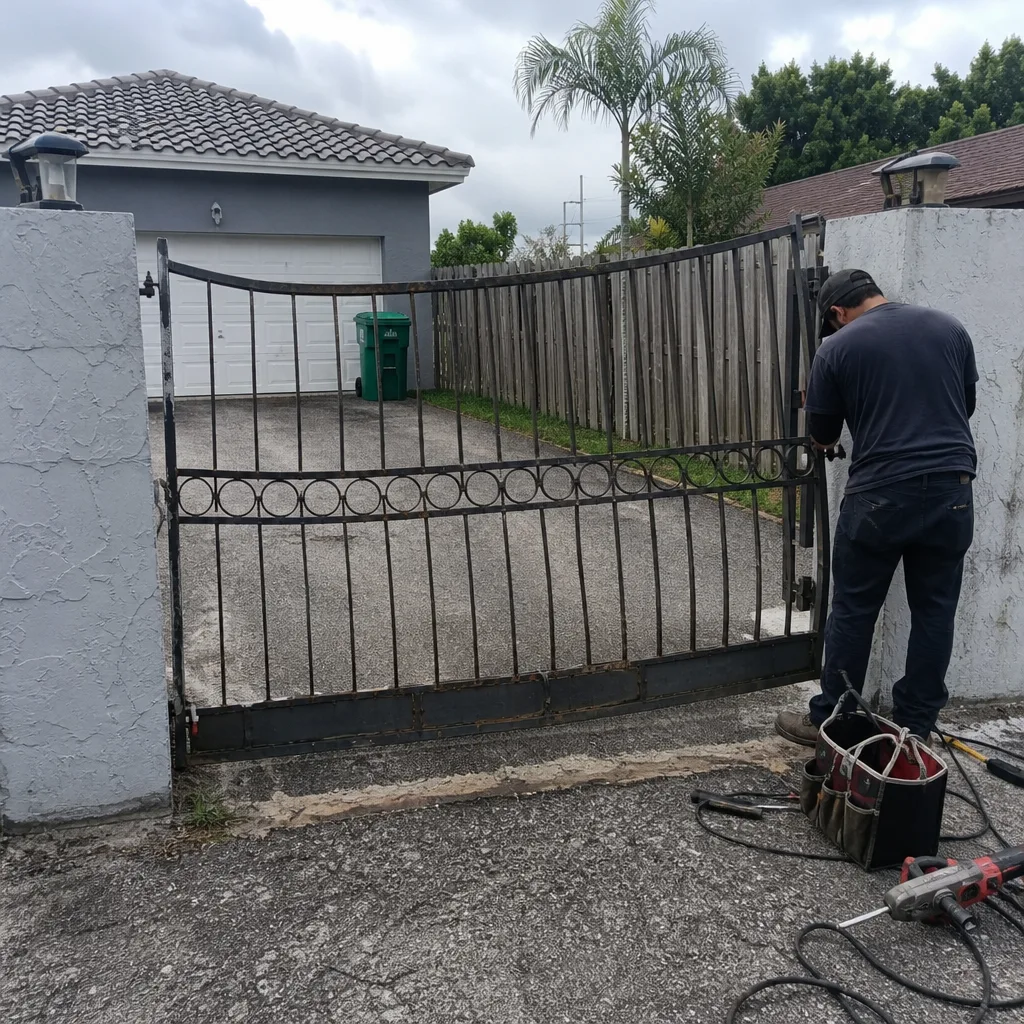 Before
 After
 Before
 After
The Bottom Line
Pembroke Pines gates don’t live on a four-season calendar. They live on a wet season, a dry season, and a hurricane prep window, and each stretch stresses a different part of the system. Prep in April and May before the daily storms arrive. Know your manual release before storm season, and inspect carefully after any named storm – and again a few weeks later for the electrical problems that surface slowly. Use the dry months to catch thermal expansion, cracked seals, and dust in the tracks. And treat your operator’s service interval as climate-driven, not manual-driven. Do those things, and the gate that groans in October won’t come as a surprise.
Contact Tidewater Gate Repair
Whether you’re prepping a gate for the wet season, dealing with post-storm electrical issues, or just trying to figure out what your gate needs next, Tidewater Gate Repair is here to help. We work on gates – only gates – across residential and commercial systems throughout Pembroke Pines, and we handle repair, electric repair, and new installation under one specialized team. Call (877) 748-7198 for a free estimate. We answer 24/7, with fast dispatch from 7am to 7pm, Sunday through Friday.
Written by the team at Tidewater Gate Repair.